
“Takes,” poems, Tweet threads, reviews, and editorials I’ve read over the last six months that have stuck with me, and why. Punctuated with pictures so no one’s eyes have to cross with exhaustion.
Mary Margaret Alvarado, “On Memory with No Devices.” This is an essay you will never want to end.
 Dan Arnold and Alicia Turner, “Why Are We Surprised When Buddhists Are Violent?” While I take issue with the piece’s implicit “we,” the authors make an important point about secular-dominant progressive American political consciousness. Most of us know Buddhism primarily through the ecumenical, culturally-mixed forms of Buddhism introduced in the last 50 years in colonizer states, which emphasize individual meditation and mindfulness and largely forego the religion’s incredibly varied forms of belief and ritual life throughout Central and East Asia. Because of our American context, it can be difficult for secular progressives to fathom how Buddhism— in Sri Lanka, Thailand, and now certainly in Myanmar— is used to justify horrible mass ethnic-national violence. The causes of this bloodshed are never simply religious, but in each case involved ethnic and state power; and in each case, the violence had passionate Buddhist critics. But Arnold and Turner are at pains to remind readers that any religion can be an instrument of nationalist violence.
Emily Bazelon, “When the Supreme Court Lurches Right.” Though this survey understates its own major point (that the Supreme Court has spent most of its history as a fundamentally reactionary and anti-egalitarian body), it remains a good overview of the shifting history of the court in American public life.
 Peter Beinart, “American Jews Have Abandoned Gaza–and the Truth.” Beinart deeply identifies as a Zionist— he rejects the idea that the formation and expansion of Israel is intrinsically a settler-colonialist project, and strongly opposes the B.D.S. movement— but he’s been a consistent progressive critic of settlement expansion and of the corrupt, reactionary presidency of Benjamin Netanyahu. He’s also filled with moral horror at the consequences of Israel’s blockade of Gaza, and the spiritual costs to Israel of the human suffering that the state has brought on Palestinians. (His association with Israeli peace groups and his authorship of pieces such as this one are likely behind his recent detention at Ben Gurion Airport.)
Patrick Blanchfield, “The McCain Phenomenon.” This is the best piece I’ve read— free of sentimental glow but also of contrarian reflex— on the meaning of McCain in American public life: it’s a progressive’s examination of McCain as a symbol of America’s reverence for individualism, military honor, and matured rogueishness.
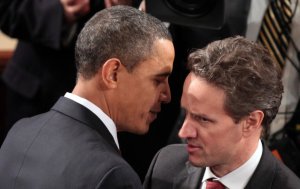 Zach Carter and Paul Blumenthal, “Former Obama Officials Are Riding Out the Trump Years by Cashing In.” Lockheed Martin, Uber, Covington and Burling, Booz Allen Hamilton, Morgan Stanley, Amazon: as soon as their government tenures ended, many of the most powerful figures from Obama’s administration stepped through the revolving door into comfortable positions selling weapons, subprime loans, union-busting regulations, and more.
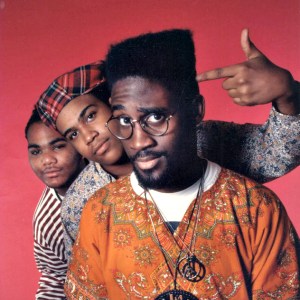 Jeff Chang on De La Soul’s 3 Feet High and Rising. A joyful essay, an in-depth history of a unique cultural text: a work of incredible lyrical skill and bonkers musical invention, one that you still can’t get on Spotify.
Thomas B. Edsall, “The Democrats’ Gentrification Problem.” Educated middle-class white people and urban black communities exist across a widening fault line of money-mobility, neighborhood history, and a wealth gap deepened by racist housing policies. While this article says little about the role of organized multiracial communities in pressuring lawmakers from the bottom up to create housing equity, it’s still a top-down view of a deep tension between two important Democratic constituencies and the continuing power of white racial kinship networks in maintaining a black economic underclass.
Eve Fairbanks, “Well-Off Millennials Are All Julia Salazar. I Wish We Weren’t.” This piece diagnoses a real social problem— affluent folks feeling they have to exaggerate, or invent, a hard-luck biography to be seen as authentic, especially in high-stakes elite institutions— but avoids looking right at the sources of, or responses to, this phenomenon. My response is: yes. But privileged folks also just need to stop lying about our privilege. First, because it trivializes the reality of suffering we pretend to have experienced. Second, because it’s built on the cancerous belief that a safe, materially-comfortable upbringing makes us inauthentic. But how can we believe this, if we hope to create a world that (while growing beyond capitalist definitions of safety and comfort) actually is safe and comfortable, rich in possibility and relationship for all people? A sense of possibility and comfort isn’t the toxic aspect of privilege: emotional numbing is. The cost of buying in to privilege is choosing to ignore the dehumanization of those on which our comfort depends. (I also think that this habit of exaggeration leaves us less likely to honor the actual pain, our own or others’, that comes with any life. This is its own form of dehumanization.) Fairbanks does describe the transmutation of pain– into visible, nameable forms— she witnessed among her privileged cohort. But I wish she’d gone way, way further– and perhaps even ventured into encountering lives characterized by the suffering our material comfort is built upon. Or questioning the social value of high-stakes elite institutions altogether.
Max Fisher, “Israel Picks Identity over Democracy. Other Nations May Follow.” We’re in a global moment of parliamentary democracies shifting toward autocracy and ethnically-defined nationalism. The question for radicals is: what does the call to solidarity look like as states contract toward reactionary politics? How can we ourselves live out an alternative to the deep comfort of seeking company only in others like us? What is genuinely collective about collective liberation, and how can we articulate the value of the collective when compared to the shortfalls and exclusions of parliamentary democracy?
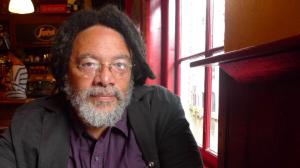 Paul Gilroy interviewed by George Yancy, “What ‘Black Lives’ Means in Britain.” Gilroy speaks about the power of corporate multiculturalism in Britain and the US; argues that inequality is a relationship, not the possession suggested by the term “privilege”; and describes the difficulties in black-solidarity organizing in a country defined (as Britain is) by economic-imperialist ventures and migration pressures different from the US importation of chattel slaves.
Jack Goldsmith, “Uncomfortable Questions in the Wake of Russia Indictment 2.0 and Trump’s Press Conference with Putin.” Bush II’s former Assisant Attorney General (who left in the wake of the Iraq War and the revelations of torture at Abu Ghraib) asks: What rules of international espionage did Russia break, that the US is willing to pledge to respect? What blowback or unwelcome reciprocity is the DOJ inviting by issuing subpoenas to foreign nationals? What vulnerabilities remain in our e-mail and voting systems? And: what unthinkable disasters are journalists inviting on themselves by encouraging the prosecution of Wikileaks?
Briahna Joy Gray, “How Identity Became a Weapon against the Left.” Gray has argued, here and in The Intercept, that as center-left institutions become fluent in the language of intersectional politics, they employ the signaling characteristics of that language to attack the left as racist and sexist for its emphasis on class. Doing so requires erasing the women and queer folks of color active in movements for (e.g.) single-payer healthcare, fighting Wall Street corruption, strengthening the green economy, or raising the minimum wage, but the center-left has a fabulous track record of doing so already.
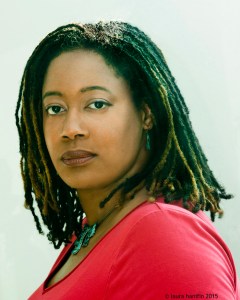 N.K. Jemisin’s acceptance speech for her third consecutive Hugo Award win for the Broken Earth trilogy. It’s “a massive, shining, rocket-shaped middle finger” and a reflection on creative and spiritual survival against a steady deluge of racist shit.
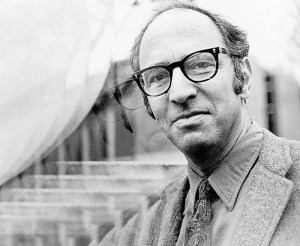 Tim Maudlin, “The Defeat of Reason.” Phew, there’s a lot here. This article reviews two huge, argumentative, intellectually ambitious books: Adam Becker’s What Is Real?: the Unfinished Quest for the Meaning of Quantum Physics, on the puzzles, obfuscations, and final hope for clarity in quantum mechanics, and Errol Morris’s The Ashtray (or the Man Who Denied Reality), an attack by a former student on the philosophical and cultural legacy of anti-foundationalist intellectual Thomas Kuhn. In the first part of Maudlin’s review, he explores Becker’s historical work and conclusion that the conclusions popularly attributed to a quantum mechanical view of reality— fundamental smeariness, observer-dependence, and inconsistency— are bogus, the result of Niels Bohr’s Kantian dogmatism in defense of his version of QM and the physics community’s shut-up-and-calculate attitude. But Becker suggests that, though quantum mechanics may in fact be more deterministic than Bohr believed, it’s still spooky: electrons must be able to change from waves to particles in an instant, even if the waveform showing the electron’s possible location is immense: a faster-than-light change effected at a distance. Meanwhile, Morris, who despises his onetime teacher Kuhn as a relativist who discounted the importance of reason and evidence, charges at the legacy of Kuhn’s 1962 book The Structure of Scientific Revolutions. Kuhn introduced the notion of paradigms (the rules, practices, and examples that bound a theory of reality) and their importance in shaping scientific thought. A paradigm never wins out “by logic and experiment alone” but by power, persuasion, and culture. Further, no two paradigms are commensurable: the inhabitants of two different theoretical frameworks live in two different realities. Therefore, no neutral adjudication is possible– only conflict, and later history written by the winners. In a time where politics and philosophy were questioning the legitimacy of received authority, this idea was a sensation. Morris, now an investigative documentary filmmaker, hates it: “It is one thing to remark how hard truth can be to establish,” Maudlin writes, “and quite another to deny that there is any truth at all.” Morris’s book explores the nature of the reference of terms (the theory of how any noun picks out or denotes something in the real world) and ultimately argues that a belief in shared, neutral, objective truth is a moral issue. “If… we all live in worlds of our own manufacture, worlds bent to conform to our beliefs rather than our beliefs being adjusted to conform to the world, then what becomes of truth?” What are the consequences of believing that we impose, rather than discover, structure in reality? Maudlin’s essay falls short of exploring the appeal of Immanuel Kant’s Transcendental Idealism at the root of both Bohr and Kuhn’s philosophies. I want to hear his argument for why we’re tempted to believe that we merely impose, rather than actually experience, things such as time or cause-and-effect, etc.
Philip Metres, “Imagining Iraq: on the Fifteenth Anniversary of the Iraq War.” How can Americans hope to understand Iraq as more than a backdrop of our imperial history? Metres, author of the intricate and morally damning poetry collection Sand Opera, explores possible paths out of imperial memory.
Ann Pettifor, “Irish House Prices Sky-High Due to Finance Not Scarcity.” Dublin’s housing crisis is even worse than Seattle’s. And, as in Seattle, this is generally justified in microeconomic terms: massive demand on a limited supply. But in reality, the main driver is macroeconomic: housing is such a good investment that there’s a worldwide rush from the wealthy to buy in. If you buy a house, you don’t need to live in it to make money off it, especially if its value grows 6-10% a year. If you invest in a townhouse block and all six units are bought at 10-20% over list price in two months, you’ve just made a handsome return. Until we start taxing investment in things like condo development (or in buying a home you don’t intend to occupy or rent out), house prices will keep exploding.
 Hilary Plum, a poem I love called “Lions” and an essay on war, Orientalism, historical memory, and the moral position of citizens in empire “Narrating Forgetting.”
Sebastian Purcell, “Life on the Slippery Earth.” An introduction to what’s survived in the historical record of Aztec moral philosophy, especially its emphasis on group– rather than individual– virtue.
EDIT to add this single tweet from Dana Regev, which– out of the whole spectacle of vicious male backlash and horrible retraumatization for women and femme folks in Kavanaugh’s nomination, Dr. Blasey Ford’s testimony, Kavanaugh’s ugly response, and his subsequent appointment to the Supreme Court– felt like the thing that I as a man/cismen most needed to sit with, journal about, talk with other men/cismen about, let haunt me.
Nate Silver, “There Really Was a Liberal Media Bubble.” It’s incredible the extent to which many professional journalists and think tank intellectuals are able to make a living having opinions while talking to almost no one but one another. Silver is, of course, not exempt from this himself, but it’s to his credit that he includes his own organization, FiveThirtyEight, in the scrutiny of this article.
 Tim Urban, “The Fermi Paradox.” Why don’t we see evidence of the presence of other intelligent species in the Milky Way? This article, chirpy listicle style and all, is a good look at a scientifically and philsophically significant question, a different perspective on literally every sort of human problem I can imagine.
Blanca Varela, “Material Exercises” (tr. Jeannine Pitas). A great, strange poem, beautifully translated.
Bonus feature, “now without clip art!,” on the institutional Catholic Church: The Church as an institution is in a state of huge crisis; here are some readings about it.
A grand jury report of widespread, decades-long sexual abuse by priests, and coverups by leadership, in Pennsylvania coincided with the revelation that Cardinal Theodore McCarrick had preyed for decades on seminarians and altarboys.
A bomb-toss of a letter from pissed-off former Papal Nuncio (ambassador) Carlo Maria Vigano alleged in August that Pope Francis was aware that Cardinal McCarrick was a serial predator, and that Francis had nonetheless lifted the sanctions imposed on McCarrick (a lifetime of prayer and penance and withdrawal from public life) by the previous pope, the traditionalist Benedict XVI. Vigano claimed that Francis was willing to tolerate McCarrick’s behavior as he sought McCarrick’s help as an ally in fundraising and the appointment of more-progressive archbishops.
So: what to make of it? Well, Vigano’s letter is full of awful homophobic sinister-gay-mafia bile equating gay relationships, same-gender sexual abuse, and pedophilia. In its direct attack on Francis himself the letter is clearly intended as a means for right-wing European and American Catholics to concentrate their rage at Francis’s attempted reorientation of the church (toward suspect things like mercy, political egalitarianism, inclusivity, environmental stewardship, and concern for migrants and the poor) and build power for their own political projects. Finally, Vigano’s letter has since been revealed to be wrong in its particulars: it now seems that Benedict had never formally sanctioned McCarrick, but as of 2010ish informally asked him to keep a low profile. Nonetheless, there’s strong circumstantial evidence that Francis, like popes before him, was willing to trust his advisers in overlooking credible evidence of abuse to rehabilitate a potential political ally.
Here’s a Tweet thread from a Catholic with whom I imagine I’d agree on very little except for the moral parallel between two clubby, secretive institutional cultures that would tolerate those credibly accused of abuse: the Catholic hierarchy’s welcome for McCarrick and the Yale-Federalist-DC world’s support of Brett Kavanaugh.
And, you ask, where are the voices of actual gay clergy, in the midst of a shitstorm of fingerpointing, secrecy, and homophobia? Here’s one voice, from Fr. James Alison.
 Jay Aquinas Thompson
You must be logged in to post a comment.