
Disclaimer: This is a post about the HBO show Game of Thrones, not the George R.R. Martin novels on which the show is based. I haven’t read the novels, though I’ve had friends refer me to parts of the novels after talking about plot elements of the show. (I’d love for commenters to do likewise and point me to elements of the books– up to the middle of Storm!— pertinent to this conversation.)
Spoiler alert and plea: This post will ruin countless plot points from the first three seasons of the show. You’ve been warned. But I also beg you: If something heroically antisexist or relevant happens anywhere after the mid-point of Storm of Swords, please don’t give it away! Keep conversation on the show, please.
End of pleas and disclaimers.
 So: TV is not social-justice work. A show can illuminate, provoke, or mobilize audiences around an issue; it can challenge an audience’s or genre’s stereotypes; but it’s made to be entertaining and to make its owners money. Buy me a hot dog sometime and I will talk for two hours about how grateful I am that I watched The Wire, but having watched it doesn’t make me an organizer.
That being said, a TV show is part of a cultural conversation, and takes place in an environment contested by social forces larger than TV. Two lessons from social justice work come to mind as I try to untangle my feelings about GoT.
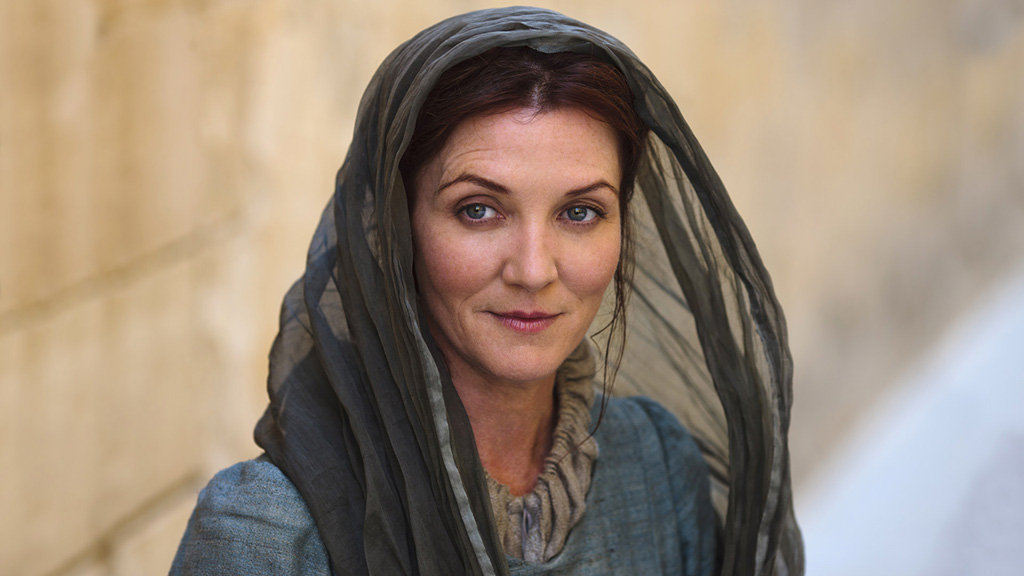
First: It’s possible to perpetuate oppressions even as you strive to challenge them. Game of Thrones is a world full of richly-portrayed, interesting, and morally complex women of all ages. Cersei Lannister (who shades from diabolical to trapped and miserable as the series goes along), Catelyn Stark (an older woman, the linchpin of her family) and her daughters Sansa and Arya, Brienne of Tarth (a tall, tough, physically intimidating woman!), and, of course, Daenerys Targaryen don’t spend the show as props for male ego, competing love interests, or caricatures. (Nor do GoT‘s writers condescend to them by sanctifying them as noble sufferers: rather than pity Arya, I’m frankly starting to get scared of what’s going on in her head.) The women of Game of Thrones are reflective agents struggling for independence in a sexist world. In other words, they are people, striving for fuller lives in an oppressive society.
 But Game of Thrones is also crammed full of tits. That is, the show’s producers go to incredible imaginative lengths to decorate scenes of male power with (often anonymous) naked women. The prostitutes of King’s Landing are shown as victims of male violence, but are also presented, as when Tyrion invites Podric to his first sexual experience, in scenes of pure objectified perfumey mystique. Any chance Daenerys can be shown naked (including scenes where, I’m told, she was just, you know, clothed in Martin’s novels), the producers take. Have her be bathing when a hunky barbarian bursts in to defect to her? Check. Have her then step nude moodily lit and gently dripping from the bath to say thanks? Check. One character, Ros, whom I’m told is a composite of a number of minor characters in the book, got the worst of this. She spent the maybe the majority of her scenes naked, including in a staged “educational” lesbian sex scene that was one of the most obnoxious and gratuitous things I’ve ever seen on TV, until being crucified and shot full of arrows by Prince/King Joffry. There are some intriguing theories explaining the preponderance of naked women in the show. I’ll leave you to evaluate their credibility.
 The issue is related, I think, to the show’s vaunted realistic approach to its fantasy world: people curse, sweat, switch sides, and struggle for power, honor, lust, and shame in moral circumstances much more complex than in, say, Tolkein’s world or even Gene Wolfe’s. But this also means that GoT recognizes no courtly presumption of women’s honor or distance from the fray. Sexual violence is everywhere in this world; in that sense, there’s a resigned quality even to its imaginative ambition, a subtext of “this is just the way people are” that’s curious in a show so imaginative in other regards. (As my genius cousin the fantasy novelist said once in exasperation, wouldn’t it be a more imaginative feat to create a fantasy whose world centered on an active struggle against sexism or violence or whose conceit flipped our expectations of such on their heads? Then she told me to read Zoo City, which I got for my wife instead.) But the show blurs its own ethical position by actively exploiting the sexism we already have– setting us up to ogle female characters or non-characters— to “realistically” portray the sexism of Westeros. So: Game of Thrones can challenge some aspects of sexism while at the same time working hard to perpetuate others.
Second: If you as a person with power are striving to address an oppression, you should expect more criticism from members of the oppressed community, not less.
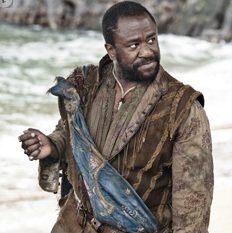
 I’m amazed, though I suppose I shouldn’t be, how vituperative the online responses have been to commentators of color who identify GoT‘s appalling racism. In its portrayal of the Dothraki in Season 1 (and, though it gets less screentime, in its thin characterization of the black pirate Salladhor Saan, eager to “fuck a blond queen” in Season 2), Game of Thrones hits every single ugly trope of white SF/fantasy’s conceptions of people of color. I’ll leave it to these two excellent posts linked to above to spell out a more detailed look at the show. Daenerys’s crowdsurf on the backs of the slaves she’s liberated at the end of Season 3 is the white-superhero-daydream cherry on top of a show whose interest in cultural complexity seems to end at the shores of Westeros. All I’d add is: please, please, please listen carefully when someone of color names racism, even if you’re not expecting to hear it, struggle to see it, or feel personally hurt. Listening carefully doesn’t mean wigging out, getting defensive, blaming the victim, or holding up your opinions over others’ actual lived experience of oppression. If your defense is “hey, they’re trying” (and, honestly, I don’t see GoT trying very hard on matters of race) then consider criticism to be candid feedback on how intentions don’t match effects.
Hey readers, any other recommendations for fantasy which addresses these issues in more complex or radical ways?


 Jay Aquinas Thompson
You must be logged in to post a comment.