This is the music that got me through the year, that disrupted or seized or soothed me. As always, includes a few records from the previous year I came to late.
 This year the instrumental music I’ve loved best has foregrounded somatic emotional experience, bodily sensation. I absolutely cannot get enough of PAN’s compilation Mono No Aware: it’s ambient music that foregrounds not concepts or memory-qualities but big feelings and strong transformations. Its songs can be as hot and close as tears, as intimate as a lover pressed up against you, or as creepy as feeling yourself grow hooves or wings. Some of the textures/moods near the middle are too extreme and abrasive for me to do anything else to but listen, but that’s its own kind of ambience.
 Speaking of bodily pleasure, Four Tet‘s New Energy, especially “Scientists,” is a further step in a good direction for Kieran Hebden, away from the skittering nerves of his first few records, toward a beating heart and a sense of collective ecstasy: there are at least two or three other songs on this record that are on my permanent dance playlist. Jazz drummer Makaya McCraven’s Universal Beings (tied for my favorite record of the year) is body-music too. It’s some of the most rich and joyful ensemble playing I’ve heard in a long time, each of its four sides–London, New York, Chicago, LA–edited from popup studios and live jams into a distinct mood. Side two, knotting itself into the breathless “Atlantic Black” (Tomeka Reid and Shabaka Hutchings twisting and feeding off each other) is the funkiest and my favorite, but each has an everything-here-now urgency, even when the soloists play harp or cello. I’ve loved to go back to again and again. A smaller-scale pleasure has the been the totally out-of-the-box improvised duet/duel from pianist Irene Schweizer and drummer Joey Baron on Live! This record is gymnastic, violent, childlike, playful, and exhilarating.

 Speaking of timbre, I had to love it as a lullaby first but I’ve come around to Yo La Tengo’s sleepy subtle new record, There’s a Riot Going On: I couldn’t pay any direct attention to it on its first few plays but its presence has stayed with me, a blanket I can always crawl under even as the lyrics suggest uncertainty, dread, the brevity and fragility of consolation. And then songs started coming out of the sound: “Forever,” “Polynesia #1,” “Let’s Do It Wrong,” “For You Too.” I similarly took awhile to love the new Ought, Room inside the World. I was puzzled and put off by the polish and spaciousness of the production after loving by the loose wires and crumpled metal of Sun Coming Down, but that smooth coating covers some good medicine and Tim Darcy, writing gorgeous lyrics I like even better than his old taunting chants or aspirational cries, still sings like someone clowning on Jimmy Stewart. They’re growing into grandeur.
 It’s so easy to tap through on Spotify, try the next of the million flavors, that I have to browse new music in a way that’s less attentive but more feel-sensitive if I want anything to sink in or spur a response for me: when I browse, it’s not for argument but for appetite. Popping out in a long shuffle, Maximum Joy‘s glorious new reissue (seven singles on four sides of vinyl) I Can’t Stand Here on Quiet Nights was delicious right away– spaceyness and heavy bottom of the dub bass, kiddish chanting of Janine Rainforth, spikes of guitar. There’s a sense of communitarianism, utopian hope, in the music’s borrowings and interpolations (reggae, shrieks, guitar jangle, dumb squawking sax) that makes me think of second-wave ska or African Head Charge, defiant of its desperately bleak, individualist political moment of England in the early 80s.
 I loved Maximum Joy because its roominess and blending was aspirational: one of my other favorite records of the year, Mountain Man’s Magic Ship, I loved for how it too felt like an invitation to a way to live. Three-part harmonies and a single guitar around a single mic, songs to the Moon and friends named Stella and naked bodies swimming. Speaking of moods, Kacey Musgraves’s “Slow Burn” projected a serenity that’s pure gift, when you can bless and thank all of life from eight miles above it. And (Sandy) Alex G’s “Bobby” twisted on the knifepoint of its desire: my favorite crush song in years. I spent a plane flight to Cleveland completely swept up in the grief and lean hard economy of Big Thief’s Capacity, music that takes its strength from the urgency with which it treats its material.

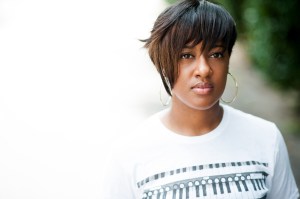 I finally loved a Nicki Minaj record all the way through this year! Praise the Queen! Maybe it’s because on this one the best stuff is the hard stuff and there’s more hard stuff (though there’s one ballad I love too, “Come See about Me”); maybe it’s because I’m finally getting the hang of dancehall reggae; maybe all her rivalries and beefs have sharpened her writing; but the cold-eyed pride of the record is a single mood and I’m in love. Also loved Rapsody‘s album, Laila’s Wisdom: the record has old-school virtues (gospel backing vocals, live guitar) and an old-fashioned sense of legacy (Laila’s her grandmother), and Rapsody shines out with all sort of emotional colors rare in modern hiphop: curiosity, loneliness, loving exasperation. Off of albums that didn’t catch me as a whole, I really loved Janelle Monae’s “Django Jane,” Future’s “Incredible” and GoldLink’s “Have You Seen That Girl?” I grudgingly also adored Drake’s “Nice for What” (New Orleans bounce) and “Passionfruit” (something more nocturnal and sad, love that pulsing drum): his played-up tenderness and silly tough-guy routines are annoying but as a synthesist of sounds, Drake is hugely capacious, sensitive, and ambitious: he listens widely and sounds completely natural in a huge international variety of sounds. Lastly, although Finn got obsessed with “Walk It Like You Talk It,” my own recent favorite Migos single was the just-pre-Culture one-off, “Cocoon.”

 My beloved pop records this year were Christine and the Queens’ Chris and Ariana Grande’s Sweetener. Chris is cocky, lonely, charged by pride and scarred by old trauma, and I didn’t know what to expect from her show when Cait and I went to Showbox Sodo. Watching Christine/Heloise, I realized she’s an entertainer rather than a witch– holding a mirror back up the audience’s longing and desire (like, say, Michael Jackson) rather than performing a transformation on herself for the sake of the audience’s soul (like, say, Anhoni or Perfume Genius). But that’s cool, the world needs more entertainers as good as her! And Sweetener, damn! Now that Grande’s not trying to Disnefy/naughty-kitten herself anymore, something superhuman has emerged in her— that incredible virtuosic voice, her poise and reflectiveness in the face of awful tragedy and ordinary pain, her radiant confidence in great song after great song. Other bangers close to my heart this year were Selena Gomez’s “Bad Liar” and (speaking of superhuman maturity) Lorde’s “The Louvre.” And just to agree with everyone, Robyn’s “Honey” is a gorgeous sacramental song about sexuality, the way deep shared pleasure is a sinking into time.
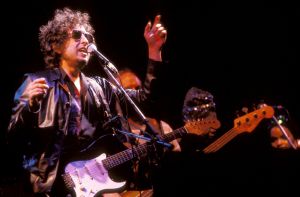 A special shoutout to Bob Dylan’s Trouble No More: the Bootleg Series, Vol. 13 (1979-1981), the recent live collection of his gospel years. Dylan’s songwriting had always prized instinct, conviction, and heat over subtlety, irony, and intellect, so I guess it’s not surprising that, when he became a Christian, he chose Protestant austerity and fundamentalist hellfire. I’ve never loved the gospel albums all the way through, but this collection gathers the best from this whole period and shows off outstanding backing vocalists and an absolutely dynamite band. The liner notes from the mighty Amanda Petrusich are a welcome close-reading and contextualization too. Trouble ends with Dylan’s dissatisfied live tinkering (new lyrics, new arrangements) with some of his best late-gospel songs, “Caribbean Wind” and “The Groom’s Still Waiting at the Altar,” tunes he’d later abandon, but the first three-quarters of the set is delivered with fearsome conviction and swing. I can’t get enough of it.
Randy Newman is a singer of inversions: at his worst, he’s sentimental or he curdles into the passive ironic pessimism of rich liberals, but at his best he makes songs out of undersides and shadows, out of feelings most of us are scared to even put words to (“I Want You to Hurt Like I Do,” “Rollin’,” “Same Girl,” “God’s Song,” “Lover’s Prayer”). Dark Matter is otherwise mediocre late-career “mature record”: over-reviewed like recent Nick Lowe or Marianne Faithfull, because few critics can resist writing about their fondness for an artist’s legacy rather than the actual art in front of them. But “Wandering Boy” is a tender song for a grief I hope I never experience: at a celebration of your long life, remembering the child you lost, not to death but to life. The other songs of impossibly delicate beauty this year: Frank Ocean’s “Moon River” (points to any singer who can outdo Jerry Butler’s version of anything), “I Wonder If I Take You Home” from Meshell Ndegeocello‘s covers album, and Sampha’s “(No One Knows Me) Like the Piano.”
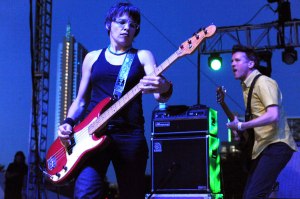 My bolt of left-wing disbelief, rage, and hope this year was Superchunk’s What a Time to Be Alive. Unlike most long-lived groups, Superchunk’s overpraised “grownup” phase came mid-career, with four albums of stuffy overproduced 60s-ish classical pop. Then, somehow, miraculously, they aged out of it backward into the righteous Majesty Shredding, the death-haunted and youthfully heartbroken I Hate Music, and now this incredible bright-burning sparkler of a punk record. Speaking of lefty rock, I believe Merrill Garbus and I wish I loved all of Tune-Yards’ I Can Feel You Creep into My Private Life, but it’s hard to make communitarian and body-moving art from the kind of chastened, newly-awoken, and frequently paralyzed white-anti-racist perspective of the record: “Colonizer” sounds like some true pain went into it, but I just can’t bear to listen to it, a guilt-plumbing that plays like reverse self-obsession. But a few songs did get me– “Honesty” is my favorite– and I still can’t wait for the next record. Other rage to dance to: !!!’s “Five Companies.”
 Ending with my (see Universal Beings above) tied-for-first: Dear Nora’s Skulls Example. Katy Davidson began their career fully-fledged making subtle complicated funny indie that called back to Henry’s Dress, Tiger Trap, and Sleater-Kinney. Over a decade, their band has grown into something more spartan and more preoccupied with Davidson’s obsessions: our eerily-fake social reality, weird cacti, climate change, and the impassive barren gorgeousness of nature. What else do you need?
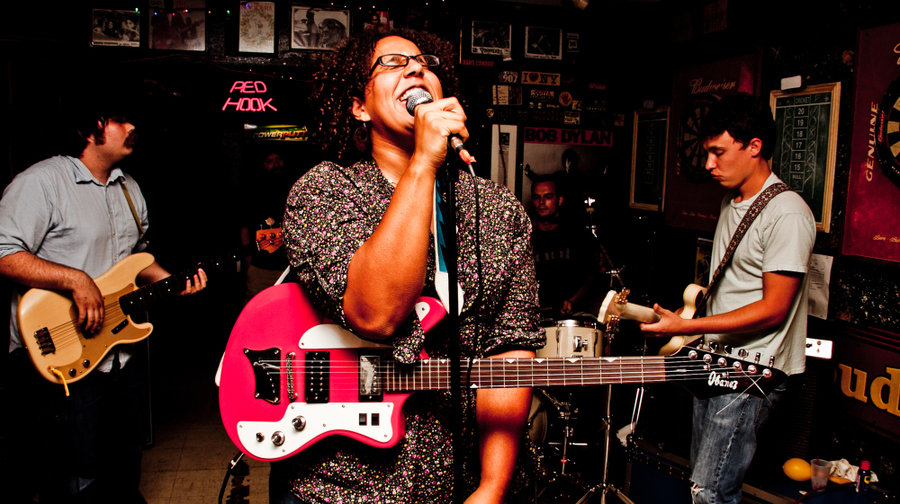
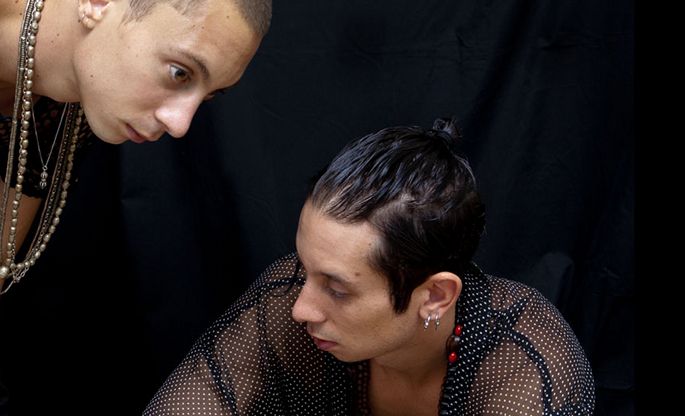
 inc., “A Teardrop from Below.” My song of the year. As obsessed as I am with No World, inc.’s record from a few years ago, this song improves on it in every way— the whispered vocals, the nimble guitar, the skittery soothing drums. This band certainly deserves to be huge; if they follow up



 Jay Aquinas Thompson
You must be logged in to post a comment.