Hi dear hearts, this comes to you late after a month of a broken computer, a thumb I split while splitting kindling, and some good deep hard work in my community and relationships that kept away from my beloved nerdy pleasures.
But so: here’s the music that kept me alive from this year, plus an accompanying playlist. As always, it includes some treasures from last year that I just now got to.

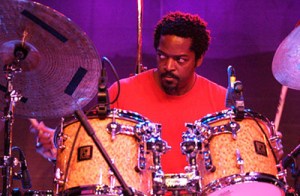 First thing is that this is a year that contemporary jazz really opened up for me with three very different records I adored. Steve Lehman’s The People I Love is presented as his tribute to the classic saxophone-quartet format, but the record starts out with a severity that I had to reach for my limited antecedents for: Dave Liebman’s scorching live show I saw in a big churchy stone space a decade ago with other slack-jawed grad students. Lehman’s playing is dextrous, fast-moving, and extreme; I love the conversations he locks into with digressive and tuneful pianist Craig Taborn on “qPlay” (dig too the skittering synthesized drums below it) and drummer Damion Reid on “Beyond All Limits.” Music about energy, not narrative; solos about dialogue, not commentary. (Lehman’s on Bandcamp, but not on Spotify.) I also loved the Marta Sanchez Quintet’s El Rayo de Luz; Sanchez’s sense of harmony in her horn charts is eerie and exquisite, and the music’s emotional center is in the way the piano will answer, tug at, twist up, and return a melody back to her two saxophonists: it’s subtle, brainy, tender. It makes my ribcage ache. For presence and aural pleasure, I love Gerald Cleaver’s Live at Firehouse 12: again, the limitations of my listening history don’t leave me much to draw on, but I love that jazz-drummer thing of keeping the beat and commenting on it at once, riffing back to his soloists or shifting suddenly under them and forcing them to duck after him. The piano is mixed low: the attention is much less on underlying chordal structure than on all on the ideas Cleaver tosses up to his horns and gets tossed back. The horns’ melodies are sometimes twisty, sometimes downright jolly: the climax of “Detroit” is as polyphonic as Dixieland.
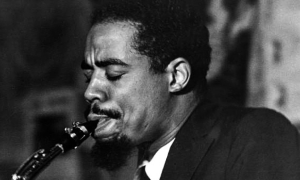 Two jazz reissues this year I also loved: the rangy small-group playing of Charles Mingus’s Jazz in Detroit, recorded live (with accompanying interviews) at a short-lived collective space, the Strata, in 1973. After the fun gigantism of his big-band comeback, Let My People Hear Music, Mingus seemed to be in the mood for exploring wider spaces with a smaller group: his players here are all young, some new to playing with him, and they all stretch. By contrast, Eric Dolphy’s Musical Prophet: the Expanded 1963 New York Studio Sessions feels not like rovings but like musings. Dolphy’s playing could be fiery-intense and rough and there are a few big full-band tunes, but for most of these recordings, Dolphy seems to deliberately downplay forward motion: instead, the music keeps collapsing into self-reflection, irony, melancholy (“Come Sunday”‘s moaning bass floating alongside Dolphy’s murmuring bari sax), buried self-assertion (the theme of “Alone Together” doesn’t fully show up until 12 minutes of musical conversation between Dolphy and his bassist), and a cerebral exploratory quality held up by an inexhaustible melodic creativity. Dolphy contained multitudes; he died of undiagnosed diabetes less than a year after these recordings. How many other jazz musicians died of health conditions aggravated by structural racism?
 The mood of our big quiet hemlocks and swift icy creek are caught by Emily A. Sprague’s Water Memory, a beautiful ambient project from a musician best known in her singer-songwriter work as Florist. Sprague doesn’t wear down listeners’ distinct attention under reverb or drones: instead, each instrument is a small clearly-rendered organism– or a small repeated movement, like the flickering of a flagellum, inside an organism– and the songs’ colors vary across the album. A meeting with a perfect musical creature in 40-plus minutes.
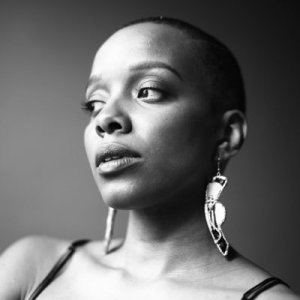
 I absolutely can’t get enough of Jamila Woods’s LEGACY! LEGACY!, an album of subtly shifting influences and musical colors, driven by Woods’s arching twisting sense of vocal melody. She’s a queenly, sharp presence (“shut up motherfucker, I don’t take requests”), and her sense of pride stretches way back– her companions and lovers and “holy books” are all drawn from way back, from a deep sense of musical and communal history. I especially treasure the little skirls of jazzy guitar on “BASQUIAT” and the soothing-then-strutting two-part “GIOVANNI.” Also word to Earl Sweatshirt’s Some Rap Songs, out at some extreme where hip-hop meets avant-garde jazz and experimental poetry; Earl may still be in his Xany-gnashing, Caddy-smashing youth but he’s making a world of his own around it if so. My bangers of the year were Lizzo’s “Tempo,” with the inexhaustible and self-possessed Missy Elliott, and Normani’s perfect “Motivation,” who I first heard alongside Doja Cat, thank you Sayer for introducing me. Let’s take a moment too and be grateful for how much good pop there is right now about easy, confident pleasure in material flash or in guilt-free, un-power-tripping free-agent-type sex: if you want to, it’s easy to avoid bellows of lost entitlement, emotional blackmail, stray shots or empty bottles and stay in the Top 40. Oh and I give up, I also loved Katy Perry’s “Never Really Over.”

 I looked forward to a dozen-plus indie rock albums this year but wound up adoring only a few. Frankie Cosmos’s Close It Quietly is Greta Kline’s absolute best work so far, a work on tip-toe balance between assertion and minimalism, small acts of emotional courage and small touches of self-deprecating humor. Kline’s songs are mostly tiny, so when she repeats a chorus (as on “So Blue”) you really feel it, and when a hook kicks in (as in the B section of “Rings [on a Tree]”) it hits you right in the shoulders. Laura Stevenson’s The Big Freeze is finally a whole album of hers I’ve loved as much as I loved 2012’s single “Runner.” But where that song’s dynamism and surge thrilled me, Freeze is more austere and spacious: it’s a big roomy recording of overdriven electric, fingerpicked acoustic guitar and an underlining of low harmony. Its sound reminds me of Brian Paulson’s groundbreaking production on Spiderland, letting distorted and acoustic instruments speak to each other without violence. I also loved (Sandy) Alex G’s House of Sugar. Alex Giannascoli’s earlier records were characterized by a lo-fi slacker shrug that, when pushed, stiffened into open resistance. He’d blast off synth rackets, snip songs short just as they took off, process instruments through a tin can. The musical ingredients on House of Sugar have evened out a little: the listener can expect close-mic’d and often double-tracked acoustic guitar, hanging looped-up synthesizers, violin, far-off wailing or pitch-shifted backing vocals, some nostalgic sax, and a fake accent or two, not easy but not self-undermining either. There’s a self-enclosed musical richness to these arrangements and a good-enough-for-me roughness that’s belied by the pathos and grief of the lyrics; Giannascoli is absolutely soaked in a fear of death and split by gender-ambiguous heartbreak. Most lo-fi albums feel smaller as they go on; House of Sugar widens instead into something big and melancholy.
 I spent a week of evenings in the kitchen getting electrocuted by Mannequin Pussy’s Patience, an album of romantic longing, heartsickness, and rage all together, and a lot of drives with the New Pornographers’ In the Morse Code of the Brakelights. Brakelights is an album dominated by gigantism: cliffs of big bright reverby guitar, abrupt bangs of processed snares, melodies impossible to trace as lines of overlapping gray mountains, strings and ah-ah-ahs that swoop by like mountain wind. A.C. Newman is the last songwriter left in the group, and he’s stayed cerebral as he’s aged: he’s not particularly heated, cynical, disillusioned, etc.; he writes more about patterns of relationship than about relationships. I guess this is one way to age contentedly. Please also do not neglect the stunning big kingdom of Helen America’s Red Sun. One-off songs I loved this year: Pedro the Lion’s “Clean Up,” Big Thief’s “Cattails,” Black Ends’ “Sellout” (a freaky math-rock jam from my favorite new Seattle band), Jay Som’s “Tenderness” (though also shoutout to “Superbike” and “Devotion”: Melina Duterte’s guest-packed ensemble playing evoked less personality than she did playing every instrument on Everybody Works, but the gleaming compressed guitar and her small turned-inward voice are still a pleasure everywhere in her music), and Priests’ “I’m Clean,” an arch and nervy kiss-off that helps me feel human and brave when I need it.
A PS for the truly riveted: here are the older albums I’ve completely fallen for this year: Donato Dozzy’s K, Fiona Apple’s Idler Wheel, Jonathan Richman’s Action Packed compilation, lots and lots and lots of 80s and 90s dancehall reggae, Bach’s violin sonatas and partitas, Schubert’s piano sonatas, Team Dresch, Joe Lovano’s I’m All for You, Hank Jones’s The Trio (the 1978 one), the Spinanes’ Manos, PJ Harvey’s Rid of Me, Orchestre Baobab’s Made in Dakar, Mingus’s big-band record Let My Children Hear Music, Arthur Blythe’s Lenox Avenue Breakdown, John Prine’s Sweet Revenge and Storm Windows, Velocity Girl’s first compilation and Copacetic, Al Green’s I’m Still in Love with You, Dave Edmunds’s Repeat When Necessary, Bonnie Raitt, Luther Vandross’s compilation The Best of Luther Vandross… The Best of Love, Emmylou Harris’s Roses in the Snow, George Jones’s All Time Greatest Hits Vol. 1, John Fahey’s Of Rivers and Religion, Teddy Pendergrass’s TP, Pharoah Sanders’ Message from Home (produced by the mighty Bill Laswell), the Fastbacks’ Answer the Phone, Dummy, Sonny Rollins’s Sonny Plus 4 (his first album as a bandleader, the final studio recording Clifford Brown made before his death), Miles Davis’s 70s electric albums Black Beauty and Big Fun, the many treasures of Gary Giddins’ two-part “Post-War Jazz: an Arbitrary Roadmap,” The Indestructible Beat of Soweto, Vol. 4: Kings and Queens of Township Jive, and— on the turntable right now— The “King” Kong Compilation collecting Leslie Kong’s pioneering early reggae productions.
 Jay Aquinas Thompson
You must be logged in to post a comment.