
When Jesus comes back to Seville, performing miracles for the people, he’s manacled by the Inquisition and sentenced to be burned at the stake.
—This, at least, is how it happens in Ivan’s story, the heart of the first half of The Brothers Karamazov. The night before he’s to die, Jesus is visited by the stern, bloodless Grand Inquisitor, who tells him (monologues, rather—Dostoevsky’s Jesus never replies) that he’s dangerous: that he asks too much of humanity. Refusing to prove his divinity; refusing to feed the hungry before asking them to be virtuous; and most of all, granting humans the freedom to choose: this, the Inquisitor says, is demanding too much.
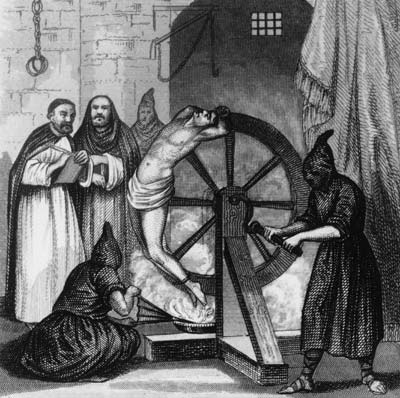
If Jesus wants to save humanity, the Inquisitor says, he should overwhelm temporal power, turn stones to bread, and command obedience. Hearing a simple moral appeal, the commandment to love a neighbor and honor God, the hungry will rise against their leaders, the doubtful will scoff, and those with choice will choose to damn themselves. Mankind wants a strong leader.
This fable has a surprise ending, and echoes on its town throughout the novel, but in retelling it to my dad this fall, he told me it reminded him of Jean-Jacques Rousseau. Rousseau, the French liberal philosopher of the social contract, makes a different claim about human nature: that we can’t know a thing about our innate qualities unless we look at the life of humans before society. Natural man is uncorrupted, self-sufficient, and (Wikipedia quote) “disinclined to witness suffering.” If some modern humans (the rabble and the bourgeoisie) are lost causes, Rousseau suggested, it’s because of the artificial nature of society, which has taught us greed, idleness, ego, and immoral desire.

Where does this leave a teacher? I’ve spent the last year working through the thought and pedagogy of Paulo Freire, the late Brazilian teacher, philosopher, and political exile (that’s him up top, second from left). Freire, schooled in Marxism and liberation theology and writing in a time shaped by the revolutions in Cuba and China, saw human nature differently. The oppressed, as a class, were created by violence, but they aren’t lost for good. Humans may not see the machinery that shapes their daily lives, but they’re rich in empirical knowledge, the day-to-day sense of relationships and power by which they survive. Freire, more optimistic than Dostoevsky or Rousseau, believed that, by asking the right questions, you can awaken the desire for freedom—for “humanization,” for subjecthood in life—in anyone. Even Rousseau’s man warped by civilization, even the Inquisitor’s rabble ruined on Christ.
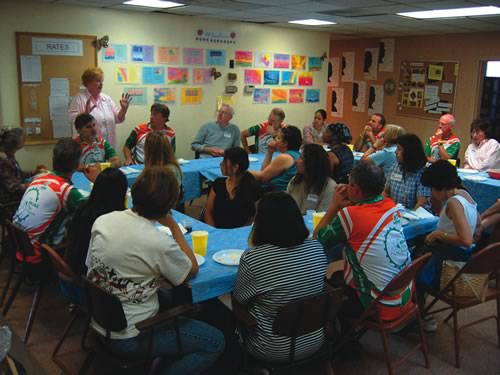
The gift is the kind of critical reflection you need to turn your empirical knowledge into a knowledge of systems: systems of oppression, but also of history, self, and community.
And Freire, unlike Dostoevsky or Rousseau, had tried it—had worked and taught and seen it was possible to teach critical faculties, a sense of self-determination, authentic love. It was his work with peasant literacy and critical pedagogy programs that got him “invited” to leave Brazil by the dictatorship in the 1960s.
So. You can believe we’re lost souls if you like, but don’t tell me that radicalism is cynical. Kisses kisses—

 Jay Aquinas Thompson
You must be logged in to post a comment.