
Ending this year limping and shaking out my wings. Here’s the music that got me through. This list is dedicated to Andy, who wrote me something like seventy-five postcards, each describing a piece of new music that had struck him, over the spring and summer; to Paulie, who tells me every year that I can earn their respect by waiting to post my year-in-music list until the year is over; to Riz Rollins, musical godparent of two decades, whose heavenly “Drive Time” show on KEXP now falls on my house-dinner cooking nights; to Lace Cadence who fills in for Riz sometimes and throws confetti over me with his Afropop sets; and to everyone who shared a moment with me to one of these songs.
 For sheer plays, my year winner is Sean Shibe’s Bach, a setting of two lute suites and a prelude-fugue-allegro for solo guitar. It’s just exquisite– not too bright, brisk, or flashy, mic’d nice and close, letting the emotional richness and unbelievable subtlety of the music come through. Finn loves this record– they call it “the morning music.” It feels impossible as I listen that a human mind could have created something so radiant in its symmetries: as if it were a 17th-century German who designed the first nautilus shell or coral reef. Earlier in this brutal year, it was Pablo Casals’ recording of Bach’s Cello Suite No. 2 in D minor that got me out of bed, those first few low sorrowing notes soothing my own grief and pain. Nothing cerebral or analytical about it.
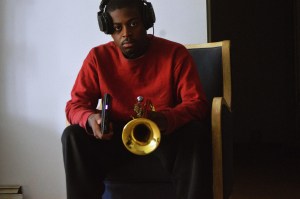 Black power and cosmic future-in-the-stars aspirations thread through Kareem Ali‘s techno. The amazing “Night Echoes” was my entrypoint, a perfect chamber of time that I first entered mid-year, but here’s another beautiful one, and Ali has an ideas-are-for-sharing ethos and lots of other albums and singles to choose from. Dive in! My kitchen dancefloor hit of the year was the Souldynamic bootleg of Sierra Leone All Stars’ “Mother in Law” (Bandcamp only): try listening with a wooden spoon in your hand. My other favorite techno of the year was Andrea’s Ritorno. In it, time is measured in elements moving forward and backward in the mix rather than in builds toward ecstasy or dissolution as in most dancefloor music. (Though there are some delicious beatdrops!) You’ll fall in deep sexy love with the sound of this record: big soft echoing fogbanks and tide-washes, variable reverb and flanging effects that seem to pull you nearer, ease you back, pull you nearer again.
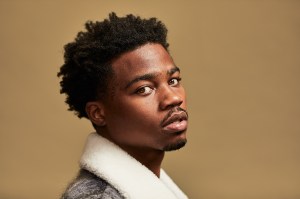
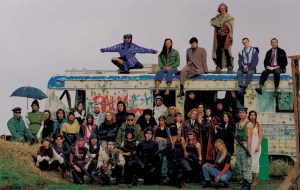 Anderson .Paak’s “Lockdown” made my heart pound; it’s lived in me like an echo since the public fury and gathering visions of the summer: you should have been downtown, the people were rising. Loping and funky and limber, it’s the opposite of the crowded, urgent, all-of-everything rush of Lil Baby’s “The Bigger Picture,” a song about the unbearable contradictions, rage, grief, and militant hope of life in the cage that white racism has built. The guts and dignity of this song captivate me. (Met both of these through critic Joe Levy’s Uprising 2020 playlist on Spotify.) The album that felt closest to uprising for me this year was Crack Cloud’s Pain Olympics: hectoring, utopian, angry gathering-music, forged by an artistic core of folks who met in Vancouver through addiction recovery and added to by many, many, many artists, dancers, players, and makers. Despite the declamations and jeering, there’s a visionary impulse in this music: Crack Cloud can see the better world. Though some songs are more mood and energy (begun from jams?) than tune, the whole is seamless, and I guarantee that when concerts come back, Crack Cloud will tear you up. Run the Jewels’ RTJ4, another kind of movement music, got me through a long bleak drive: gleeful, furious, obscene. (To hear another facet of Killer Mike, check his interview on the Bad Faith podcast on base-building in Georgia.) Ka’s Descendants of Cain is one of my favorite books of poetry of the year. Ka has sounded old for a decade, weaving myths of honor, loss, sacrifice, and death into his continuous-recent-past stories of hustling and surviving in Brooklyn. Ka’s raps are epigrammatic and intricate, wry and grim at once (“quiet and frigid disposition, growin’ up in the cold / surprised I ain’t get high from what I was low enough to behold”), his heart breaking despite his tough front. For a completely different energy, rap for the club, I absolutely loved DJ Mustard and Roddy Ricch’s “Ballin”: you’ll snap your fingers to the beat instantly, and Ricch’s flow is intricate, effortless, and catchy, a testimony how far into pop the possibilities of technical proficiency in rap have extended. Same joy at Megan Thee Stallion’s “Savage Remix” featuring Beyonce, and Tarrus Riley’s “Lighter,” with vocals from Shenseea and Rvssian, a sublime summer-night radio-up song that should be twice as long.
Not all the indie rock I loved this year felt young: X’s “Cyrano de Berger’s Back,” an 80s B-side the band finally remade for their first original-lineup album in thirty-five years, swings like soul music; Waxahatchee’s “Lilacs” and a few other moments on the acclaimed Saint Cloud have a timeworn sturdy feel, fresh fruit from an old tree; Clem Snide’s “Roger Ebert” is timeless wisdom right from the dissolving brink of death; Katy Davidson’s early work collected on Dear Nora’s Three States: Rarities 1997-2007 sounds like the murmurings of an old desert soul even when Davidson was fresh out of high school.
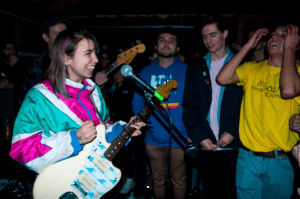
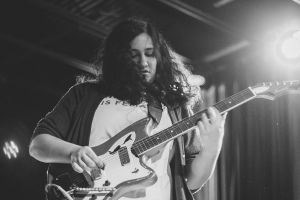
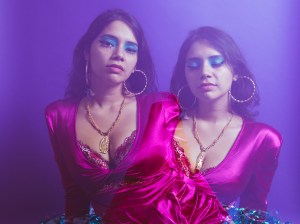 But Beach Bunny’s “Ms. California,” a soaring pop song about being eaten away by insecurity and jealousy, puts me right back in first-love feelings, that burning and blurry feeling of craving what my beloved craves, even to the edge of losing myself. And Great Grandpa’s Four of Arrows sounds like a college crush: it runs on the everything-out vulnerability of Alex Menne’s vocals, their big bashing highs and collar-grabbing drama. “Bloom” and “Mono No Aware” sound like a million bucks, and in a just world would have made Great Grandpa major indie stars; I prefer, though, the broodier more intricate stuff like “English Garden” and “Mostly Here.” Palehound’s “Aaron,” a declaration of faith to a partner through his changes, is the love song I loved best this year. Angelica Garcia’s “Karma the Knife” could cut your throat: this song bangs, and Garcia, sounding like a swaggering high schooler, is a natural star. And I absolutely cannot resist Kiwi Jr.’s Football Money, skeptical and clangorous and funny and tuneful, admissions and shaggy-dog stories of an amused barely-adult small-town librarian dropped in the big city, too broke to be white collar, too clever to quit. The literal only thing you’ll dislike about Football Money is that it ends too soon. Lastly, I grew into loving Phoebe Bridgers’s Punisher. She’s a stunning lyricist, youthfully severe but free of bile and judgment, excellent at offhand details and at zingers too. Punisher’s production sounded mushy, wispy, and vague in a typically indie way at first, but the louder I played it, the better I liked it, the more its details and meticulousness– as precise as the lyrics, as precise as the neat 60s-type chord turnarounds– grabbed me. Live, I bet I’d love these songs even more.
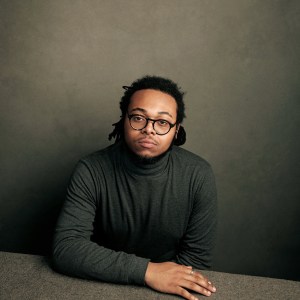
My jazz records this year are Immanuel Wilkins’s Omega and the reissue of the Beaver Harris-Don Pullen 360 Experience’s Well-Kept Secret album from 1985 (on Bandcamp, not streaming). Wilkins, a hugely talented Julliard grad overflowing with prodigious energy and tunes at twenty-three, has made an album saturated in the grief and rage of America’s racist violence. His quartet is dynamic, the songs’ feels constantly shifting; I especially love the stormy drama of pianist Micah Thomas, ricocheting off Wilkins’s solos that sometimes evoke gospel, sometimes spiritual-jazz ecstasy and fury. I first fell for Pullen, who as a young hotshot was Charles Mingus’s last pianist, on Mingus’s rangy joyful late live return Jazz in Detroit, and I’ve come to love his assertive, sneaky and inside-outside playing. Pullen can be exuberantly funky or right on the edge of burning up, and on Well-Kept Secret— featuring steel drums, lots of oddball brass and percussion as well as its co-leaders’ drums and piano– he’s both on every song. “Goree,” a raging many-part suite named for the Portuguese slave-trade hub, will hold you for its entire 17 minutes; “Newcomer” lifts my heart.
Another classical album I loved: Daniel Hope’s Belle Epoque is a two and a half hour reverie, a dream-gallery of an era in London, Paris, and Vienna– from just before the turn of the century to just before WWI, as the first coals of musical modernism flared to heat but before “civilization” tore itself apart. Belle Epoque includes pieces by Debussy, Ravel, and Massanet, but also early works by prickly weirdos like Berg, Webern, Schoenberg; there are duets, small ensembles, orchestras and even a few vocalists; but the whole work circles back to sound, the gliding sweet sensitive quality of Hope’s violin. (Listen to how it takes the place of the vocalist on Hahn’s “A Chloris”: listen to how he makes that melody sing without a singer.) Belle Epoque circles back, too, to memory, nostalgia: do I love this music in part for its sweetness-before-the-disaster evocation, a warped and backwards-cast longing for an innocence I’ll never feel again?
 Speaking of innocence, one oddball record I guarantee I would never have listened to if Andy hadn’t told me to is Gaby Moreno and Van Dyke Parks’s Spangled!, a Mexico-to-Argentina songbook album (drawn mostly from the mid-century El Cancionero Picot anthology, but also including tunes by Ry Cooder, Dorival Caymmi, and Harry Nilsson) sung by the LA-via-Guatemala Moreno and arranged by Parks in vivid technicolor. The songs may evoke dashed dreams, racist indifference, heartsick love, or eternal longing, but Moreno sings with optimistic dazzle and the sheer harmonic inventiveness of the arrangements suggests a spirit that hard times can’t snuff out.
 Why do cool kids disdain Jason Isbell? He’s an astounding songwriter, his tenor voice is beautiful, his songs about getting sober are as good as Stevie Ray Vaughan’s, and he stuck his neck way out to write “White Man’s World” (and had a lot of country music’s doors slammed in his face in response). I’m coming to him late and backwards, but please do listen to Jason Isbell & the 400 Unit’s Reunions. The songs all hit, the big roomy production soars, he doesn’t let himself off the hook for his unforced adult disasters. Other somewhat-in-the-region-of-country songs that killed me this year are Ashley McBryde’s “Sparrow,” a forthright and splendidly beautiful song about fame vs. family; Ray LaMontagne’s “Weeping Willow,” a perfect guitar-and-voices oldie that could have been written seventy years ago; and Caroline Spence’s “Who’s Gonna Make My Mistakes,” about the messes you watch yourself make as if from miles away.
Some singalongs this year include Paul McCartney’s “Calico Skies,” a perfect song I just met from this year’s reissue of Flaming Pie, and the Magnetic Fields’ “Come, Life, Shaker Life!,” a ritual incantation for the sacred feminine ecstasies of another century, off Quickies. And on a lot of long drives I’ve belted along to Sunday Service Choir’s “Weak,” a gospel tune with a melody so good it calls back the 90s R&B that first thawed my fussy punk heart. (Also dig “Souls Anchored” if you like what you hear in this one.)
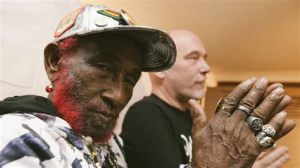
 A few good nocturnal atmospheres this year in the beautiful and dead-simple love song “Better Part” by Meerna, the eerie insistent slow nightmare Lynchian tug of Men I Trust’s “Say, Can You Hear,” and the intricacy, tightening and deepening, of Lianne La Havas’s cover of Radiohead’s “Weird Fishes.” But for the nights when time gets elastic or swells enormously and the mind reaches to its own edges, I put on Lee “Scratch” Perry’s Heavy Rain, a dub reworking of 2019’s Rainford. Perry– the forefather of dub, of studio-as-instrument, of the remix– sounds identical now, at eighty-three, to how he did at fifty-five on my beloved Lord God Muzick, but the musical palette conjured here by co-producer Adrian Sherwood is much less digital and hard-edged. Perry is possessed, gleeful, freaky, and the atmosphere is consistent even the music’s dynamics lurch, hiccup, drop away, and swell as dub can. One of the album’s surprise pleasures is how much room it provides for individual instrumental expression: grumbling looping trombone, the weaving harmonica of “Heavy Rainford,” and some splendid violin playing in “Above and Beyond.” An album to live in.
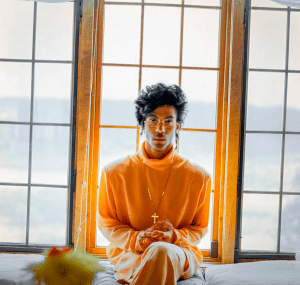 Oh and I can’t possibly leave here without talking about Prince’s Sign “O” the Times (Super Deluxe Edition), a reissue I’ve prayed for ever since Prince’s estate began reissuing and digitally licensing his huge catalogue. Sign “O” the Times is some of my favorite music, 81 perfect minutes, and Sign is just about three-quarters of what any obsessive would want. And, right, deluxe though it is (91 songs! eight hours!), it still leaves things out. On the way to Sign in 1986-87, Prince spun off multiple test-pressings for an album called Dream Factory as well as an all-Camille alter-ego/persona/second-soul album and then tried to pitch Warner on a triple LP called Crystal Ball before being forced to winnow his material to the mere double LP that is Sign. Along the way, he broke up the Revolution, deleting their original backing tracks and redoing them himself. This deluxe set includes very few of these original Revolution takes of the songs; it also, infuriatingly, omits ten or so complete songs slated for Dream Factory, Camille, and Crystal Ball that have turned up elsewhere: on the third disc of Hits/B-Sides, the Black Album, movie soundtracks, and the confusingly named 1998 Crystal Ball rarities set. (If you’re fanatical, you can re-create these albums song for song; if you’re less fanatical, at least please do yourself a favor and listen to “Good Love.”) Omissions aside, I’m forever going to be thankful for the long version of “Shockadelica,” the original “Rebirth of the Flesh,” and the unstoppable complete live set. Join me, sweeties, in sitting in the sunglow of a supreme creative gift?
Oh and since you ask: older music I fell in love with this year, a Merman Top 40: Erykah Badu, Mama’s Gun. Sonny Boy Williamson II, His Best. Professor Longhair, Crawfish Fiesta. Lois Maffeo & Brendan Canty, The Union Themes. Prefab Sprout, “Appetite.” Bill Evans, The Paris Concert Editions One and Two. Mississippi John Hurt, Avalon Blues: the Complete 1928 OKeh Recordings. R.E.M., Green. Hezekiah Walker, “I Need You to Survive.” Joe Pass, Portraits of Duke Ellington. Art Pepper with George Cables, Goin’ Home. Ray Charles, “In the Evening (When the Sun Goes Down).” The Mekons’ cover of John Anderson’s “Wild and Blue.” Cheap Trick, Greatest Hits: the Japanese Singles Collection. Boston, “Peace of Mind.” Salt-N-Pepa, “None of Your Business.” Tracy Chapman, Tracy Chapman. Nanci Griffith, “Ford Econoline.” Massive Attack vs. Mad Professor, No Protection. Dischord 1981: the Year in Seven Inches. Bessie Smith, “Backwater Blues.” Benny Carter, Further Definitions. Blur, “Tender.” Samba Mapangala & Orchestre Virunga, Virunga Volcano. X, “4th of July.” American Music Club, Mercury (again). Joan Armatrading, “Willow.” Dorival Caymmi, Caymmi e Su Violao. Elis Regina and Antonio Jobim, Elis & Tom. Don Byas, Savoy Jam Party and At Nalen with Jan Johansson: 1962. Arvo Part, “Summa (version for choir)” from Pilgrim’s Song. Frank Sinatra, Nice ‘n Easy. Jimi Hendrix, First Rays of the New Rising Sun. Pavement, Wowee Zowee. Charlie Rich, “Life Has Its Little Ups and Downs.” Sprigs of Time: 78s from the EMI Archive.



 Jay Aquinas Thompson
You must be logged in to post a comment.