Category Archives: spirit

Forking Paths: on Gene Wolfe’s “Book of the New Sun”

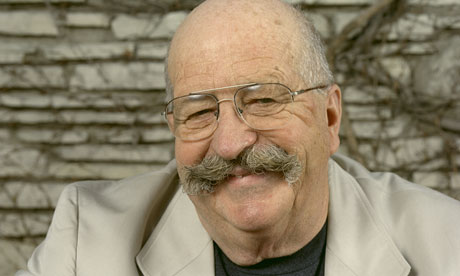
This week I have to return its first two volumes to the library, so I figured I’d write about Gene Wolfe’s Book of the New Sun. It’s a fantasy series and (now that I’ve read them twice, I can probably fess) one of my favorite sets of books. Set on a dying future Urth, under a dimmed sun “with a worm in its heart,” New Sun is the story of an exile from the guild of torturers, Severian, and his journey to becoming the Autarch, the master of Urth’s biggest kingdom.

There are countries and literary climates where genre literature is just literature. America now isn’t, quite, despite the spate of “post-genre” writing from MFA programs and from writers like Kazuo Ishiguro, China Mieville, Jonathan Lethem, and Margaret Atwood. Anyway, Wolfe seems too happy in wide-angle high-genre writing (and probably too big a G.K. Chesterton fan) to ever be read as a forerunner to the hip style now called “New Wave Fabulism.” His subtle, somewhat Modernist, allusive and fantastically inventive fiction—like that of Joanna Russ, maybe, or Cordwainer Smith—exists in a funny in-between environment, the space reserved for “writers’ writers.”

(This isn’t to say Wolfe is an academic. Wolfe—admirer of Proust and Borges, Korean War veteran, and one-time Buckley conservative—couldn’t quit his day job as a plant engineer (he spec’d out the machine that made possible the Pringles potato chip!) until the success of this series.)

By repeated exposure, readers like me have gotten used to stories that are long and fantastical also being epic—stories whose hearts are in heroism and world-shaping deeds. New Sun has both, but it’s fundamentally a weirder narrative than that, bigger and smaller than the epic. It’s a story about stories. Severian is a chilly, emotionally guarded and occasionally unreliable narrator—a Nabokovizing of, say, Aragorn or Conan—and readers will miss major shares of the story if they don’t attempt to see past his misdirections and oversights. His backwards-to-the-throne journey depends on coincidence, intervention, and divine do-overs: it’s more “Garden of Forking Paths” than The Golden Compass. A dozen chapters of New Sun are given over to folktales, legends, plays, and symbolic dreams.

New Sun’s shape is also not that of the epic: Severian’s journey differs from that of the usual chain-breaking liberator. At the book’s conclusion, we’re left with a world whose stagnation may simply have to continue. Fully self-creating spirits, in Wolfe’s cosmogony, are dangerous; they’ve harmed us humans in the past and would again. It’s the fate of most humans to labor for forces whose heart and motives are not intelligible.

If this theological bent is starting to sound familiar: Wolfe has identified himself in the past as a Thomist Catholic, a philosophically rigorous branch of the church that concerns itself with the essential mystery and oneness of God, and with the possibility of salvation through knowledge. Yet, whatever our learning, we humans express a will that we can’t understand. “He is thy being,” wrote one Thomist mystic, “but thou are not His being.” The concluding revelations of the series’s final volume, The Citadel of the Autarch, are more exegetical than fantastical. Behind Wolfe’s torrent of new-old coinages, the terms for the divine entity—“the Increate,” “the Pancreator,” “the Panjudicator”—would be recognizable to most Christians.
Wolfe’s prose is often beautiful, and his sense of invention felt as magnificent on re-reading (I’m saying it!) as do my childhood memories of Tolkien’s or Lewis’s. There’s a magic sword, godawful-looking creatures from another world called cacogens, a big reveal of a secret mad scientist (not who you’ll expect), cruel kings from Urth’s forgotten past, and a creature called the alzabo that eats memories along with bodies.

The cultures of Urth are also refreshingly complex. Rather than the usual endless-Europe-plus-dragons, Wolfe’s world is in parts Byzantine, Orwellian, and Tang Chinese, ways of life that feel lived in from inside. In his world, it’s a historical curiosity that humans used to be divided by skin color. Several characters are descended from Korean spacefarers; Severian, tall, dark-haired and with light brown skin, doesn’t seem to be a typical white sword-swinger. Nonetheless, was it necessary that the natives (sorry, “autochthons”) of his continent—probably South America, by narrative clues—be “squat, dark,” and savage? Or that female character after female character (of fantasy-standard flowing hair and heaving breast) swoon ripely for Severian?

Genre writing would seem, by its nature, to expose to high contrast the knobs and pitfalls in an author’s imagination. We notice, say, a sexist trope more quickly in a world that’s largely invented. Likewise, the more detailed Wolfe’s theologoumenon (see the quote introducing this site), the more a disaffected atheist reader finds to irritate her. But New Sun’s inventions aren’t all high-drama, clash-of-kingdoms stuff. The books are full of casual, eerie details. Iron is a precious metal in this dug-out planet, the Moon is green with cultivation, rats and wolves can read and write, and the mountains are all carved with faces of forgotten rulers. And did you know, mentions one character, that the sun used to bright enough that the stars weren’t visible during the day?

The book bears—demands, maybe—re-reading. (Some questions that hung from one reading and got clearer, maybe, in the next: Who is Severian’s mother? What’s going on between Hethor and Jonas? Who was Apu-Punchau? What is the Autarch’s name? Why introduce a little boy also named Severian? What is being guarded in the mine at Saltus?) I can think of only a few novels—At Play in the Fields of the Lord, maybe, or The Sheltering Sky—that gave me so much more on a second time through.

Any fans or skeptics out there have a thought?
2 Comments

Filed under poetry, spirit

Jupiter up, higher and more southerly the last few weeks, and Rigel and Betelgeuse, the winter stars you forget, through the thinnest of clouds. Cait’s very pregnant now, her belly button half-out and belly taut; I help her out of chairs. I haven’t been publishing here in part because my energy is other places: activist work has me thinking about how I can teach through service instead of opinions. Striving to be alert, show up, be humble, sit with my feet closer together, modulate. When I feel the most hopeless—the week of Obama’s shit debt-ceiling deal, the night the cops klieg-lit Westlake Plaza and dragged the Occupiers out of their tents—I think of what my dad told me, “the new society is being born inside the old one.” Activism as creating the beloved community, not in some emerald-lit down-the-line time, but in moments and encounters here and there in this very life we’re living now. And my own child, quiet then busy in Cait’s body, motions only now volitional, able to hear me play Lester Young and Jherek Bischoff records and maybe wake up to my voice, born in a world of Tumblr feeds and topsoil erosion and soldiers fertilizing the desert. Dear commitments. Sara Grant, RCSJ,—I was put on to her by Fanny Howe’s prose book Winter Sun—says Catholics should admit not knowing what God has in store. They must no longer take for granted “as still sufficient for us today the myths and symbols which satisfied older and less scientifically sophisticated generations than our own, who moreover recognized them for what they were—myths and symbols which had to be transcended.” Theology which isn’t “reborn in every age and culture in terms of contemporary human experience” isn’t theology; it’s necrophilia and Odin-talk. “Eye has not seen, nor ear heard.” Salvation through knowledge: my baby doing somersaults, a flooded field, my hairline receding and this rind of moon catching light. In “Of Soul and White Folks,” Mabs Segrest calls whiteness an anesthetic—a chosen inability to feel and connect that numbs even our connections with other whites—and racism a form of paranoia, an externalizing of an internal unease and terror. We live this way and are unable even to mourn. To share in the world’s self-knowledge will bliss and break us, says the vinegar-smell of my block’s rotting apples. The last lines I loved, Whitman: “If you would understand me go to the heights or water-shore, / The nearest gnat is an explanation and a drop or the motion of water a key, / The maul the car and the handsaw second my words.” I’m waiting for a poet who won’t simply repeat the horror and disorientation of the world to me, but will take them as the givens to underline a poetics of joy. Or a poetry of the encounter with Mystery that invites us to join the encounter rather than to worship it. Jupiter like a friend you run into at the grocery story, a book by firelight: Sara Grant says what “rivets” modern readers of the Upanishads is their sense of “me now,” with all history scraped out. Who wouldn’t see their own son in their arms when they read a sentence like “the knower of Brahman enjoys all delectable things simultaneously, as amassed together through a single moment through a single perception which is eternal, like the light of the sun,” blind cavefish and aggregates of stellar dust?

1 Comment

Filed under poetry, spirit

Her Dark Materials

Dull days of spring rain here. In college, one of C’s professors required his class to observe an animal for a half hour and take notes; C chose a capuchin monkey at the zoo. The monkey did, she said, nothing—it sat on its mock-branch fringed with leaves, groomed itself, and looked around cautiously.

The immediate lesson we can draw from this is that animals are boring. Or, beyond that, that nature is unnarrated. Watching Life on Earth (or, lord deliver you, African Cats) on mute, you see how silly any story is that you attach to the life of an animal, how arbitrary the edits look. The music as a cheetah hunts can make your heart race, but then it’s tomorrow, the mother nuzzling her cubs in the dust, paws still bloody. Or could it have been any day later, the cubs grown?

The larger lesson seems to be that there’s no place to see nature from, no place it can be seen in reference to. A monkey seen from outside its cage, a cheetah or jellyfish on DVD, only seem understandable to us because of our vantage. But what legitimacy or completeness does a sight like that have? I stand in the woods and hear leaves give the breeze a form and I feel the suggestion of a bright universality of purpose in nature, feel what I think is peace that passeth understanding, but even that peace means nothing, nothing but my day’s particular story.

And over and above the stories? I suppose nothing we can describe except the enormous ongoing is-ness of nature around us, unimaginable and more than complete, aware of all the suffering and drama of flagellum, cactus flower and flesh wound inside it, and moving.

For those of you who made it this far, remember Nature smiles as unreadably on Randall as she/it does on David Attenborough:

1 Comment

Filed under spirit

Theologies, Habits

I was carrying an armload of groceries under the shrub arch up the street from my house– early daphnes and rose hips– and this one green gritty bitter fragrance hit me and I thought, how do you make a theology? By talking about it all day, measuring its dimensions and sizing up its rivals? How, exactly, did Sara Grant and R.H. Blyth fill their time and minds?

What’s the name, too, of what I have and try to practice, the unassured anti-authority redemption-narrative Zen I don’t want to force on anybody? Are you the things you do? If the most moral people to have ever lived are forgotten (by time “scattering her poppy”), is that my justification for having a day job and mostly just listening and agreeing with life, rather than trying to work as a teacher of values?

I finished Thomas Browne’s Urn Burial this week, where he writes: “There is nothing strictly immortall, but immortality; whatever hath no beginning may be confident of no end. All others have a dependent being, and within the reach of destruction, which is the peculiar of that necessary essence that cannot destroy it self; And the highest strain of omnipotency to be so powerfully constituted, as not to suffer even from the power of it self.”

If it all depends, is a daydreamer as loved by God (say) as a theologian? Saw my own windhover this morning, as I jogged my compost to our alley bin straight at a gliding pigeon, who carried in her beak an oak leaf up to her nest behind tin utility shingles; she seemed to float precisely stationary as all around her the various gravelly bricked-in universe approached with my striding.

1 Comment

Filed under spirit

Consolations

I’ve been reading R.H. Blyth, Gertrude Stein’s lectures, and essays on Continental Feminism. I started these books I thought I was tired of poetry, but I realize now it’s philosophy I’m tired of, and I feel my way forward in the prose looking for the poetry in it: the feats of metaphor, the simplicity, the dance among its elements. Its consolations.

The fedupness could be just seasonal, feeling tired of my own habit of looking ahead toward some greater intelligence or instruction on how to live. I’m tired of being told; I feel dumb, impatient, windburned, and a little too vital to pay prolonged attention to the depth of oneness in Zen, the poetry in repetition, or the role of performance in gender.

Has anyone else felt tired of living by? What comes next? Sitting on the bus and discreetly eating a turkey sandwich, I suddenly felt I didn’t know if I was a convert, a completed being, someone with a satisfied mind. If I was, could I even tell? A paper takeout box of satisfactions, a goldfish bowl of doubts…

Something on primary language next week! Kisses—

Comments Off on Consolations

Filed under spirit

Sunday’s on the Phone to Monday

Here’s something I’ve learned about spacetime and want to share.

We can thank Einstein’s theory of Special Relativity for the knowledge that time, velocity, and perspective are all observer-dependent; that the only thing constant wherever you are and however you move is the speed of light, c. We can also thank him for one creepy question: whether the future is already written.

A consequence of Special Relativity is that something in one observer’s future can already be in another observer’s past. Since there’s no simple limitation on how far this extends, an observer must therefore exist that has seen, as past or as “having become,” everything that’s going to happen to me, or to you, or to any perspective-point. (Roger Penrose has elaborated an example of this based on the moment of an Andromedan invasion of Earth.) Simultaneity is relative. So the question is, Do we live in a fatalistic universe?

No, says physicist Howard Stein. Here goes my interpretation— my attempt to rephrase what I’ve hearned— of his explanation why.

Stein starts by defining a relation Rxy such that y has already become, or is already definite, with respect to x. (I notice at x that the toaster has already spit out the toast at y. The toast has become toasted to me: for this relation, Rxy can be said to hold.) x and y, if I’m interpreting the Stanford Encyclopedia’s interpretation of Stein correctly, are four-dimensional variables: three dimensions of space, one of time.

So. If R can be said to define “having-become-ness,” two other things have to be true. First, R must be transitive. (Remember this term from algebra?) That is, if z has already become with respect to y and y has already become with respect to x, then z has already become with respect to x. If the parakeet has already chirped when the toast pops up, and I notice that the toast has already popped up, then, to me, the parakeet has already chirped. If Rzy and Rxz, then Rxy for all x, y, or z.

The second necessary relationship is that R is reflexive: that any perspective x has already become with respect to itself: Rxx, for all x. From my perspective at an instant, my perspective at that instant has come into being. (Got that?)

With transitivity and reflexivity in place, Stein argues that R defines “having become.” His last point is important in his argument against fatalism: he says that R does not hold between every two points in spacetime. That is, for any x, there’s at least one y that hasn’t become yet.

In fact, says Stein, there are a lot of such points: every point y in or on the “past light cone” of x.

Wait, what? Hold on, here’s my best attempt to explain: A past light cone is the range of points that could possibly be causally connected to x—that is, if they traveled within light speed, they could influence x. At one second in my past, it’s things 300,000 km away or less; at two seconds, it’s things 600,000 km away or less; etc. Something that happened 50 km away from me one second ago, could, in theory, reach me or influence me by this present moment: it’s inside my past light cone. Something that happened on Mars one second ago won’t reach me or influence me until after this present moment: it’s outside of my past light cone.

This structure of causality (that is, of the range of potential influence) is cone-shaped, more or less. If I see a star that’s ten light years away suddenly explode, it seems to happen right now. Really, it happened ten years ago. But, since it’s right on the edge of my past light cone (the light from the explosion racing toward me at light speed), the explosion seems to be an event in my present, rather than in the ten-years-ago past. Further, since the speed of light is a hard limit, there’s no way I could have known before this instant (or been influenced by the fact) that the star was going to explode, even though it happened—was over and done—ten years ago.

Here’s my best understanding of why Stein’s R represents a formal refutation of your-future-is-my-past fatalism: if Stein’s R does represent becoming, then my future from x could never be perceived as anyone’s past from, say, q, and then be returned to me in time for this knowledge-from-the-future to affect me. (That is, q could never warn me ahead of time that my toaster was going to catch fire at z, even if she saw it in her past.) I could never share, in a given moment, a causal relationship with someone who had seen my future past that moment.

Still with me? Here’s another weird consequence of Stein’s theory: Stein also demonstrated that an event’s present “is constituted by itself alone.” Each event is alone in its present. Including any other event in that event’s present—that is, saying that for each x a perspective y exists such that Rxy and Ryx both hold—requires the universal relation (meaning the relation of x = everything ever to y = everything ever), and no other.

So. The light cones and their ranges of influence topple backwards in time. From my perspective right now, I just noticed the toast pop up; from the perspective of the toaster as it pops, I haven’t yet noticed it. The toaster and I can’t share simultaneity.

This consequence is a major sticking point for philosophers of time, who seem nonetheless to be stuck between two firm conclusions. If you disagree with Stein and say that an event’s present can contain another event, then you live in a universe where the two events could influence each other and where, therefore, the future is definite—where fatalism holds. But if you reject fatalism, you live in a universe where every instant in every perspective is alone in its becoming.

(If you don’t mind a little more technical talk, please read SEP’s excellent article, by Dr. Steven Savitt, for a more extensive explanation.)

So (and this is my breath of breeze for poetry readers who’ve made it this far) this question gives me a new way to think of about the segmentation of experience. You know how, in poetic thinking or in a thickened apparent instant, thing A starts to B while thing B starts to A:

Flowers by the Sea
William Carlos Williams

When over the flowery, sharp pasture’s
edge, unseen, the salt ocean

lifts its form—chicory and daisies
tied, released, seem hardly flowers alone

but color and the movement—or the shape
perhaps—of restlessness, whereas

the sea is circled and sways
peacefully upon its plantlike stem

4 Comments

Filed under poetry, science, spirit

Praxis and the Feeling Heart

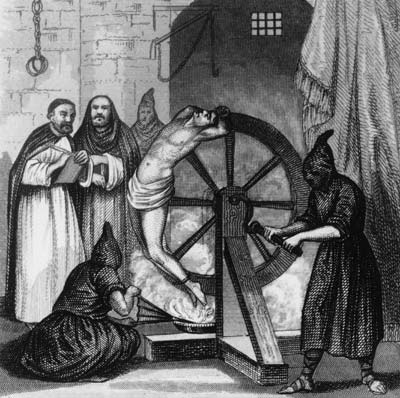
When Jesus comes back to Seville, performing miracles for the people, he’s manacled by the Inquisition and sentenced to be burned at the stake.

This, at least, is how it happens in Ivan’s story, the heart of the first half of The Brothers Karamazov. The night before he’s to die, Jesus is visited by the stern, bloodless Grand Inquisitor, who tells him (monologues, rather—Dostoevsky’s Jesus never replies) that he’s dangerous: that he asks too much of humanity. Refusing to prove his divinity; refusing to feed the hungry before asking them to be virtuous; and most of all, granting humans the freedom to choose: this, the Inquisitor says, is demanding too much.

If Jesus wants to save humanity, the Inquisitor says, he should overwhelm temporal power, turn stones to bread, and command obedience. Hearing a simple moral appeal, the commandment to love a neighbor and honor God, the hungry will rise against their leaders, the doubtful will scoff, and those with choice will choose to damn themselves. Mankind wants a strong leader.

This fable has a surprise ending, and echoes on its town throughout the novel, but in retelling it to my dad this fall, he told me it reminded him of Jean-Jacques Rousseau. Rousseau, the French liberal philosopher of the social contract, makes a different claim about human nature: that we can’t know a thing about our innate qualities unless we look at the life of humans before society. Natural man is uncorrupted, self-sufficient, and (Wikipedia quote) “disinclined to witness suffering.” If some modern humans (the rabble and the bourgeoisie) are lost causes, Rousseau suggested, it’s because of the artificial nature of society, which has taught us greed, idleness, ego, and immoral desire.

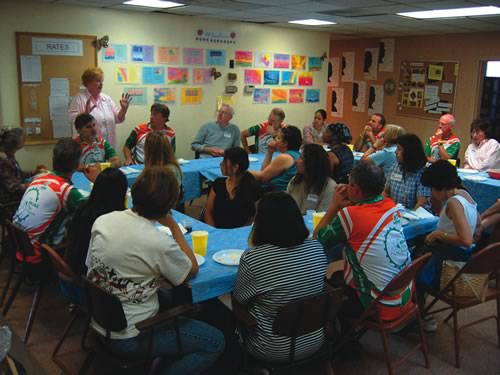
Where does this leave a teacher? I’ve spent the last year working through the thought and pedagogy of Paulo Freire, the late Brazilian teacher, philosopher, and political exile (that’s him up top, second from left). Freire, schooled in Marxism and liberation theology and writing in a time shaped by the revolutions in Cuba and China, saw human nature differently. The oppressed, as a class, were created by violence, but they aren’t lost for good. Humans may not see the machinery that shapes their daily lives, but they’re rich in empirical knowledge, the day-to-day sense of relationships and power by which they survive. Freire, more optimistic than Dostoevsky or Rousseau, believed that, by asking the right questions, you can awaken the desire for freedom—for “humanization,” for subjecthood in life—in anyone. Even Rousseau’s man warped by civilization, even the Inquisitor’s rabble ruined on Christ.

The gift is the kind of critical reflection you need to turn your empirical knowledge into a knowledge of systems: systems of oppression, but also of history, self, and community.

And Freire, unlike Dostoevsky or Rousseau, had tried it—had worked and taught and seen it was possible to teach critical faculties, a sense of self-determination, authentic love. It was his work with peasant literacy and critical pedagogy programs that got him “invited” to leave Brazil by the dictatorship in the 1960s.

So. You can believe we’re lost souls if you like, but don’t tell me that radicalism is cynical. Kisses kisses—

Comments Off on Praxis and the Feeling Heart

Filed under politics, spirit