Category Archives: politics

Canons as Such

As a big reader and a complete fanatic about music, I’ve wondered why I don’t really like Top Ten lists, or statements of “essential works.” Canons aren’t something I’ve given up: I spent college telling people how I’d read Ulysses (not a lie); at the end of every year, I work my way through year’s-best lists of indie rock, African pop reissues, and basement noise squalls; I read or at least tried every book on my professor Mary Jo Bang’s recommended-in-2009 poetry and avant-garde theatre list. But I don’t enjoy consuming canons, I don’t like the trying-to-get-it feeling I get in the presence of art I’m told is great or important, and I don’t like trading my appetites for tastes.

So—what does a canon suppose? What’s the difference between, say, a mixtape and Harold Bloom’s Western Canon?

Canons are a stance, an intellectual flex and assertion in a world just as status-conscious as, say, the halls of Congress or a boy’s locker room. A cultural institution names what’s important to make itself important; it creates a synthesis to imply extremes (“we consider art from here to here”) then establish itself as a mediating center. The larger part of canonizing consists of nods toward tokens or toward those-too-important-to-ignore; the rest consists of conveying impressiveness, seriousness, breadth.

It seems lists are more trustworthy when they’re for and from someone. If my student asks me what to read next, I tell her eight things and encourage her to eat them, spit them out, demand answers of them, and marry them. Instead of placing you at a center, a good list (anything—a mixtape, the top-rated things on your Goodreads, a photocopied course packet) can show how lost and enamored you feel. It also exposes your limits, putting less vertical distance between yourself and the folks you’re sharing with.

The thing is, even simple eclecticism (like: today at my desk I’ve played Mbilia Bel, Thank You, and Nicki Minaj, but I’m not telling anybody about it, except you!) isn’t a virtue on its own. Part of a “comprehensive” canon is to demonstrate the cultural capital you’ve accrued: look how cosmopolitan I am. It also fosters the polite liberal-politics notion that the “answer’s in the middle,” between two strong positions. If a later Bloom includes both Billy and Girl and Washington Square in his temple of texts, he’s charting your middle path, teaching moderation-by-example. Too, in local culture, list-making is political, a curated set of mutually beneficial relationships: I gain status by calling attention to you, you gain influence by my calling-attention. (And I’ll maybe curate a festival for you, and my forty other best friends, making you famous or dead-to-the-world in the guise of reviewing you.)

The question is, how can an outlet for opinion make itself part of a community rather than a gatekeeper for one?

…And, well, shit, at the end of all this high-toned talk of mine, I still do like a few lists. The website Tiny Mixtapes is musically narrow and can be prickly in their approach to more “pop”-leaning art, but they feel like lovers, gourmands at the table instead of gourmets. You can see the thread—emotion, sprawl, extremity—connecting their love of the Dardenne Brothers, Big Boi, Zs. (They’re on the edge of being crate-diggers, offerers rather than critics.)

Annnnnd Robert Christgau, the rock critic, is cheerful, prejudiced, and unserene (compare the difference in tone between his Consumer Guide reviews of Randy Newman and of, say, XTC). And eclectic: His favorite album of 2009 was Brad Paisley’s, of 2008 was Franco’s, his favorite album of the decade was M.I.A.’s, his favorite single of the decade was James McMurtry’s. “I’ve been resisting the hipper-than-thou for four decades. But still it beckons.”

How about for you? How do you share something like taste?

1 Comment

Filed under music, politics

Lately They’ve Told Me

From Finite and Infinite Games by James P. Carse:

The exercise of power always presupposes resistance… Power is never one’s own, and in that respect it shows the contradiction inherent in all finite play. I can be powerful only by not playing, by showing that the game is over. I can therefore have only what powers others give me.


Michel Foucault, from The Foucault-Chomsky Debate on Human Nature:

…Those who resist or rebel against a form of power cannot merely be content to denounce violence or criticize an institution. Nor is it enough to cast the blame on reason in general. What has to be questioned is the form of rationality at stake. The criticism of power wielded over the mentally sick or mad cannot be restricted to psychiatric institutions; nor can those questioning the power to punish be content with denouncing prisons as total institutions. The question is: How are such relations of power rationalized? Asking it is the only way to avoid other institutions with the same objectives and the same effects, from taking their stead.


George Oppen, from “Of Being Numerous”:

…consciousness

Which has nothing to gain, which awaits nothing,
Which loves itself


My bike last night, locked out in snow:

Comments Off on Lately They’ve Told Me

Filed under hometowns, poetry, politics

Praxis and the Feeling Heart

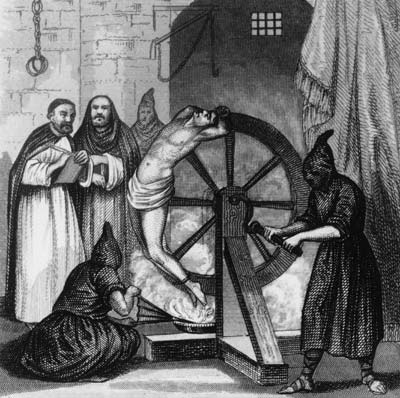
When Jesus comes back to Seville, performing miracles for the people, he’s manacled by the Inquisition and sentenced to be burned at the stake.

This, at least, is how it happens in Ivan’s story, the heart of the first half of The Brothers Karamazov. The night before he’s to die, Jesus is visited by the stern, bloodless Grand Inquisitor, who tells him (monologues, rather—Dostoevsky’s Jesus never replies) that he’s dangerous: that he asks too much of humanity. Refusing to prove his divinity; refusing to feed the hungry before asking them to be virtuous; and most of all, granting humans the freedom to choose: this, the Inquisitor says, is demanding too much.

If Jesus wants to save humanity, the Inquisitor says, he should overwhelm temporal power, turn stones to bread, and command obedience. Hearing a simple moral appeal, the commandment to love a neighbor and honor God, the hungry will rise against their leaders, the doubtful will scoff, and those with choice will choose to damn themselves. Mankind wants a strong leader.

This fable has a surprise ending, and echoes on its town throughout the novel, but in retelling it to my dad this fall, he told me it reminded him of Jean-Jacques Rousseau. Rousseau, the French liberal philosopher of the social contract, makes a different claim about human nature: that we can’t know a thing about our innate qualities unless we look at the life of humans before society. Natural man is uncorrupted, self-sufficient, and (Wikipedia quote) “disinclined to witness suffering.” If some modern humans (the rabble and the bourgeoisie) are lost causes, Rousseau suggested, it’s because of the artificial nature of society, which has taught us greed, idleness, ego, and immoral desire.

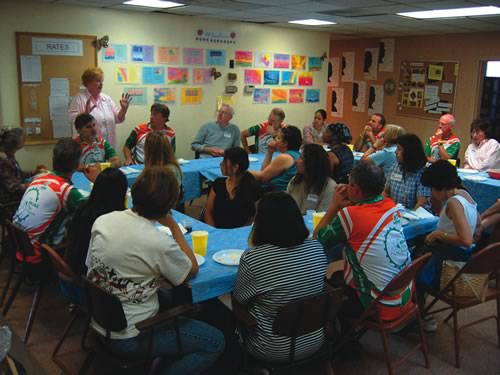
Where does this leave a teacher? I’ve spent the last year working through the thought and pedagogy of Paulo Freire, the late Brazilian teacher, philosopher, and political exile (that’s him up top, second from left). Freire, schooled in Marxism and liberation theology and writing in a time shaped by the revolutions in Cuba and China, saw human nature differently. The oppressed, as a class, were created by violence, but they aren’t lost for good. Humans may not see the machinery that shapes their daily lives, but they’re rich in empirical knowledge, the day-to-day sense of relationships and power by which they survive. Freire, more optimistic than Dostoevsky or Rousseau, believed that, by asking the right questions, you can awaken the desire for freedom—for “humanization,” for subjecthood in life—in anyone. Even Rousseau’s man warped by civilization, even the Inquisitor’s rabble ruined on Christ.

The gift is the kind of critical reflection you need to turn your empirical knowledge into a knowledge of systems: systems of oppression, but also of history, self, and community.

And Freire, unlike Dostoevsky or Rousseau, had tried it—had worked and taught and seen it was possible to teach critical faculties, a sense of self-determination, authentic love. It was his work with peasant literacy and critical pedagogy programs that got him “invited” to leave Brazil by the dictatorship in the 1960s.

So. You can believe we’re lost souls if you like, but don’t tell me that radicalism is cynical. Kisses kisses—

Comments Off on Praxis and the Feeling Heart

Filed under politics, spirit