
Hey friends and readers, thought I’d share this wonderful post from our friends and partners at BAYAN-NW, the group I work most closely with as a member of the Coalition of Anti-Racist Whites. (BAYAN-NW, the Seattle chapter of an international organization working for National Democracy in the Philippines and against imperialism abroad, has been CARW’s partner organization for a few years. We support them through fundraising, childcare, event logistics, and community turnout.) Their 13 Moments from 2013 are inspiring and serious, a big story of a cross-issue movement for social change. Think of this a shot in the arm against despair, cynicism, or the feeling that everything’s going to shit: the smartest and most committed folks are working hard for a better world! Dig it.
Category Archives: politics
Anti-racist work: what one of our partner organizations has been up to!
Comments Off on Anti-racist work: what one of our partner organizations has been up to!
Filed under politics
Who Get to Be the Heroes of Indie Rock?
Last month I finished my third-ish read in twelve years of Michael Azerrad’s 2001 history, Our Band Could Be Your Life: Scenes from the American Indie Underground 1981-1991 and found more to challenge in it than I expected.
This is a book I love for its nerdy minutiae and its big historical sweep. For its glory-days stories, too: 18-year-old me was over the moon to hear how Husker Du recorded “Reoccurring Dreams” on acid in a desanctified church, how Ian MacKaye ran Dischord Records out of his mom’s house, how Black Flag was so broke early on they ate dog food rolled up in white bread.
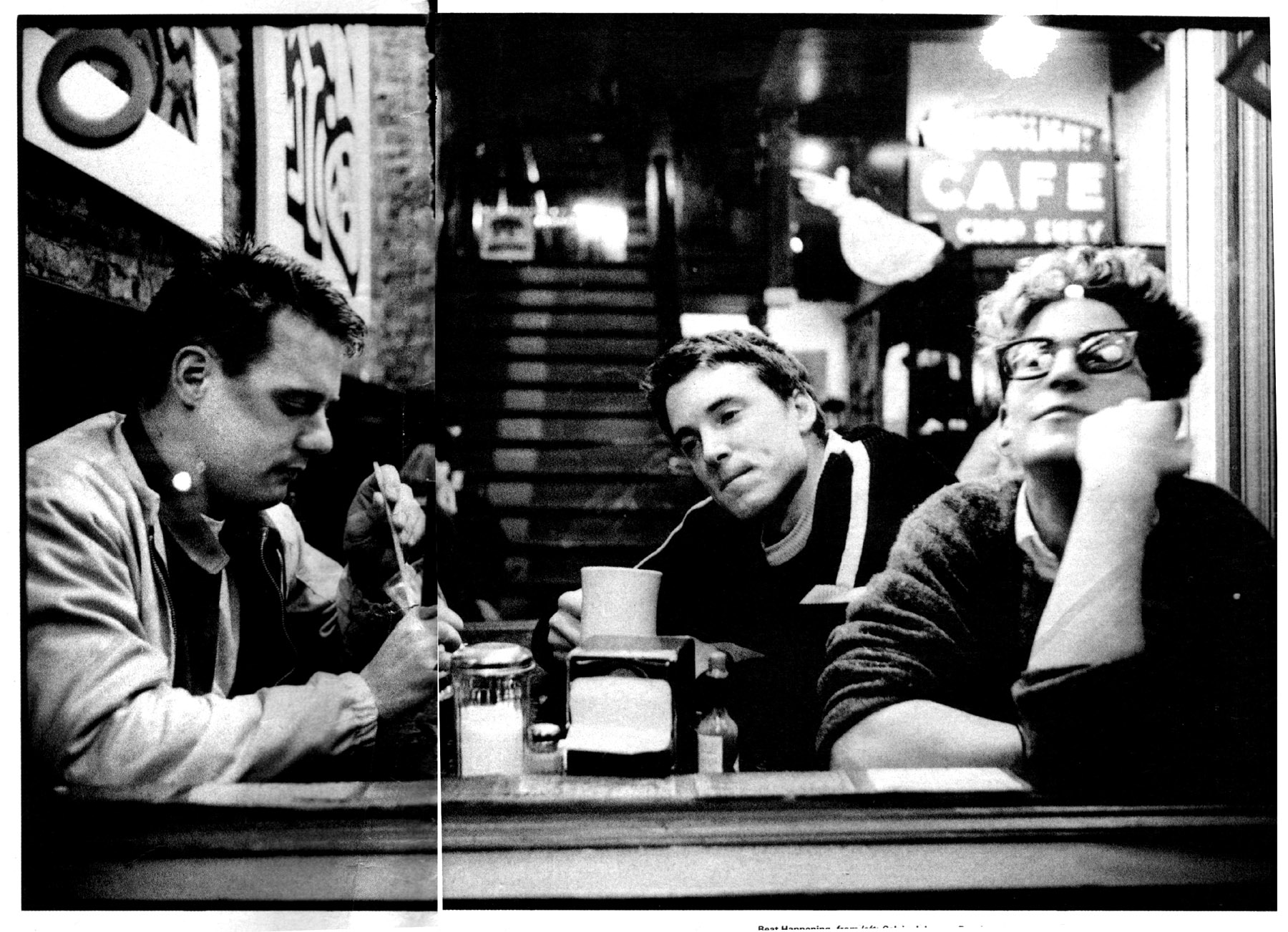 Stories of firsts are also always a thrill, even if they were miserable for the subjects: Mission of Burma playing empty bar after empty bar without a radio station in the country that could even make sense of their music, without a community, without anything like a “scene” beyond Boston. I appreciate, too, in a culture as anti-hierarchical as indie, the chance to acknowledge forerunners, the folks whose sweat sprouted into crash pads, friendly basements, left of the dial stations, and make-it-work clubs even if their bands didn’t live to see it.
The book’s decade-long arc is a story of groundbreaking and, simultaneously, cooptation. Bands (especially those like Dinosaur Jr and the Replacements, who liked classic rock just fine) jumped ship to major labels and crumbled. The scenes grew up and split on drugs and rhetoric. Sub Pop was too smart for its own good, creating a scene to sell records that resulted in a nationwide crop of horrible knockoff bands.
 Azerrad examines these paradoxes but he leaves others unexamined. I would love to read a history in full of indie rock’s change from being “new redneck” (in, I think, Joe Carducci‘s phrase) music, created by working-class suburban kids in Minneapolis, D.C., L.A., etc., into being the turf of urban, arty, cool-conscious, middle-class kids (like, sort of, me). In passing, Azerrad gives Sonic Youth much credit/blame for the shift. But I want to hear a historian’s perspective on the consequences: the leveling-down of regional scenes, the increasingly collegiate and referential tone of 90s-00s indie (to be fair, this has gone much farther since the book’s publication), and the continued devaluing of the role of working-class and small-town folks in creating culture in general. (The prestige of online need-to-know cultural meatgrinders like Pitchfork, again post-publication, have far exacerbated this as well.)
Though indie rejected rock-god-hood and emphasized a horizontal, collaborative, community-building approach to art, the format of Azerrad’s book (lengthy profiles of thirteen of the biggest, best-known American indie bands of the 80s) goes along way toward building an alternative canon of scene Heroes that, yet again, diminishes certain scenes, groups, and artists, and shortchanges the communities which made these scenes possible. These thirteen groups were overwhelmingly white men; plenty of hardcore punk’s earliest fans were, too. But how would the book have looked different if it had included a chapter on Lydia Lunch, the poet and bandleader, instead of just quoting her concert review of Big Black? Or a chapter on Barbara Manning, the mercurial, outrageously gifted songwriter whose Lately I Keep Scissors has been a touchstone for dozens of later groups? Or, for that matter, Bad Brains? The all-black virtuoso hardcore, thrash, and reggae group from D.C. broadened the musical palette of East Coast punk considerably, smashed the color line around hardcore, and mixed religious and revolutionary exhortations as few other indie groups did.
 There is little about the sexism and occasional sexual violence of the 80s indie scene (though we do hear that part of the draw of the Replacements was that “girls liked them”), and Minor Threat’s ugly reactionary rant “Guilty of Being White” (“I’m sorry / for something that I didn’t do / I hurt somebody / I don’t know who”) is defended by Ian MacKaye as being an “anti-racist” song misinterpreted as racist– this from a group who shared the stage with Bad Brains.
Our Band Could Be Your Life is loaded with inspiring stories and gives storytelling room to artists who lived out their political-aesthetic values and make incredible music. But, on reflection, I also see in the book a missed opportunity to tell the story of indie through the lenses of class, race, gender, and local community. Maybe that book is out there, who knows? (Any recommendations?)
“…the male experience and the male perspective is still seen as more universal, more public, than the female.”
This huge and brain-stimulating list has been making the rounds online and I thought I’d share. Vela magazine compiled a list of non-fiction (short-form essays, travel writing, science writing, memoir, political essay and more) by women, almost all of it available online. The editors write:
We know, sadly, how much easier it is to pack a syllabus or an anthology with male writers, and so this list is meant to serve as a reminder of the abundant, stellar nonfiction by women, and a sort of huh-uh! to excuses about not being able to find enough work by women writers.
Dig it!
What Would a Postmodernist Do?
Political theory before lunch:
I’ve lately been reading two books by non-aligned Marxist intellectual heavyweight Samir Amin— a world traveler of Egyptian and French descent currently involved in the World Social Forum, and involved in the 50s in the Bandung Conference. Both The Liberal Virus and The World We Wish to See are published by the mighty Monthly Review Press, and the former, at least, sets aside space for robust criticism of postmodernism as a political theory.
Amin’s criticism took me by surprise. As an American college-educated lefty who’s sought out a lot of other American college-educated lefties in his short life, I’ve spent a lot of time around a lot of postmodernist political analysis. The basic strain of this analysis is that so-called universal truths aren’t trustworthy because the “universal” is defined by the most powerful actors in society and serves their interests. Postmodernist histories examine the way universal norms of what’s normal or desirable become tools of social control: they are the intellectual justification for punishing or forcibly normalizing whatever is defined as deviance, whether that deviance manifests itself as pathology, criminality, queerness, midwifery, anything.
My sense of postmodernist cultural theory since Baudrillard is that it examines social reproductions: the spectacles of mass media, our own insane drives and unverifiable obsessions, and our freedom to broadcast give away or mash up anything in our newly unfixed culture. It is interested in social reproductions over both the Marxist questions of labor, scarcity, production, and economic power and over the Man’s demands for conformity to universal norms. We can defy the Man’s universalism by creating our own meaning in the mirrors and neon: our world is all surface, but the surface is nothing but a visible core anyway.
This historical analysis and attendant cultural framework (which I’m doing a quick and dirty summary of; would love clarification if I’ve gruesomely misrepresented anyone’s area of expertise out there) has been influential, lately, in Occupy. Occupy needn’t make demands, because the new ways of living the occupations represent are themselves the demand: to ask something of the State or its owners would be to legitimize them.
So. Did this framework weaken Occupy, for instance, as a political force? Yes, it outright killed it, say some. (I’m with this guy that the surveillance state had more to do with it.) No, and policing your fellow Occupiers hurts the whole movement, say others. An anti-statist political thinker like David Graeber (linked to above) is not exactly as TV-eyed as Baudrillard, but in his own work he privileges the carving out of free alternative spaces over open political confrontation, noting that anarchist values will never come to predominate from a state-style revolution.
What does Amin criticize in postmodernism? In it, he sees privilege and accommodationist wimpiness. He points out that the West’s “society of spectacle” and the consumption it requires depends on Third World misery and cheap labor. He believes that a struggle against capitalism will require the work of democratized states, not just autonomous communities. He also notes that being unwilling to unify under a counternarrative to capitalism (a counternarrative with its own primary values and truths) is to be atomized to just another individual– defanged, and, eventually, wiped out. (This critique brought to mind David Graeber’s note on Foucault: the belief that ideas and their attendant free performance are the real source of power in our society is to ignore “the men with sticks to beat you” who underlie the authority of the state and big finance.) Then again, Amin is not particularly interested in First World political theory. He lives and works in Senegal, and spends his time organizing and working alongside the intellectuals of the global periphery, not (say) teaching in an American or French elite university.
Where does that leave me? I see my main political role in an oppressive society as allyship. The historical analysis of my friends in the Coalition of Anti-Racist Whites has helped me to see the real damage done to oppressed folks by middle-class leftists, whether in the self-interested pieties and messed-up power structures of the non-profit world, or in the alienating attempts of white Old and New Left academics to explain that class trumps race, sexuality, immigration status, disability, etc. Among the principles of ally-based activism might be: Listen; leave space for an oppressed community to construct its own meanings and values; then seek an accountable role where you can help them. This idea clearly has some historical relation to postmodernist critiques of universalism, filtered through feminist care ethics and the intersectional work of folks like the Combahee River Collective.
So I wonder where I stand on this issue.
I’m interested in hearing from friends here:
What is a postmodernist praxis? Can the powerless in our society use postmodernist political theory to bend the social balance of power away from the hegemonic atomizing monster of our dominant society?
Filed under politics
On Not Voting for Obama in 2012
Hey friends—
As early as last week, I wasn’t sure I was going to share this essay, but I’ve decided to go for it. It’s a monster piece of writing, close to 6,000 words, so huge that even inserting a cut seems useless, but: I hope you read every word and I hope you like it. Would love your thoughts in any case, here or over email.
On Not Voting for Barack Obama in 2012
by Jay Thompson
Disclaimer
This text is full of interpolated (and erratically-cited) materials from writers whose opinions, historical perspective, and independent research I intensely admire. No original research went into writing this, only reflection and synthesis. Thus, no copyright infringement is intended, but I’d also ask that no portion of this be published on the internet without the below list of cited works and this disclaimer. If you are the author of one of the texts I draw on, thank you for reading; if you’d like your work to be properly cited in a revised version of this essay, say the word and I’ll do so.
CONTENTS
Dedication. Why did I write this, and for whom?
Background: the Democrats. How has legislative social reform looked for the last 100 years? Why are the Democrats incapable of it now?
Obama’s Style. How did the health care bill get passed, and what does that say about current national politics?
Big Money. Why did the stimulus look the way it did? What’s the larger view on how our economy has been changing for the last 40 years?
The Security State. Why is there bipartisan consensus on the post-9/11 security state?
Interlude. OK, but what are the best things Obama’s done since being elected?
Obama and Race. How has racism affected the reformist possibilities of Obama’s presidency?
The Liberal Class. How have mainstream progressives been captured by the Democrats?
The Exchange. What does it mean to choose to vote for Obama?
Wouldn’t Romney Be Worse? Yes. Bearing that in mind, how can one vote strategically?
Where Are We Headed? What future does capital imagine for America?
Alternatives to Voting for Obama. What else is there to be done?
DEDICATION
Dear friends—
This essay is for you, my loved ones of many different persuasions, heartspaces, and life projects. In it, I try to introduce the reasons why I’m planning on voting for Jill Stein, and not Barack Obama, for president this November, and why I would love it if you did the same.
This was a personally difficult essay to write, one that required a lot of reflection, acknowledgment of privilege, and thoughts about the future I hope for. It was written between July 2011, the season of the debt limit deal, and October 2012, when Jill Stein was among those arrested for a non-violent sit-in outside Obama and Romney’s second debate.
My hope is that this essay is persuasive, without seeming hectoring; reflective without seeming over-theoretical; and personal without seeming out of touch. Not everybody reading will agree with my political analysis, but I’d love to talk about this essay with you no matter if you’re piqued, puzzled, pleased, or curious.
My gist is this: Our country has problems—foundational and current—that voting for a Democrat won’t fix. I believe that government can be meaningfully engaged to make change in this country. But I also believe that our political mechanisms are completely captured on a federal level by a dangerous, short-sighted oligarchy. This group has been empowered by Democrats as well as Republicans; it has a very limited investment in keeping this country livable and anything like equitable.
Why has Obama been so disappointing? Many young people who first engaged with national politics around Obama’s 2008 campaign imagined we were electing a movement leader instead of a president. This was never realistic. Obama wound up unaccountable to his key constituencies, in part because the mainstream left was unwilling to hold him accountable to his promises to those constituencies. This meant that the progressive-superhero complex that surrounded Obama on his election (remember his Lincoln portrait mashup?) turned sour very fast. Also, plenty of white leftists imagine that racial animus has had nothing to do the narrowed possibilities of Obama’s presidency. I disagree, and will try to lay out a few reasons for doing so.
That being said, I’ll begin.
BACKGROUND: THE DEMOCRATS
Equality-driven social reform has found its base in different communities at different times in the last hundred-odd years in America. In the 1890s, the farmer-led, cross-racial People’s Party organized lectures across the country to build a grassroots movement for fair crop prices, the secret ballot, and the direct election of senators, and against railroad monopolies and the gold standard. Early in the twentieth century, the Progressive party (and its friends in the G.O.P.) worked to universalize educational opportunity, build a stronger safety net, and grant suffrage to women. Members of America’s more privileged liberal class, along with rural populist folks of all colors, together provided the argumentative force and heart-strength to fight Pinkerton-style abuse of unions, Jim Crow in the South, and the appalling conditions of early-century American slum life. These coalitions were a strong implicit argument against Social Darwinism, whose pseudo-science assured citizens that inequality was a fact of human nature. Cross-class organizing made possible the New Deal, the Great Society, and the “good government” that came out of the work of agitators such as Rachel Carson and Ralph Nader.
It’s important not to believe in any past golden age in American politics. America’s citizens, divided by classism and white supremacy, have never been equal partners in our country’s project. The consensus of the powerful that underlay last century’s reforms was never democratic in the sense of the term used by those who now work for social change. The Progressives of the early century were as concerned with stable market conditions for big business as they were for relief of dire poverty and the end of abusive monopolies. The big-city Democratic machines of the same era provided for the needs of poor voters, but they depended on keeping their voters poor; otherwise, there’d be no need for their services. But, by the late 1960s, the Democrats’ base was largely constituted by students, African-Americans, immigrants, the unionized working class, and politically-engaged women, who had leveraged the party (at the cost of many compromises and betrayals) to create institutional reform toward a more equitable society. I’m only beginning my own education in all this history, but I believe the most relevant historical question is this:
When, exactly, did the Democrats begin disemboweling their own constituencies? And why? That is, when did Democrats become the party of NAFTA, deportations, the drug war, and “the end of welfare as we know it”?
This transition began in the 1970s. First, this was the era in which the Right captured populist rhetoric. This is the rhetoric that still labels constituencies of color, the poor, queers, the disabled, and women as “special interests,” while praising as “authentic” a white working class that’s been thoroughly disempowered by the party they vote for. The striking thing is that the Democrats have never truly resisted this formulation. It’s also striking that poor rural whites will vote for a party that subsidizes toxic agribusiness, sends manufacturing work overseas, and empowers criminal subprime mortgage lenders, but it’s this constituency that has elected every Republican president since Richard Nixon.
Second, the 1970s was the end of the recovery boom—the 25-year flush period of rebuilding the manufacturing, vehicle, steel, and electricity capacity lost in WWII. Capital provides an equitable society for its citizens only when it can afford to. In the early 1970s, declining profits and vanishing investment opportunities coincided with the increasing mobilization of America’s disenfranchised communities. Many of these communities were armed with a critique of capitalism itself. This was a very dangerous situation for the owning class. Their resulting counterattack smashed organized labor, drove up the cost of elections, and cut the social safety net; all these policy changes favored Republican politics. For Democrats to win, they were forced to respond by embracing the same wealthy donors as bankrolled the Republicans. (Bill Clinton—why does anyone revere this guy?—showed this dynamic off by running as “labor’s candidate” and then pushing through NAFTA one year after taking office.)
Further, the financial upheaval of globalization meant that, to quote Kevin Baker, “America’s business leaders no longer had any stake in the success of the national project.” International monopoly and a legal race to the bottom among Third World nations meant that our owning class was protected from the decline of American manufacturing and the misery brought about by rising inequality. The most powerful people in the Democratic Party were, and remain, owning-class-ers with leftist social and cultural values but with almost nothing else to distinguish them from Republican leadership. (I talk more about this in the “Liberal Class” section.)
Obama was elected at a time in history when reformist impulses in the leftist tradition have entirely died in mainstream politics. Though I think Kevin Baker overlooks quite a bit when he writes that “no other president in our history had so thoroughly spurned his political base in so short a time,” I agree that Obama’s legislative achievements were won in a sphere that completely excluded his supporters. I’ll write a little more about these achievements below.
OBAMA’S STYLE
The classes which Barack Obama mobilized to win in 2008 are not his constituency in the basic sense of the word. This constituency is found instead in the folks who finance every election (big banks, real estate, Wall Street, big pharma) and some of the wealthiest of the liberal class (Hollywood, the tech industry). The stimulus bill, Dodd-Frank, and the Affordable Care Act didn’t emerge in a vacuum. These bills reflect Obama’s priorities, but they reflect also Obama’s conservatism of temperament and the grossly distorted shape of our national political life.
Like Clinton before him, Obama excluded from the process those constituencies most in need of the reforms he sought. The clearest example is health care. In 2009, Pharma had made it clear that they’d fight any bill with a public option, drug reimportation, forgiveness of personal medical debt, or direct government price negotation over Medicare. These were the healthcare issues most urgent to Americans, and the most important for meaningfully controlling ballooning healthcare costs.
In response to Pharma’s threat, Obama didn’t give, say, MoveOn the nod to bring a million protestors flying blue flags to the Capitol Lawn to demand these provisions. He didn’t invite Physicians for a National Health Plan for a policy advisory meeting.
Rather, Obama, in secret, took these off the table. In exchange, he asked Pharma for the following: a guarantee that they’d realign toward funding Democrats in 2010 and ’12, keep anti-ACA lobbying to a minimum, and accept the bill as a chance to get 30 million new customers for their product. (In fact—do you remember this?—Obama’s then-Chief of Staff, Rahm Emanuel, told a MoveOn rep that MoveOn’s spending any ad dollars attacking Democrats who opposed these provisions would be “fucking retarded.” Now he’s mayor of Chicago.) The many things of value in the final ACA were seemingly allowed through in exchange for the insurance mandate—a massive subsidy to an industry that shouldn’t even exist.
This pattern repeated itself in the stimulus, with billions wasted on tax breaks for top earners and no direct government employment of the jobless, and in Dodd-Frank, from which principal “cramdowns” for underwater mortgage holders and a robust consumer protection body were both excluded.
I’ve heard plenty of places in the last four years that this is just how Washington works. My feeling is different. In the essentially Darwinian world of national politics, it makes sense for Democrats to treat its liberal constituency—poor folks, immigrants, students, queers, politically-mobilized communities of color, environmentalists, organized labor, educators—with contempt. After all, we are a captured demographic. The power brokers of this constituency (MoveOn, Utne Reader, the faculty of the big universities, Hollywood, the leadership of AFL-CIO) organize us to come out strongly in support of whatever candidate the Democrats present us, no matter how great the abuse of the last Democrats.
To calm anxious progressives, mainstream-left commentators give us different simultaneous messages. These can be summarized as “the President’s playing five-dimensional chess on this issue—it may look like he’s selling us short, but his tactical ingenuity will ensure progressive victory in the end” and “the President’s hands are tied, so he has no choice but compromise with the enemy, but he’s big-hearted and post-partisan enough that he’ll ultimately change the tone.” These messages are so often repeated back to back—by hagiographers like Hendrik Hertzberg and Jonathan Chait—that their ludicrous, contradictory quality is easy to miss.
And these messages, truthfully, have zero explanatory power. There’s nothing here that explains why Obama’s worked to support Democrats (such as Blanche Lincoln of Arkansas) who’ve undermined his supposed priorities, while abandoning those (such as Dennis Kucinich of Ohio and Russ Feingold of Wisconsin) on the left, his supposed based. This is one of the reasons I don’t believe it’s worth it to vote for Obama again.
BIG MONEY
Obama inherited an economy on the brink of complete collapse in 2008. Obama’s tangled-up, disappointing, billionaire-feeder of a stimulus nonetheless kept credit markets liquid and kept the giant combined commercial-investment banks from immolating themselves and our economy along with them.
But the stimulus should have been much more. It could have followed Sweden’s early-’90s example, nationalizing the worst banks and deservedly wiping out their shareholders. It could have followed America’s own mid-’30s example, employing laborers directly on urgent infrastructure projects.
Why didn’t this happen? There are a whole stack of books I’m meaning to read that I hope will tell me why in more detail. (Bailout, Griftopia, and The Great American Stick-Up are the ones I list in back: I’m fudge-recommending them, as I’ve read other work by the authors but not these titles.) But the short reason seems to me to be the close links between Obama’s economic team and the Clinton economic team that in the ’90s engineered the deregulation that led to this very catastrophe. Lawrence Summers, director Obama’s National Economic Council, lobbied as Clinton’s Treasury secretary for both the deregulation of derivatives (remember those?) and the abandonment of Glass-Steagall, the post-Depression bill separating commercial from investment banking. That’s right: the man most instrumental in addressing the 2007-8 meltdown was literally the author of “too big to fail.” But, despite such obvious links, the Obama administration’s secret bank bailouts and ineffective tax cuts will be remembered kindly as mere timid decision-making, rather than part of an ongoing 1%-friendly policy history.
At this distance, it’s easy to forget, too, Obama’s faraway campaign promises to renegotiate NAFTA to return manufacturing to the US (he didn’t; it was never brought up) and to fight for the Employee Free Choice Act, which would have allowed workplaces to unionize with an open-tally secret-vote simple majority (he didn’t; it died).
This year’s American Jobs Act, which Obama had no chance of passing because of paralyzing GOP obstructionism, would have done a lot of good for unemployment, but would not have touched some of the worst abuses of the poor, now normalized by the passage of time. You know what I mean: our “new normal.” Homeowners drowning in debt, austerity governance slashing social services, and millions of people being consigned to permanent unemployment.
Nor would the Job Act have done anything to stop our economy’s movement toward neo-feudalism. This is the feudalism not of land, but of credit. The same people who bankroll Democrats and Republicans provide us access to credit cards, mortgage and small business loans, medical care, pensions, and Social Security. We pay them in interest, fees, monopoly rents, and a lifetime of debt. For some reason, the mainstream political discourse compares “free market” Republicans (the supporters of Medicare Part D and bottomless oil and gas subsidies?) to “pro-regulation” Democrats (whose regulations come with tax shelters, overseas factories, and insurance mandates?). The reality is that we live in the exact opposite of a free-market era. We live in an era of regulatory capture, where the state apparatus is controlled by, and directly benefits, those it oversees. In many very real ways, our vote doesn’t matter.
THE SECURITY STATE
It’s very difficult to face just how this country has changed since 2,900 Americans were killed on September 11, 2011. What Paul Krugman called the “years of shame” since then have seen a more militarized, authoritarian, secretive, intrusive, violent, and corrupt government. With the election of Obama, the PATRIOT Act-era state Obama has gone from one president’s aberration into a national fact of life.
A huge coagulation of corporate money and a deadly-serious security state have worked together to create this security apparatus. Police powers are federalized, torturers are offered legal amnesty and continue their work in secret overseas prisons (whether run by Special Ops, the CIA, or “unsqueamish” foreign governments), and whistleblowers are prosecuted under the Espionage Act.
How does it change the psyche of our country to know that literally any of us can be indefinitely detained without charge by the US military, for “supporting” or “associating with” any “Terrorist” group under Obama’s AUMF? So far, “support” for which people have been jailed includes translating press releases, writing on Facebook walls, and sharing YouTube videos associated with certain groups.
This apparatus does not care who is President. It follows political winds, but only so far. The FBI disbanded its unit investigating right-wing viligantism and militias after the unit’s preliminary report provoked outrage from Republican senators. But they’ve never let go of harassing, detaining, and charging such troublemakers as Chicano rights groups, people who wear black at protests, the Thomas Merton Center, the supporters of Wikileaks, Democracy Now!’s producers, and pro-Palestine campaigners: the old targets of reactionary intelligence institutions. (Well, Obama did take time to give Dolores Huerta a Medal of Freedom—consciousness takes a generation to catch up, I guess.)
The PATRIOT Act has become the new normal for a generation of voters. It’s currently unimaginable that it will be revoked, even as Obama’s DOJ has been unwilling to even publicly share its interpretation of the federal legal powers the Act codifies. In the meantime, citizens are chilled out of demonstrating, venting online, mobilizing in acts of civil disobedience, or packing scary-looking things in their luggage.
From the Alien and Sedition Acts of 1798 to the imprisonment of critics of US military involvement in WWI, this country has recovered more than once from very, very grave assaults on its legal freedoms. We shouldn’t waste time despairing over the post-PATRIOT-Act state of our civil liberties. We should do something about them, and that doesn’t include voting for the president that made the Act permanent.
INTERLUDE
But hey: let me take a quick break and say that Obama has appointed two good and evidently non-reactionary Supreme Court Justices, appointed intelligent and serious people to the EPA and Department of Energy, has let USAID do its work without being hamstrung by pro-life politics, has made history for our country simply by being an African-American man in the White House, and has come out strongly in support of gay marriage when he didn’t have to. This latter issue is a cause for celebration—seriously. It’s also a reason to believe in the power of consistent lobbying, and demands for accountability from a leader’s constituents. The gay rights activists who pressured Obama for years to live up to his own stated positions are far, far less timid than, say, MoveOn. High five.
OBAMA AND RACE
It is a reality that every aspect of President Obama’s administration is racialized: his presidency, in the words of Ta-Nehisi Coates, is “the revolution that must not announce itself” if it is to survive. Despite Obama’s scrupulous avoidance of direct conversation around race since his election, he’s been subject to record amounts of filibustering and political obstructionism from Republicans—an open skepticism and stonewalling impossible to see outside of its racialized component. Coates observes that, given the abuse Obama endured for his pledge to “get to the bottom of” the killing of Trayvon Martin, it’s hard to imagine his initiating, say, a national dialogue on the reform of drug laws.
Obama remains—as are many black politicians—trapped in the “twice as good, half as black” double standard that rules every white social context in this country. As the leader of the Democrats, Obama has been forced to appear above reproach from even fanatical bigots in any issue dealing with race. When Shirley Sherrod was tarred for an out-of-context remark, when Henry Louis Gates was arrested outside his own front door, Obama has found himself engulfed in hysterical attacks from the right (remember the “deep-seated hatred for white people and white culture” Glenn Beck saw in the President?), and pleas to play it safe from white Democrats.
Racism has severely constrained Obama’s ability to meaningfully address inequality in this country. The Democrats’ decades-long demobilization of community activists ensures that he’ll pay a small political price for failing to do so.
THE LIBERAL CLASS
Does anyone else reading this recognize the emotion I mean when I describe the weary, condescending cynicism of my liberal friends? Of myself, too, at various times in my life? The sense of contempt (the flipside of despair) we feel, for the average Americans whom we blame for the state of America?
In a society such as ours, the liberal class (labor and church leaders, humanities professors, lefty politician-heroes like Elizabeth Warren, tech philanthropists, rock stars and Hollywood spokespeople) functions as a safety valve. Arising out of a healthy civil society, the liberal class lobbies for incremental social reform. Such lobbying allows the state to present itself as moral and credible, and it has the further value to the state of discrediting more radical movements for social change. LBJ’s Democrats passed the Civil Rights Act, but only once they turned away the Mississippi Freedom delegates from the 1964 Convention. FDR’s own administration in the midst of the Second New Deal undid Undersecretary Rexford Tugwell’s Resettlement Act and its new collectively-held communities and farms. Molly Ivins and AFL-CIO President John Sweeney made sure their condemnation of the marchers in black was at the front of the messaging from the 1999 WTO protests.
But this class—the big names that rally voters to support social reforms within the system—has been essentially discredited.
Why? Look at its record. After a peak of civil involvement, coinciding with a peak of class and racial unrest in the 1960s, this class empowered the Democratic politicians who have spent years destroying the Democrats’ constituencies. (See the “Background” section above.)
The willingness of the liberal class to justify “grand bargain” Medicare and Social Security cuts, NAFTA, globalization, and the hamstringing of organized labor is an important reason that white working-class voters have abandoned Democrats—one as significant as the right’s skilled organizing around racial resentment and traditionalist social values.
Can you blame white working-class voters for thinking that government might be the problem after all? Rather than organizing to fight back for labor, support small business and manufacturing, create sustainable rural economies, and hold Democrats accountable, mainstream liberal sentiment has intoned that “politics is the art of the possible,” told us that we should all just be more civil (remember the “Rally to Restore Sanity”?) and heaped contempt on red staters (remember Metro vs. Retro America?).
My middle-class, college-educated white friends and I come from a class that is insulated from the worst abuses of our society’s powerless folks, even as we persuade ourselves that the Democrats care more about these folks than the other guys do.
But don’t we all also feel it—that malaise and alienation from our neighbors? That essential pessimism about the fate of this country, the shame around its imperial brutality? That feeling of doom regarding the Earth’s long-term health?
The spasm of energy and frustration represented by the Occupy Wall Street movement has made inequality news again in America. But, whether in “liberal” Chicago or “conservative” Tucson, the movements’ hold on public spaces has been broken. And it remains to be seen whether the anger over inequality can translate into political alliances that will provoke genuine dissent from Democrats’ constituencies. America is demographically tending left—even Karl Rove and the thugs at True the Vote admit it—but given the current state of electoral politics and the Democratic Party, this trend barely matters. This is another reason why I find it very, very hard to imagine voting for another Democrat for president.
THE EXCHANGE
Every four years, mainstream liberals tell us that this is the most important election in history, and that we Must Not Let the Other Guy Win. But, as noted by Glenn Greenwald, very few commentators are willing to state in simple language the moral exchange of a decision to support Barack Obama over, say, the Green Party’s Jill Stein or the Libertarian Party’s Gary Johnson.
I’m paraphrasing and extending Greenwald’s rhetoric here, but the list would be something like,
I’m willing to support a president who conducts secret and illegal drone killings of Muslims in the Middle East; erodes citizen privacy through omnipresent and increasingly entrenched state surveillance; tacitly supports Israeli state terror that makes a war with Iran much more likely; assassinates American citizens without due process; jails none of those responsible for the fraud that led to the economic collapse of 2008 and bails big banks out with secret Federal Reserve money; extends NAFTA across the ocean with the Trans-Pacific Partnership; permits the CIA and FBI to harass, detain, and torture Muslims with impunity and without transparency; condemns Citizens United then creates a Super PAC; and charges whistleblowers with espionage—in exchange for a president whose Justice Department takes on and meaningfully pursues civil rights cases, including within state institutions; who allows contraceptives and information about abortion in state-supported overseas aid; strengthens some environmental regulations; speaks in support of gay marriage; broadens health care coverage; speaks up for women’s reproductive freedoms; and who by his race and office represents a monumental change in America’s self-perception and history.
It’s hard to read this list, no matter what decision you plan on making in 2012. And, of course, something like this list is essentially unsayable in our contemporary gossipy, upwardly-mobile, incestuous, hagiographic media and commentary culture.
WOULDN’T ROMNEY BE WORSE?
Yes. But not as much worse as mainstream-Democrat commentators would have you believe. I hope it is obvious that I want Romney to lose. So, yes, please vote strategically.
Even measuring very cautiously, if you live outside of Nevada, Colorado, Wisconsin, Pennsylvania, Ohio, Iowa, New Hampshire, Florida, Virginia, or North Carolina, your vote for a third party will not cost Obama anything.
WHERE ARE WE HEADED?
I’m not a capitalist; I believe the market model is no way to create a moral society. One reason I think so is the contradiction that seems to underlie market-based societies: that the mechanisms of capital tend to undermine the broader conditions that markets need to thrive. These broad conditions include a robust, mobile middle class; active governmental bodies to regulate the market’s behavior according to its needs; an egalitarian working class with a strong sense of community and a love (as well as fear) for its state; and a resilient social safety net to encourage employment mobility.
The hugely unequal societies of Third World capitalist states, where the kind of exploitation emergent in the US has been a fact for centuries, are fundamentally unstable, scary even for their ruling classes. But capital, left without a political counterbalance, is incapable of acting to rein in state violence, for instance, prevent catastrophic climate change, or restitch a welfare state to keep the working class compliant.
The state-assisted global monopolies that have made middle-class America’s quality of life possible have done so at the cost of exporting misery, death, and permanent political crisis to the Third World. This crisis isn’t a social growing pain requiring “smarter” capitalism to fix. It is, instead, an inescapable cost of doing business for American capital. Third World agony is what makes possible the Western middle-class quality of life. We probably all know about Chinese workers killing themselves at Foxconn’s iPhone factories. But it goes a lot further: I mean environmental rape; the empowerment of authoritarian brutality in Egypt, the Philippines, Colombia, Bahrain, at the cost of democratic activists’ lives; overseas aid that really mostly aids in resource extraction; and Export Processing Zones to hop over inconvenient manufacturing and labor laws.
But, absent something equivalent to the WWII economic boom, the addition of second household incomes, or the creation of a still-bigger credit or housing bubble, capital has no choice but to bring these Third World conditions home to America. Global oligarchies have broken our state counterbalances so completely that this can’t be steered off.
This is a grim outlook. I wish I had something better-feeling as I bring this essay to its home stretch. But two things in this outlook seem worth highlighting.
First, that complicity isn’t sustainable. The belief that we Americans might as well stay the course, since the empire is working for us, is cynical, sure, but it’s also not standing up to our new economic realities. Capital will come for us, too.
Second, that the soon-to-come “majority-minority America” (does any historical moment better point to the absurdity of the term “minority”?) will probably be more, rather than less, governed by fear. Fear surrounds us already. Muslim communities are subjected to constant, conspicuous scrutiny, harassment, and violence. The white working class is poisoned by drugs to boost its productivity at service jobs that don’t compare to the union manufacturing work they’ve lost. Or it joins the Army to fight endless wars overseas for oil and mineral extraction. The liberal class takes its tech or nonprofit job, skips the march, votes Democrat, and has its iPhone read by the NSA. White wealthy conservative America is doing everything it can to take away the votes of those who’d otherwise pull this country left: poor people of color and immigrant communities.
A majority-people-of-color America will probably look more like Latin America than America now. It may even look like Gaza.
ALTERNATIVES TO VOTING FOR OBAMA
In this essay’s lengthy negative framing, I’ve said a lot more about why I won’t vote for Barack Obama than about why I will vote for Jill Stein. I believe the Green platform is the only pro-human platform out there that’s also familiar enough to Americans that it could make a dent in this election. Take a look at her website to learn more.
In the meantime, though, it’s important not to be nostalgic for a time in American history where our representative political system was more decent. There have been no good old days in American politics, only different manifestations of our society’s essential struggles.
But, just as important as keeping an unsentimental view of American history is keeping a sense of scale. There are points at which our civic structures are authentically open to our involvement. Here are those points which I’ve thought about. I’d love to hear yours.
- Vote for a third party. It’s condoned by almost no one in the political class, since it’s manifestly bad for that political class and good for the American polity.
- Within the party system, support lobby groups such as Blue State and Accountability Now, who recruit and run Democratic primary candidates against the worst corporate Democrats. Examples include owning-class DINOs like Blanche Lincoln and Ben Nelson, who’ve made a killing by attacking the Democrats’ constituencies from within the party. Wouldn’t it be amazing if Democrats could be carrot-and-sticked into actually supporting the issues that matter to immigrants and people of color, union workers and wish-I-was-union workers, students and professors, queer folks and the working poor? Crazier things have happened!
- Work for a co-op. A hundred million people already do worldwide. This is a labor model that challenges some of what is most violent about capital. Put your money in a co-op, too, while you’re at it.
- Work for and with state representatives and city councils. In state and city politics, grassroots lobbying actually has the power to flip an election (see the rise of Seattle’s Socialist House candidate Kshama Sawant) and advance an important issue (see Seattle’s Caring Across Generations campaign).
- Addressed to my fellow white, middle- or owning-class, college-educated, cisgendered folks: listen to, read books by, study under, and work in solidarity with people from oppressed communities.
- Work as privileged individuals with other folks of privilege to reflect upon the spiritual costs and trauma of dominance in our unequal, violent, schizophrenic society. Such work instructs each of us in compassion, and adds a complementary reflective and emotional dimension to the work of supporting the organizing efforts of folks from oppressed communities.
That’s all I’ve got. The new society is being born inside the old one. Thanks for reading.
Recommended and Cited Works
- Kevin Baker, “The Vanishing Liberal: How the Left Learned to Be Helpless,” Harper’s, April 2010
- Neil Barofsky, Bailout
- Ta-Nehisi Coates, “Fear of a Black President,” The Atlantic Monthly, September 2012
- Terry Eagleton, “Reappraisals: What Is the Worth of Social Democracy?” Harper’s, October 2010
- Stanley Greenberg, “Why Voters Tune Out the Democrats” (this article is actually fairly obnoxious, but provides a good frame of reference for how the mainstream left reflects on its own relationship with its constituents), New York Times, July 31, 2011
- Glenn Greenwald’s columns for Salon and The Guardian (too many to cite individually)
- Melissa Harris-Perry, “Black President, Double Standard: Why White Liberals Are Abandoning Obama,” The Nation, September, 2011
- Chris Hedges, The Death of the Liberal Class
- Miles Mogulescu, “NY Times Reporter Confirms Obama Made Deal to Kill Public Option,” from Huffington Post, March 16, 2010
- Politjock, “The Shock Doctrine (Act II): Debt Default Crisis,” from The Daily Kos, July 26, 2011
- Robert Scheer, The Great American Stick-Up
- Matt Stoller, “Why Ron Paul Challenges Liberals” and “The Fake Election: 10 Arguments Republicans Aren’t Making,” from the blog Naked Capitalism
- Matt Taibbi, Griftopia
Filed under politics
A Naptime-Length Notes on Wallace Stevens (2)
Wallace Stevens was idealistic, head higher in the glowing empyrean than any poet but Shelley, adamant about poetry’s nobility and its force. A poem’s subject, he reminded his readers, is not its fixed objects, but “the life lived in the scene they compose.” Complementarily, our souls consist of our externals, animated by the imaginative principle: “There are men of a province / Who are that province.” In his prose work The Necessary Angel—and in the more explainy poem-essays—Stevens characterizes poetry’s internal violence as a pressure of that imaginative principle back against the pressure of the bare fixed facts of the world in on us.
 But Stevens’s poetry also reflected the political, artistic, and cultural limitations of this definition. It really is often gaudy: brightly colored and small-seeming, scrubbed of other real people and their complementary nobilities, forces, and powers. The poems can feel dioramic, to quote one of my old teachers, the poet Michael Palmer. They’re full of bright miniatures: “Toward the cool night and its fantastic star, / Prime paramour and belted paragon,” or “The silver-shapeless, gold-encrusted size / Of daylight,” or “He sat there reading, from out of the purple tabulae, / The outlines of being and its expressings.”
Stevens’s ideas, then, appear more often in emblems than in things. More particularly, sometimes, in emblems of a certain sort of nasty exoticism. Tropic isles, bejeweled native palaces, country “darkies” (or “negresses” or “blackamoors” or, unbelievably, the decorations of a “nigger cemetery”), Indian chieftains, sunlit Asias, all are selected by Stevens for their distance from the fixity of Hartford. They stand for the far gleaming plunder of the mind, the sort of noble visions the imagination can conjure; not people, not places. Brazil with “her serpents” and “avoirdupois” might as well be a palace on the Moon, for neither feels real.
His poetry’s thesis—that the poem can ignite and animate reality and invite us into the grand, impossible, and timeless—is often instantiated in the same materials as fed generations of Orientalist, racist fancy in Europe and America. Stevens’s foil, complement, and friend, the poet William Carlos Williams, had his own imaginative and political blind spots. But at least he had real people in his poems. The “we” Stevens intended, when he wrote that poetry’s music “helps us to live our lives,” wasn’t that big.
 —But here I go, knocking the dreamy dead! When the question underneath for me is: How can one accountably bear witness to poetry? I spent years thinking that, since my favorite poets filled me with a sense of wild child-like freedom, poetry must occupy a space in us free of all of reality’s oppression, mundanity, uneven privilege, rage, and heartache. I don’t believe that any more. I still believe that the poems I love invite me to an experience as if it were mine—“a remembrance of my own”—but I don’t believe anymore that poetry can step over ugly preconceptions, unexamined privilege, and plain power.
I don’t believe as poets that we can have it all, either—that late-capital’s teeming has dropped every form and image from history in our lap for the selecting, mirroring, editing, or ironizing. We’re not that big, not that smart, not that right. I don’t know what comes after this, but I’m going to try to listen.
New Dead Friend
Today I learned about Olof Palme, the anti-Communist Social Democrat Swedish Prime Minister who hitchhiked across the US, vocally and monentarily supported gender equality, public-supported modernization of children’s health care, nuclear power, and Third World liberation movements (including Castro’s Cuba), and was assassinated in the street by parties unknown in 1986.
Comments Off on New Dead Friend
Filed under politics
Shock, Awe, and the Debt Limit
Perhaps you’ve heard that the United States’ full faith and credit is in trouble? For my first post here in a while, I’m going to provide a forum for a piece by my father, Sanford Thompson, an anti-war activist, community radio worker, and public-library scholar. In response to a question from a friend who’ll be teaching a class on politics at an SEIU Local in Seattle, my dad wrote this on the debt limit.
~ ~ ~
The debt limit fight – a phony crisis if there ever was one – has driven all other political news to the sidelines. I’ve seen so many arguments about it I decided to try to make a classification of them.
Argument #1: (Conventional macroeconomics vs. economic lunacy)
This is terrible economics. You don’t encourage the private sector to hire by cutting the public sector; that’s how depressions start.
This is the kind of argument you hear from economic experts like [Paul] Krugman. The US Republican Party are not the only lunatics here, official economists on both sides of the Atlantic have been gripped by a doctrine that sees austerity as the only answer to every problem; Krugman calls them “Austerians”. He calls the Republicans “crazy”.
Problem: there is no explanation for how or why this delusion became so widespread. It’s treated like a flu epidemic or something. There is no particular course of action urged.
Argument #2: (Republican policy fail)
This is the Republicans’ fault. They got the tax cuts they wanted. Likewise the deregulation, foreign wars, bloated Pentagon budget, etc. It is their policies which have led to this disaster.
This is the argument made by official Democratic intellectuals and policy types. It can be seen in Mother Jones, Rolling Stone, Washington Monthly, and similar. The implication is that if the Republicans had any integrity they would retire en masse, slink home, and never say a peep about public affairs again.
Problem: In its most partisan form, this argument focuses on the Republican Party alone, and ignores its many willing partners, including Wall Street, the Chamber of Commerce, the Pentagon complex, and so on, not to mention the Democrats. The remedy is to vote Democrats in (particularly progressive Democrats) and Republicans out.
Argument #3: (Republicans as predators and wreckers)
This is hypocrisy. The Republicans and their clients have no problem with deficits when their friends are getting the money. Their goal now is to cut spending to people whom they never liked in the first place.
This argument is heard from people like Thomas Frank, James Galbraith and other progressive big thinkers. It is often expressed in the left blogosphere. It explicitly calls out the Republican client base and highlights that they are waging class warfare on the American people. It relates the economic madness to other issues like anti-immigrant hysteria, racism, the attacks on labor, anti-abortion (and anti-birth control!) jihads, the cost of political campaigns and associated corruption of US politics generally.
Problem: This is really just a slightly more muscular version of #2. It widens the focus to classes seen as large social groups behind the institutional actors, but the remedy is not that different; it may be expansive enough to include local or state-level third parties, the labor movement, etc.
Argument #4: (The big project)
This is class war, aimed to destroy the 20th-century social contract. The population is confused and vulnerable; now is the time to strike. In this context, the fake “Tea Party” movement, the attacks on labor and women, and everything else make perfect sense.
This is the kind of argument articulated by people like Naomi Klein, Amy Goodman, William Greider and others. Some bloggers express this as well. It is explains the gamut of reactionary policies today, not just economic and budget issues. It goes deeper than #3; the social issues are not just honky WASP prejudices, but part of an economic platform. It situates the political aspect of the crisis in historical context, going back to Goldwater, Reagan and Nixon.
Problem: by implication, this argument harks back to a golden age when politicians were sane, business leaders were moderate, and the middle class had security. It doesn’t really explain why the class war is being waged with such intensity now. And it doesn’t answer the question whether that lost paradise didn’t really contain the seeds of its own destruction, and if so, what we should do differently now.
Argument #5 (Capitalism cannot work)
As long as we have capitalism, we will have crises, stagnation, poverty and all the rest. In this context, other things make sense as well, including the abandonment of production in favor of speculation, runaway jobs, global destitution, destruction of the environment, etc. The only answer is a new form of civilization.
This is the full-blown Marxist or socialist argument I would like to hear, but don’t. It is implicit in some of the environmental/climate change critiques, as well as the more moral (as opposed to political) critiques offered by people like Chris Hedges.
Problem: The argument is better on explanation than on prescription. There has never been a more powerful framework for analyzing society than the one pioneered by Marx & Engels. But the policy prescriptions are muddy at best. The term “socialism” is ill-defined and loaded with lots of negative baggage. There is no agreed policy suite. Socialism was abandoned by Western intellectuals en masse during the 1980s; the subsequent debacles in the USSR and China seemed to confirm its demise. So the subject hasn’t gotten the attention it deserves, in spite of the fact that it is now more urgent than ever.
~ ~ ~
[back to Jay] The final question posed here– what would be the substance of an anti-capitalist critique?– will be another of this blog’s ongoing projects. (Oh, and: lest you doubted.) In the meantime, I’m working on a good old-fashioned staples-and-tape zine on leftists and the 2012 election, pieces of which (between snips on literature, philosophy, punk rock, and pedagogy) are going to appear on this blog.Thanks for reading my dad.
Comments Off on Shock, Awe, and the Debt Limit
Filed under politics
 Jay Aquinas Thompson
You must be logged in to post a comment.