Category Archives: politics

When People Ask Me Why I Quit Facebook

Something extractive about it, obligatory. You know what I mean? I’m good at overdoing things, and the way Facebook called me to overdo my friendedness made me tired.

Something diffuse, thinning about it. We live in an era in the wired-in Global North where friendship is changing from a noun to a verb: from the pleasure, aspiration, and moral ardor of a few abiding commitments to a diffuse cloud of being friended, a well-wishing whose many-fibered vapor buoys our sense of self. This formulation first got planted in my head by William Deresiewicz’s piece on this, one I still go back to.

Something self-commodifying about it. (I have nothing against commodities; I love commodities. I just got under my own skin when I realized how Facebook had trained me to position myself as a spectacle, a product.)

Something disquieting about how I saw politics manifest on it in my community. An environment where signaling membership and belonging is low-commitment and low-risk, but at the same time depends on an essentially middle-class code-fluency. Folks of our class and culture have been persuaded that virtuous self-expression is itself political. That that self-expression—rather than an ongoing personal relationship with, and practical commitment to, an oppressed community—amounts to categorical solidarity. That politics is about mastering a language. (Don’t want to minimize its potential for contacts among diffuse groups, rapid mobilization, usefully-jarring perspectives: there’s no one right way to do political work. Not intending to dismiss those for whom it’s an essential political tool. It’s just not for me anymore.)

Comments Off on When People Ask Me Why I Quit Facebook

Filed under politics

On Liberation, Loneliness, Spirituality, and the Cops

Hi friends, the lefty/dissenting Catholic webspace, Young Adult Catholics, has published an essay called “Honored Guests” which I wrote last summer. Hope you enjoy.

Comments Off on On Liberation, Loneliness, Spirituality, and the Cops

Filed under politics, spirit

What Cait Said

White middle-class progressive folks are prone to feel a sense of individual burden or despair in facing an unjust world. Used to having our individuality and agency flattered, we face evil, destruction, unfairness, and oppression and think, “How could it be so unfair? What can I, with my sense of how to make things more just, ever do to make the system more just?” And with that, we often either sink into complacency (“nothing to be done”), or we begin holding forth to those around us about how much better we’d do things if only the powers that be would listen.

But activism is not mainly about explaining your smart idea to the powers that be. Institutional power seeks only to maintain itself. Power has no in-built drive toward rationality or fairness; few institutions have any free space in which a new idea is given a “hearing.” Instead, activism is mainly about building the strength– and amplifying the voice– of the people whom power ignores, diminishes, scatters, silences, or crushes. Want a fairer world? Fight to make room for those most excluded.

Comments Off on What Cait Said

Filed under politics

Recent Publications

An interview with critic and editor Eric Weisbard on the twentieth anniversary of his editorial project, the monumental, contrarian and delightful SPIN Alternative Record Guide, up now at Berfrois.

A meditation on death, time, oppression, lost loved ones, and God up now at Young Adult Catholics in honor of All Souls’ Day.


Comments Off on Recent Publications

Filed under music, politics, spirit

Stories of the Big Bad Winners

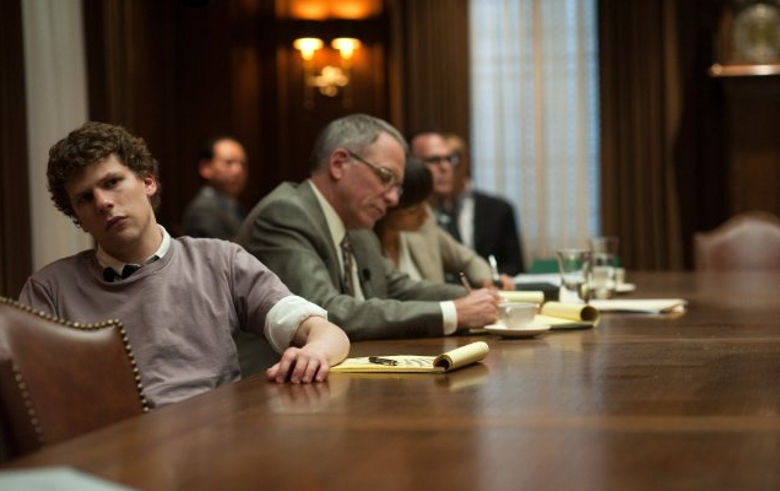
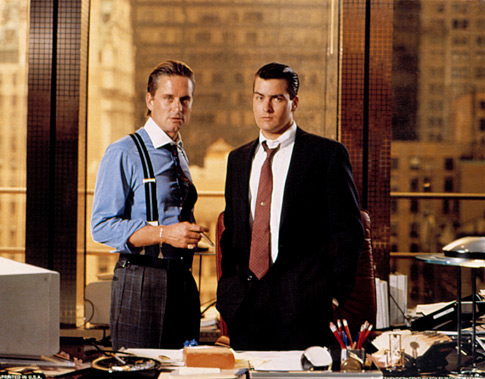
wall_streetI’ve been trying to pin down what it is that bugs me about The Social Network, Wall Street, and other movies about the flaring egos and larger-than-life ambitions of our world-shaper class. David Fincher, Oliver Stone, and other directors attracted to stories about power suggest the forms, at least, of moral critique—Fincher’s Mark Zuckerberg or Stone’s Gordon Gekko are callous, calculating, and hungry, not loveable. But these movies are in love with the very power they critique. They instruct us that the powerful are art’s only worthwhile subjects. In them, little people are just that. (Bothering to include and humanize the little people—the objects of these giants’ will—is part of the reason I loved Boiler Room much better than these much more celebrated films.)

the-social-network_houstonSometimes I wonder why history—across cultures, across power systems—seems to be dominated by similar sorts of winners: arrogant, nimble, forceful, manipulative, whether in the emperor’s court or in the halls of Harvard. Activists, journalists, or dissident artists—those who spend their time and define themselves in opposition to this type of elites—can make the mistake of totalizing these folks’ power into wisdom, of imagining them as all-seeing and brilliant adversaries. But the winner class isn’t actually all that wise, or at least not necessarily. The “best and brightest” in this country gave us Vietnam, the echoing economic catastrophes of 2007, the Iraq War and its fantasies of a swift and seamless transition of Iraq to a neoliberal vassal state.

This class does, at one level, dominate history. Perhaps the fact that they haven’t annihilated the whole human race yet attest to the fact that “common” people, as a collective or as ingenious, restless, impatient, creative individuals, have agency too—a sort of counterforce—maybe not equal or opposite but wise (or capable of wisdom) in a way the class of winners can never be.

1 Comment

Filed under politics

Repost: How Can We Say “God Loves You” to the Oppressed?

This piece was published in the Spring 2015 issue of The Inbreaking, the newspaper of the Seattle Catholic Worker, and I thought I’d share it again here. Thanks to Peter Gallagher and Shelby Handler for comments and feedback on an earlier draft.
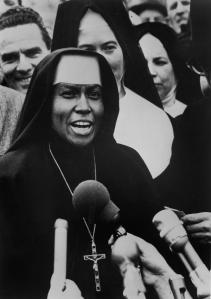
https://twitter.com/archstl/status/555805463267532801

Mary Antona Ebo, F.S.M., lifelong civil rights activist and marcher in Selma

This winter, at the closing of the Chanukkah gathering of a Seattle Radical Shabbat group in a little craftsman house in the Central District, an attendee brought out a list of names.

The names were of unarmed people of color killed by the police in America, and it was long: it stretched back more than a decade and made its way around our circle of thirty more than three times. Seattleite John T. Williams, a hearing-impaired Nuu-chah-nulth woodcarver shot to death only four seconds after being ordered by an officer behind him to drop his carving knife, was on the list. Tamir Rice and Michael Brown were on the list. One attendee, her voice full of tears, asked us to remember that each name we heard was more than a name: it was someone’s child, best friend, lover, parent, companion—someone whose loss to state violence left a tear in the fabric of many anonymous lives.

The Radical Shabbat group, a gathering of lefty Jewish folks, is “working to practice and reclaim our Jewish ritual in a space that holds our values,” including the value of work against oppression. This list of victims ended an evening of conversation and reflection on the lessons of the Chanukkah story, making literal and human the tensions of the story of the Maccabees’ rebellion against Greek domination. How can we work against the violence of an oppressive state?

At the close of this excruciating litany, the attendees said the mourners’ kaddish for these victims of state violence. I listened but couldn’t join in: I was the only Catholic in the room and, though I grew up with Jewish folks in my extended family, I’d never learned these words. I went home with a hard knot of grief in my throat and my head tangled with questions. The Shabbat space showed its participants the trust of letting us sit in our grief and rage: not forcing a happy or positive meaning onto this list, but to feel, even if only for a moment, the terrible individual cost of our society’s criminalization of people of color. Later, I looked the words of the kaddish up: “B’rikh hu,” goes one passage, “l’eila min kol bir’khata v’shirata, / toosh’b’chatah v’nechematah, da’ameeran b’al’mah.” “Blessed is he / beyond any song and blessing, / any praise and consolation that are uttered in the world.”

“Beyond any song and blessing”: the God remembered in ritual, petitioned and honored in prayer, revered (so I as a Catholic believe) in the incarnation of Jesus, and seen in the animating power of the Holy Spirit, can seem unbearably distant sometimes when we’re confronted by state violence. In the world to come, we’re told that “the Lord GOD will wipe away the tears from all faces” (Isaiah 25:8). But in this life, the oppressed endure grief, agony, violence, spiritual degradation, and dehumanization, alleviated by no revolutionary miracle.

Eleanor Josaitis, "Detroit's Mother Teresa"

Eleanor Josaitis, “Detroit’s Mother Teresa” (1931-2011)

How can we (I write as a white middle-class able-bodied male citizen, enjoying just about every privilege American society has to offer) say “God loves you” to the oppressed? The daily life of an oppressed person is an experience—to quote Father Gustavo Gutierrez, Peruvian priest and founder of liberation theology—“of exclusion and nonlove, of being forgotten, of having no social rights.” What does it mean to tell an oppressed person that God loves them? I’m honored to have shared the space of mourning with the participants of Radical Shabbat, but I claim no special knowledge on the history and spirituality of Jewish anti-oppressive politics; I face this question as a Catholic. If the great truth of God’s love isn’t going to seem like an empty and meaningless piety in the face of the grinding reality of oppression, what actions must accompany it?

Father Gutierrez, who for fifty years has done his theological and political work in the slums of Lima, Peru, “between the sufferings and the hopes of the people with whom I live,” has a simple primary recommendation. Gutierrez writes that “Christian theology must be grounded in the reality of human suffering and exclusion if it is to be at the service of discipleship and transformation.” To follow Jesus’s teachings and to act from the trust of God’s abundant and self-communicating love means understanding that oppression is not fate, but a system created by people, and that the degradation and violence it forces onto the lives of the oppressed is “against the meaning” of the free, gratuitously beautiful gift of life. To me, Gutierrez’s recommendation leads to three conclusions.

First, Catholics must acknowledge that the suffering of the oppressed—the criminalization and state murder of young black men, the abandonment of the poor, the prohibitions against immigration even for those fleeing violence and poverty, the murder of trans people—is not merely a backdrop to their lives or ours, but a call to solidarity. As Christians, we find our fullest humanity in the radical love of our neighbor, and we affirm that we touch “the suffering flesh of Christ” himself when we minister to the most oppressed, when we strive to build their power and center their concerns.

Second, to follow the call of God’s love means following Jesus’s message toward social, not just individual, transformation. In the words of Pope Francis, “God, through Christ, redeems not only the individual person, but also the social relations existing” between all people. I believe that Jesus—by his words, actions, and life—teaches us that another set of human and political relationships is possible, one that refuses the “structural sin” in which those of us with privilege participate. What would this human-centered society, as opposed to a society of the marketplace imperatives and of state oppression, look like? It’s hard to even conceive of, but, in the meantime, it’s a truly radical assertion to center human dignity, autonomy, and freedom in our politics. When, as Pope Francis writes, “the categories of the marketplace” are made into absolutes, “God can only be seen as uncontrollable, unmanageable, even dangerous, since he calls human beings to their full realization and to freedom from all forms of enslavement.” This is a God I am glad to love.

Archbishop Oscar Romero of San Salvador (1917 - 1980)

Archbishop Oscar Romero of San Salvador (1917 – 1980)

Finally, to truthfully say to the oppressed (and show by action) that “God loves you,” I believe that we Catholics should courageously explore the consequences of what the Church calls its “preferential option for the poor.” Catholic theology defines this option as centering the needs, concerns, questions, and conditions of the poor in our faith life, and examining our society’s policies and institutions in terms of their impact on the poor. A shallow reading of this teaching simply suggests that “we” the church must minister to the needs of “them,” the oppressed. But, carried to its logical conclusion, this teaching can and should challenge Catholics to center the voices of those most affected by oppression when that oppression is being addressed.

What might this look like? Well, here in King County, youth of color are resisting—through education, protest, and direct action—the county’s plan to invest $210 million in a new youth jail; the community most affected by mass incarceration is speaking for itself and saying no. How can Catholics listen to these voices, and build their power over that of self-proclaimed experts and employees of carceral institutions?

Or, for another example: in a church that remains deeply sexist and exclusionary of queer and trans folks, how can those of us who enjoy gender and cis-gender privilege build the power of women and queer and trans communities, internationally and locally? For all his lucid and serious criticism of capitalist ideology, Francis’s opinions on reproductive choice, the role of women in the church, and the humanity of queer folks are largely awful, including his recent offhand comparison of modern “gender theory” to “nuclear arms,” for how both threaten to disrupt “the order of creation.” Liberation-oriented Catholics must clearly and definitively say no to such ideas, and the practices they lead to. Our call is not just to find common cause with oppressed communities, but to strengthen them by addressing systemic injustice and by centering these communities’ politics, cultures, and ways of knowing.

As Catholics concerned with a genuinely human-centered politics, our work must be within our faith communities as well as in the world as a whole. Authentic faith, Pope Francis writes, “is never comfortable or completely personal…. [It] always involves a deep desire to change the world, to transmit values.” And so, remembering the mourner’s kaddish, I grieve for the victims of police violence—and for the hearts of those officers who, for one terrible instant, were the state’s violence, fear, power-numbedness, and hatred personified. In this grief, I strive to act not because I feel morally superior, or because I feel the oppressed to be saints idealized by their suffering, or because I feel those who oppress are inhuman, but because God is good, and in the words “God loves you” I hear a call, impossible to ignore, to fight for the liberation of all people.

Comments Off on Repost: How Can We Say “God Loves You” to the Oppressed?

Filed under politics, spirit

What Role Might White Non-Muslims Play since the Attack on ‘Charlie Hebdo’?

What role can white non-Muslims play in expressing solidarity with the values of social and political equity and open debate since the horrific and murderous attack on the satirists at Charlie Hebdo? Mainstream American commentators seem to have decided that Charlie‘s anti-Muslim cartoons, which had previously earned death threats for editors and cartoonists and a 2011 firebombing of their offices, themselves should be “welcomed and defended.” Plenty of folks are even counting as solidarity the dissemination of the cartoons and of further “blasphemous satire.”

I don’t agree. Most of the conversations I observe on this attack, among my community and in the press, are happening without mention of the extent to which Muslims’ rights of speech, worship (three more links), and free travel are being abrogated in the West. Nor do many commentators mention the role that post-WWI western colonial politics and US meddling has played in the rise of the brutal– and, in what I know of the history of Islam, quite new– form of Islamist fundamentalism apparently behind these attacks. To claim that the defense of blasphemous speech is the best role for supporters of liberal values in the West is, to my mind, to ignore the deep illiberality (or, one might call it, “oppression”) to which Muslims are subjected by Western state power, domestically and in the Middle East.

To respond to the attacks primarily by praising the cartoons is to ignore the extent to which these attacks will likely be used as justification for continued, or expandedstate surveillance in the West. As well as for, possibly, anonymous drone attacks, aid to “friendly” autocratic governments who say they’ll help us fight Al Qaeda and ISIS, and continued military incursions in the Middle East.

Why attack Charlie Hebdo to begin with? Middle East commentator Juan Cole notes that this horrifying attack seems to be a strategic attempt to “sharpen the contradictions” between French Muslims (most of whom are secular and not remotely interested in violent fundamentalism) and non-Muslims. The response to the attack has been near-universal outrage and horror and, unsurprisingly, a new surge of reactionary politics across Europe. This, Cole suggests, is the attackers’ goal. In the attackers’ chilling form of game theory, such a rise in general anti-Muslim sentiment among ethnic Europeans will aid in the creation of a “common political identity [among the tiny minority of violent Islamists and other French muslims] around grievance against discrimination.” Of those Muslims who will bear the brunt of increased discrimination and persecution, some tiny fraction might be radicalized into terror themselves. Cole goes on, “The only effective response to this manipulative strategy… is to resist the impulse to blame an entire group for the actions of a few and to refuse to carry out identity-politics reprisals.”

But this is not generally being talked about. Rather than reflecting on Western treatment of Muslims domestically or abroad, the center of debate I’ve seen in light of these killings has been, Is Islam itself intolerant? Those who claim that aspects of Islam itself may be to blame adopt an embattled tone, as if hordes of pious multicultural commentators were declaring the “criticism of any manifestation of Islam” off-limits. I believe that this is a straw-person argument. I’m not claiming that this question– whether the illiberality or violence of some minority of Muslims means Muslims somehow aren’t “fit” for liberal values– is by definition one asked in bad faith. But it becomes disingenuous when asked apart from historical and political contexts. To name a few: the US spent decades covertly arming and training fundamentalist Muslims to fight first and kill secular socialist pan-Arab nationalists, then Soviets. The US, in exchange for favorable oil deals with Saudi Arabia, supported the Saudi royal family’s exportation of its particularly severe and repressive Wahhabism. Though they bear no obligation to do so, Muslims around the world have condemned ISIS and this attack specificallyAnti-Muslim prejudice is horribly and increasingly common in the West. And let’s not forget that, as journalist and former constitutional lawyer Glenn Greenwald so bluntly puts it, “[T]he west has spent years bombing, invading and occupying Muslim countries and killing, torturing and lawlessly imprisoning innocent Muslims, and anti-Muslim speech has been a vital driver in sustaining support for those policies.”

In this context, the celebration of anti-Muslim satire no longer seems particularly liberal or heroic. The narrow terms of conversation on the Charlie Hebdo cartoons feeds just the sort of generalizations about Islam that will harden into further stereotypes on the part of non-Muslim Westerners.

This criticism (I feel silly even saying so) is not the same as seeking to silence or censor those who share the cartoons. In the same column I quoted above, Greenwald reflects on the distinction between defending and endorsing speech, then notes:

It’s the opposite of surprising to see large numbers of westerners celebrating anti-Muslim cartoons– not on free speech grounds but due to approval of the content. Defending free speech is always easy when you like the content of the ideas being targeted, or aren’t part of (or actively dislike) the group being maligned.

So, I return to my first question. What could be the next step, as a white non-Muslim who wants to promote social equity and political freedom? For my part, I believe naming and critiquing unjustifiable generalizations about Islam in my own communities, supporting the free speech and worship of Muslims in my own country, and organizing in resistance to the US role in empowering American-friendly autocracy in the Middle East, is more strategic for these values than republishing anti-Muslim cartoons, or high-fiving Charlie Hebdo for having done so particularly. Another thing I think is important, which I probably should have done at the top of this post rather than here near the end: admitting what I don’t know about the history and theology of Islam, which is plenty, and seeking out opportunities to educate myself on the faith and its history.

P.S. Thanks to my friends Gavin, Jon, and Sam, whose reflections, assertions, and questions on this topic on my Facebook wall spurred me to set my thoughts down here in this form.

5 Comments

Filed under politics

E-40: Just a Little Ahead of Shakespeare

What makes a masterpiece? As outlets like Pitchfork have taken an increased interest in rap over the last decade, the big culture machine that used to be called “indie” has increased its influence over how non-“urban” (black and mostly working-class/working-poor) audiences have experienced rap. One of the best internal reflections and critiques on the role that classics-hunting tastemakers play in black popular music was, actually, published in Pitchfork a few years back, zeroing in on the cult of the “masterpiece.” Author Andrew Nosnitsky starts with the rapturous reception of Nas’s Illmatic (“an undeniable masterpiece, but… also a pretty narrow one”). He then examines how its self-consciously serious, introspective tone set a template that other rappers out to make “masterpieces” (i.e. big, era-summarizing albums that a major label will keep in print after singles, mixtapes, and one-offs have slipped into history) emulated.

I loved this article, and it interested me how tough it was find to find (a fate shared by many of Pitchfork’s other long features) behind the site’s main business: its daily grindout of reviews. These reviews, by the way, include the anointing of further classics, on exactly the lines that Nosnitsky identifies. Pitchfork’s lately given retroactive perfect-10’s to objet-d’art reissues of GZA’s Liquid Swords and Illmatic itself, giving the reviewers the chance to write rhapsodic (“The doors crumple open and the passengers vanish up half-lit stairwells into the Bridge. There is no Illmatic without the Bridge. Illmatic is the bridge”) odes to albums built for exactly that kind of Serious Appraisal.

I’m laughably poorly versed in rap and I don’t want to sound like I know enough to hazard an alternate history of the genre, but there are some rappers I love whose virtues have nothing to do with those of Liquid Swords and Illmatic— rappers whose voluble, good-times-y energy and omnivorous love of street sounds mean that their music will never get distilled into an Authoritative Statement, a statement that they’d likely be bored by anyway. Like E-40.

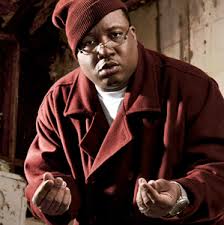
e40In the last two years, this 46-year-old rap forefather has dropped eight albums of material. His vocabulary is enormous (according to one survey, 5,270 unique words used in 35,000 lyrics– just a little ahead of Shakespeare), and his gift for slang is jawdropping. Remember learning that Shakespeare straight made up the words champion and discontent? Well, without E-40, the world wouldn’t have “fo shizzle,” “po-po” for police, “it’s all good” (!), “you feel me” (!!), “pop ya collar,” or “lettuce/scrilla/cheddar” as slang for money. (40 himself is modest in interviews, saying many of these terms came from his community in “San Yay” (the Bay Area), but damn, someone had to record them first.) 40 has a cheerful, elastic, bubbles-in-syrup voice and drops at least one amazing line a track. The production on his latest four or five records, the first I’ve been able to find my way into, is sometimes basic (“function music,” he calls it, flashy and fun when it’s not minimal and street-creepy), and his young guest MCs sometimes come off as too tough-kiddish for me to enjoy. But it’s the overall, overwhelming, cumulative experience of E-40’s music, the humanity and humor and unkillable spirit and obsessive detail in song after song, that I love best.

Here are a few tracks:

“I Don’t Work for Nobody” (from his double album with Too $hort):

“All I Need” (the giddy affirmative closeout to the first of his four independently-released Revenue Retrievin’ albums):

“That Candy Paint,” with Slim Thug and Bun B (speaking of detailing, here’s the chorus: “that candy paint, 84s, belts and buckles, chrome and grille / Leather seat, stich and tuck,TV screens and wooden wheels”):

Comments Off on E-40: Just a Little Ahead of Shakespeare

Filed under music, politics

Sexism and Racism in Game of Thrones

Disclaimer: This is a post about the HBO show Game of Thrones, not the George R.R. Martin novels on which the show is based. I haven’t read the novels, though I’ve had friends refer me to parts of the novels after talking about plot elements of the show. (I’d love for commenters to do likewise and point me to elements of the books– up to the middle of Storm!— pertinent to this conversation.)

Spoiler alert and plea: This post will ruin countless plot points from the first three seasons of the show. You’ve been warned. But I also beg you: If something heroically antisexist or relevant happens anywhere after the mid-point of Storm of Swords, please don’t give it away! Keep conversation on the show, please.

End of pleas and disclaimers.

tyrionSo: TV is not social-justice work. A show can illuminate, provoke, or mobilize audiences around an issue; it can challenge an audience’s or genre’s stereotypes; but it’s made to be entertaining and to make its owners money. Buy me a hot dog sometime and I will talk for two hours about how grateful I am that I watched The Wire, but having watched it doesn’t make me an organizer.

That being said, a TV show is part of a cultural conversation, and takes place in an environment contested by social forces larger than TV. Two lessons from social justice work come to mind as I try to untangle my feelings about GoT.

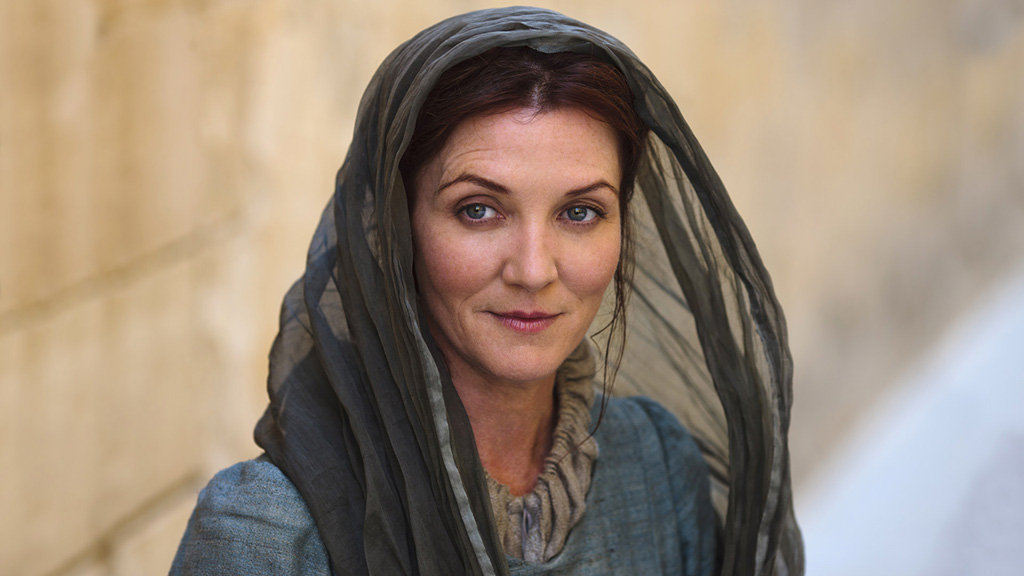
First: It’s possible to perpetuate oppressions even as you strive to challenge them. Game of Thrones is a world full of richly-portrayed, interesting, and morally complex women of all ages. Cersei Lannister (who shades from diabolical to trapped and miserable as the series goes along), Catelyn Stark (an older woman, the linchpin of her family) and her daughters Sansa and Arya, Brienne of Tarth (a tall, tough, physically intimidating woman!), and, of course, Daenerys Targaryen don’t spend the show as props for male ego, competing love interests, or caricatures. (Nor do GoT‘s writers condescend to them by sanctifying them as noble sufferers: rather than pity Arya, I’m frankly starting to get scared of what’s going on in her head.) The women of Game of Thrones are reflective agents struggling for independence in a sexist world. In other words, they are people, striving for fuller lives in an oppressive society.

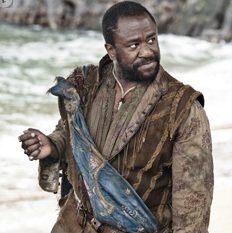
salladhorBut Game of Thrones is also crammed full of tits. That is, the show’s producers go to incredible imaginative lengths to decorate scenes of male power with (often anonymous) naked women. The prostitutes of King’s Landing are shown as victims of male violence, but are also presented, as when Tyrion invites Podric to his first sexual experience, in scenes of pure objectified perfumey mystique. Any chance Daenerys can be shown naked (including scenes where, I’m told, she was just, you know, clothed in Martin’s novels), the producers take. Have her be bathing when a hunky barbarian bursts in to defect to her? Check. Have her then step nude moodily lit and gently dripping from the bath to say thanks? Check. One character, Ros, whom I’m told is a composite of a number of minor characters in the book, got the worst of this. She spent the maybe the majority of her scenes naked, including in a staged “educational” lesbian sex scene that was one of the most obnoxious and gratuitous things I’ve ever seen on TV, until being crucified and shot full of arrows by Prince/King Joffry. There are some intriguing theories explaining the preponderance of naked women in the show. I’ll leave you to evaluate their credibility.

catelyn-starkThe issue is related, I think, to the show’s vaunted realistic approach to its fantasy world: people curse, sweat, switch sides, and struggle for power, honor, lust, and shame in moral circumstances much more complex than in, say, Tolkein’s world or even Gene Wolfe’s. But this also means that GoT recognizes no courtly presumption of women’s honor or distance from the fray. Sexual violence is everywhere in this world; in that sense, there’s a resigned quality even to its imaginative ambition, a subtext of “this is just the way people are” that’s curious in a show so imaginative in other regards. (As my genius cousin the fantasy novelist said once in exasperation, wouldn’t it be a more imaginative feat to create a fantasy whose world centered on an active struggle against sexism or violence or whose conceit flipped our expectations of such on their heads? Then she told me to read Zoo City, which I got for my wife instead.) But the show blurs its own ethical position by actively exploiting the sexism we already have– setting us up to ogle female characters or non-characters— to “realistically” portray the sexism of Westeros. So: Game of Thrones can challenge some aspects of sexism while at the same time working hard to perpetuate others.

Second: If you as a person with power are striving to address an oppression, you should expect more criticism from members of the oppressed community, not less. 

Drogo-and-Daenerys-with-Dothraki-khal-drogo-30463554-1280-720I’m amazed, though I suppose I shouldn’t be, how vituperative the online responses have been to commentators of color who identify GoT‘s appalling racism. In its portrayal of the Dothraki in Season 1 (and, though it gets less screentime, in its thin characterization of the black pirate Salladhor Saan, eager to “fuck a blond queen” in Season 2), Game of Thrones hits every single ugly trope of white SF/fantasy’s conceptions of people of color. I’ll leave it to these two excellent posts linked to above to spell out a more detailed look at the show. Daenerys’s crowdsurf on the backs of the slaves she’s liberated at the end of Season 3 is the white-superhero-daydream cherry on top of a show whose interest in cultural complexity seems to end at the shores of Westeros. All I’d add is: please, please, please listen carefully when someone of color names racism, even if you’re not expecting to hear it, struggle to see it, or feel personally hurt. Listening carefully doesn’t mean wigging out, getting defensive, blaming the victim, or holding up your opinions over others’ actual lived experience of oppression. If your defense is “hey, they’re trying” (and, honestly, I don’t see GoT trying very hard on matters of race) then consider criticism to be candid feedback on how intentions don’t match effects.

Hey readers, any other recommendations for fantasy which addresses these issues in more complex or radical ways?

9 Comments

Filed under politics