Category Archives: politics

The Fifteen Best Things on the Internet: September 2020

Hi dears. A few times a year I pull together my notes on the essays, Twitter threads, podcasts, and bird memes that have stuck with me, challenged me, or taught me something. Here you go:

1 and 2. Elizabeth Weil, “They Know How to Prevent Megafires. Why Won’t Anybody Listen?” and Marissa Correia, “The Real Cause of California Wildfires.” As I write this, Seattle is blanketed with noxious, purple-gray haze from massive wildfires in Washington and Oregon; 3.4 million acres of California have burned. Why is this happening? Weil, a California journalist, writes: “We keep doing overzealous fire suppression across California landscapes where the fire poses little risk to people and structures. As a result, wildland fuels”–dry grass, dead trees, and dense groundcover–“keep building up. At the same time, the climate grows hotter and drier. Then, boom: the inevitable.” Weil profiles numerous Cassandras, ecologists and fire experts who’ve warned of the dangers decade after decade yet still grimly watch as California steadily deepens its fuel imbalance.

There’s only one large-scale solution, say Weil’s experts: more good fire, creating “a black-and-green checkerboard across the state,” creating dampers and dead ends past which seasonal fires couldn’t spread. But barriers to this include fire politics, property laws, and the size of good fire needed to restabilize. Academics believe that, before colonization and genocide by the Spanish and Americans, “between 4.4 million and 11.8 million acres [of California] burned each year,” generally in many much-smaller fires. By comparison, in the last twenty years, California’s fire-management organizations permitted only 13,000 acres of annual controlled burns. Though the state is slowly facilitating more burns, the backlog of fuel on the ground is just too huge. “In February 2020, Nature Sustainability published this terrifying conclusion: California would need to burn 20 million acres — an area about the size of Maine — to restabilize in terms of fire.

California’s indigenous communities understood fire and practiced controlled burning. These communities had observed that, as Correia notes, “fire helps soil retain water, keeps brushy vegetation down, encourages growth of native plants, helps certain trees reproduce and kills off pathogens and overpopulation of destructive insects.” But these communities were ravaged by disease, pushed out, politically marginalized, or exterminated; white cultural memory in the state was deeply imprinted by the devastating fires following the 1906 San Francisco earthquake, which killed 3,000 and left more than 100,000 homeless: fire became an adversary.

In that time, Correia writes, California was crowded with invasive grasses such as wild oats, an annual that depletes water (forcing out fire-resistant native perennial bunch grasses) and then dies in the summer heat, leaving a dry, brittle, flammable blanket. The state has also been plagued with pine beetles, who live longer due to the warmer weather and loss of predators; the beetles leave tinder-y dead pines throughout drought-afflicted California forests.

In the same period, California’s fire control agencies have become a big business, approaching $1 billion in federal aid this year and contracting full fire suppression (including hugely costly aerial spraying) out to private agencies. By comparison, “planning a prescribed burn is cumbersome”; while a wildfire is an emergency, a planned burn “need[s] to follow all environmental compliance rules” (meaning it can be canceled because of smog levels elsewhere in the state, etc). Such a burn is also politically risky: “Burn bosses in California can more easily be held liable than their peers in some other states if the wind comes up and their burn goes awry. At the same time, [they] typically suffer no consequences for deciding not to light.”

Weil concludes that a healthy state fire policy would require residents to include intentional fire in their land management plans, and to “rethink our ideas of what a healthy California looks like”–including, possibly, acclimating to the idea of regionally smoky skies for much of the summer, as early white settlers reported. One leader in returning to intentional fire is the Yurok Tribe, who were only recently permitted by changing conservation regulations to resume their historical practice of controlled burns.

*

3. What spell does this cast for you? Bruce Springsteen in Paris in 1985, singing “I’m on Fire”: I’ll always adore Jo Barchi, a poet I’ve never, like, “met,” for sharing it.

*

4. Kevin Henderson and Joseph J. Fischel, “Four Ways to Escape a Sex Panic.” Progressive mayor and part-time U Mass adjunct Alex Morse’s run against long-time House Rep. Richard Neal was torpedoed by bogus homophobic smears about his romantic and sexual life. These attacks were found to be politically motivated, concocted by the state party and by U Mass College Democrats seeking jobs in Neal’s office, but this late revelation wasn’t enough to sway the election’s outcome: Neal won 59-41%. Henderson and Fischel examine the how of moral panic: an exaggerated threat to social order used “stoke public fear, fear that is politically and financially profitable.” Sex panics exist “the confluence of stakeholder manipulation, media sensationalism, and political, regressive fallout too easily triggered by sex—stubbornly and especially queer sex.” The term points to important questions: “How does one measure the difference between wrongful panic and rightful concern?… Might the charge of ‘panic’ glibly trivialize sexual violence?” How can we discern when we’re being manipulated? Henderson and Fischel offer four pointers:

First, when there’s only smoke, look for a smoke machine”: beware of claims without specifics, or sentences without subjects (from the College Democrats’ attack of Morse: “Where such a lopsided power dynamic exists, consent becomes complicated”). The fuzziness of this claim masks the fact that “there is no charge that the small-town mayor had sexual relationships with a subordinate, an intern, or one of his students.” So where’s the smoke coming from?

Second, “reread the accusations.” As Lisa Duggan writes, “when the terms ‘sexual abuse’ or ‘sexual harassment’ are replaced with ‘sexual misconduct’ or ‘inappropriate sexual behavior,’ that is a red flag that we are leaving the arena of critical politics for the landscape of moral judgment.” It feels, well, gross to some people that Morse, a 31-year-old, had sex with college students (though not his own). The authors write that they, personally, differ “about whether to favor university bans on sexual contact with all undergraduates (‘categorical’) or only those you personally instruct (‘supervisory’),” while acknowledging that “for some students, perhaps especially queer ones looking at smaller dating pools, the categorical ban may itself be a deprivation.”

Third, “be uncomfortable with ‘uncomfortable.'” The College Democrats’ letter wrote that Morse made (again, unnamed) students feel uncomfortable by DMing them on Instagram or matching with them on Tinder, to which these authors bluntly reply: “Nobody has a right not to be uncomfortable. The rhetorical conversion of discomfort into harm and abuse can only serve a sex-negative culture that heaps scorn and shame upon queers, women, and gender minorities, whose bodies and pleasures will too often be sources of “discomfort” under prevailing norms of propriety, monogamy, and coupledom… Morse is not required to come out as a mayor whenever he flirts or has sex. It is the weaponization of discomfort that criminalizes trans men for not having ‘proper anatomy’ in their sexual relations; that disproportionately criminalizes Black men for HIV nondisclosure; that legitimates, or used to, straight men’s violence against transgender women; and that licenses ‘gay panic’ as a criminal defense. Discomfort may signal when something is awry, but it might equally reiterate bias, stereotype, and prejudice. Feelings aren’t facts.

Finally, “Look around for a political contest.” There’s a long and ugly history of sex panics targeting queers, leading to antigay violence and rollbacks of civil rights; in this case, the attacks on Morse stuck enough to cost him a victory against an entrenched corporate Democrat.

*

5. Chris Arnade, “The Non-Voter” and Glenn Greenwald, “Nonvoters Are Not Privileged.” Yes, GOP voter suppression is real and pernicious, but nonvoting is overwhelmingly a choice, and those who don’t vote are disproportionately poorer, younger, less educated, and nonwhite. (But the nonvoting population does not skew left or right: progressive- and conservative-identified people are just as likely not to vote.) Arnade, a photographer and journalist who works among Americans surviving poverty and addiction, writes experientially: “Not voting is about a justified cynicism forged from a lifetime of being screwed over by the status quo… In their minds, and from their experiences, voting has no clear upside… Voting means entering institutions that have given them problems. From schools, where they were tested, measured, and prodded endlessly, only to be then ignored, scolded, or demeaned. To municipal buildings where they were taxed, fined, or charged. Voting means interacting with a class of people who filled and embodied those institutions… It is rejoining a part of America that doesn’t value them, from the way they dress to the way they think… Voting means getting further entangled with a bureaucracy that has done nothing but tangled them up. Hell, it might even come with jury duty.” Unlike the wealthy, successful, or highly educated, who have money on the line in an election, nonvoters know “the outcome won’t change their life because it never has.” Politics, especially presidential politics, is a distant nuisance, or at best, a spectator sport that doesn’t involve them, much less care about them. “[Nonvoters] have strong views, and they might get emotionally involved for a bit, but they know their place is to watch.”

But our political class has done almost nothing to understand this community. As Greenwald writes, as soon as Biden clinched the nomination, political rhetoric around voting Democrat became overwhelmingly shamey, a scolding of hypothetical privileged, clueless Bernie-or-bust leftists whose pouting will return the presidency to Trump. In reality, the primary motive for nonvoting “is not voter suppression but a belief that election outcomes do not matter because both parties are corrupt or interested only in the lives of the wealthy.” As Pew found, “44 percent of eligible unregistered individuals say they do not want to vote,” while another “25 percent say they are unregistered because they have not been inspired by a candidate or issue.” Unsurprisingly, “the candidates most closely associated with the status quo are ones most likely to drive voters away from the polls, while those who appear to be outsiders who intend to deviate from bipartisan consensus are most likely to motivate them”: while he was in the running, Sanders was the candidate with the highest favorability among those who identified as nonvoters.

*

6. Surely someone else also identifies with this plate-raider

*

7. Mike Davis on coronavirus politics. Like Ruth Wilson Gilmore, Mike Davis is a true movement elder–an internationally-minded socialist, a many-decades scholar of global public health, class politics and racism, and urban politics–who we’re incredibly lucky to have in this moment. Davis, recovering at home following cancer surgery, was interviewed on Jacobin’s The Dig in late March. I have a hard time with Dig host Daniel Denvir’s voice, but he asks great and open-ended questions and Davis connects zillions of points in ways I’d never heard before. (The middle of the interview, now sadly dated stuff on the Democratic National Convention, is skippable.) For instance: sub-Saharan Africa has become a site of many new viral illness in part because European overfishing in the Gulf of Guinea forced many Africans to subsist on bushmeat (wild game), increasing opportunities for animal-to-human transmission. Or: in addition to being unspeakably cruel, factory farms are “superspreader events” for viral illness; China’s factory pigs were ravaged by a relative of coronavirus last year before it leaped to humans. Or: we could have had a multi-year, “universal” flu vaccine years ago (as we now do for, say, tetanus), but there’s too little money in it for Big Pharma to bother. Or: while the Global North could barricade itself against the climate-change miseries we’ve inflicted on the Global South, there’s no protecting ourselves from the diseases that neoliberal agriculture and rotten public health are unleashing there. (As wealthy Victorians, moving to London’s West End to avoid the East End’s coal smoke, still couldn’t escape the smallpox devastating London’s poor.) It goes on! When he’s pressed on post-Bernie movement strategy, Davis urges the Left to nurture investigative journalism (not just analysis and commentary) at its news outlets, and to focus on developing an “organization of organizers”–an International-style gathering space to debate strategy and boil down our demands.

*

8. Jia Toletino, “Interview with a Woman Who Recently Had an Abortion at 32 Weeks.” The agony, the terrible burden, the love, the gnawing self-doubt, the impossible moral choices of the subject of this profile have stayed with me.

*

9. Michael Hobbes, “Everything You Know about Obesity Is Wrong.” As Americans have gotten larger over the last forty years, our medical community has blamed fat people for being fat. The science behind this is flatly wrong, and “the emotional costs are incalculable.” Hobbes interviews half a dozen fat adults who have experienced a lifetime of contempt, wrongful termination, medical abuse, mockery, and suffering; he also exposes two widely-documented truths about the science of obesity “that could have improved, or even saved, millions of lives.”

The first is that diets do not work. “Not just paleo or Atkins or Weight Watchers or Goop,” Hobbes writes, “but all diets… 95 to 98 percent of attempts to lose weight fail and two-thirds of dieters gain back more than they lost.” Losing weight and keeping it off means “fighting your body’s energy-regulation system and battling hunger all day, every day, for the rest of your life.”

Second, “weight and health are not perfect synonyms.” Many lean people are actually deeply unfit, while between a third and three quarters of people classified as obese are metabolically healthy, “with no elevated blood pressure, insulin resistance, or high cholesterol… Dozens of indicators, from vegetable consumption to regular exercise to grip strength, provide a better snapshot of someone’s health than looking at her from across a room.” We’ve been trying the same fixes over and over for “the obesity epidemic” and they don’t work.

Meanwhile, doctors receive very little nutrition education (an average of 19 total hours in four years of instruction), and are ill-equipped to give detailed diet or exercise advice. They routinely urge self-starving fat patients to keep it up, pressure those who fail at meal-replacement diets to try again, and show far less rapport with fat patients. Money is one factor: “While procedures like blood tests and CT scans command reimbursement rates from hundreds to thousands of dollars, doctors receive as little as $24 to provide a session of diet and nutrition counseling.” It’s unsurprising, then, that higher-weight patients tend to avoid doctors, with sometimes fatal consequences.

The misery of social stigma has real consequences for fat people, prejudice against whom has increased as their numbers have grown. “More than 40 percent of Americans classified as obese now say they experience stigma on a daily basis… and 89 percent of obese adults have been bullied by their romantic partners.” Those who feel discriminated against have shorter life expectancies than those who don’t, suggesting “the possibility that the stigma associated with being overweight is more harmful than actually being overweight.” The effects of weight bias are worse for people of color, as shown by increased rates of stress, depression, bulimia, and cardiovascular disease.

Fat pride, however, faces many of the same hurdles as any nascent movement: internalized shame and self-judgment, and cultural disbelief that their identity should exist as something to declare. “Fat people grow up in the same fat-hating culture that non-fat people do… They still live in a society that believes weight is temporary, that losing it is urgent and achievable, that being comfortable in their bodies is merely ‘glorifying obesity.'”

What is actually killing us? Not our portions, but our food supply. “it’s not how much we’re eating—Americans actually consume fewer calories now than we did in 2003. It’s what we’re eating.” Just 4 percent of US food subsidies go to fruits and vegetables, while 60 percent of Americans’ calories are high-sugar, low-fiber, and include additives, throwing off “all of our biological systems for regulating energy, hunger and satiety”: “No wonder that the healthiest foods can cost up to eight times more, calorie for calorie, than the unhealthiest.

As for Americans who do get care from a dietician, “the decisive factor” (not in losing weight, but in reducing prediabetes and cardiovascular risk) “was not the diet patients went on, but how much attention and support they received while they were on it.”

What policy alternatives exist? “The most effective health interventions aren’t actually health interventions,” Hobbes writes; “they are policies that ease the hardship of poverty and free up time for movement and play and parenting,” while reducing things like suburban sprawl and lengthy commutes. “Developing countries with higher wages for women have lower obesity rates” than the US; policies such as Seattle’s Fresh Bucks program (doubling the value of food stamps spent on farmers’ market produce) increase fruit and vegetable consumption. “Policies like this are unlikely to affect our weight. They are almost certain, however, to significantly improve our health.” Living wages, pay equity, produce subsidies, and better education for doctors are among the campaigns for fat activism and American public health. “Fat activism isn’t about making people feel better about themselves,” one activist says. “It’s about not being denied your civil rights and not dying because a doctor misdiagnoses you.”

*

10. Sister Thea Bowman’s address to the U.S. Conference of Catholic Bishops, 1989, less than a year before her heartbreaking and untimely death, on Black dignity and brilliance, Christian racism, pastoral leadership, and the spiritual endurance and genius it takes to thrive in an oppressive society. You feel her pushing at the edges of the room.

*
11. A Twitter thread by Suyi Davies Okungbowa on the history of the Benin Empire’s interactions with Europe. This–studious ignorance, economic bullying, military violence, looting of treasures–is what a term like “underdevelopment” means in practice. This thread encapsulates, in miniature, the dreadful starting point from which many Global South nations entered “modernity.”

*

12. William Davies, “Who Am I Prepared to Kill?” There’s a lot for me to love in the London Review of Books, which is erudite, prickly, eclectic, snappy, and full of excellent writers. I’ve stayed thinking about this essay on our culture of debate in the Global North. It’s become, writes Davies, a massive plebiscite: up- and down-voting rather than debating, “a society of perpetual referendums” instead of argument and deliberation, with products set before us to “acclaim or decry.” Real-time feedback has permanently changed the way culture is produced and evaluated. On social media, Davies writes, “chunks of ‘content’ – images, screengrabs of text, short snatches of video – circulate according to the number of thumbs up or thumbs down they receive. It is easy to lose sight of how peculiar and infantilising this state of affairs is. A one-year-old child has nothing to say about the food they are offered, but simply opens their mouth or shakes their head. No descriptions, criticisms or observations are necessary, just pure decision.” Likewise, “once history itself becomes a matter of plebiscitary decision, we are assigned to cultural camps that we had no hand in designing, and whose main virtue is that the other camp is even worse. One stupid position (‘You can’t judge the past by the standards of the present!’) presumes its only marginally less stupid opponent (‘We must judge the past by the standards of the present!’).” Likewise, “the friend-enemy distinction has become a new type of ‘judgment device’, in which my preferences and tastes are most easily decided by the fact that they’re not yours. Things which you hate must ipso facto be good. It becomes embarrassing or even shameful to appreciate something, if the ‘wrong people’ are also praising it.”

Sure, critiques like this in a bigshot intellectual outlet can feel mummified and complainy, but Davies isn’t interested in carping or performing mob-victimhood; he instead weighs this culture’s values and risks for movements for justice. “It’s hard to deny that focused [and plebiscitary] efforts such as Rhodes Must Fall have had a rallying effect” for decolonization struggles in the UK, “while the evolution of Black Lives Matter would be unthinkable without the forms of ‘acclaim’ and ‘complaint’ that social media is so effective at propagating. The reason racism is being discussed by broadcasters, politicians and historic institutions as never before is largely thanks to publicity tactics that start with a smartphone video of an act of police violence and scale up from there. The challenge is to avoid conflating tactics with goals, as if movements for justice were solely concerned with imagery, reputations and statues. Conservatives and media outlets share a common interest in restricting politics to the level of sporting spectacle, occupying the space where other forms of inquiry and understanding might occur.” Progressives should resist buying in.

This culture of up-or-down fosters parallel delusions in our political culture. The right has been taken over by splitting and projection: “Fearful of having to face up to an unbearable national guilt, the right projects its anxiety onto a culture of violent ‘wokeness’ which it claims is pulling society apart.” But the equivalent symbolic temptation for the online left is “the prospect of the unambiguous baddie, whose condemnation will absolve others of all sin.” This thinking ignores that “guilt and innocence are rarely as easily distinguishable as we might like them to be. This is what it means for a problem to be systemic. Bad things don’t happen simply because bad people intend them; and good people often play an integral part in terrible political acts and institutions.”

*

13 and 14. Atul Gawande, “Why Americans Are Dying from Despair” and System Update: “Social Fabric Unraveling.” Cultural sickness is not a metaphor: the isolation and threat-calculus imposed by the pandemic have made existing trends–of isolation, economic precarity, and the politicization of fear–much worse. Our country is killing itself by promoting economic policies that lead to generational joblessness and wage stagnation, eating away at social ties once found in spiritual community and labor union membership, making guns and opioids easily available, promoting a politics of polarization and hate, and cutting away the safety net for those who lost their jobs due to automation and outsourcing. Rates of addiction, anxiety, chronic pain, alcoholism-induced liver disease, depression, and suicidality (one in four Americans between 18-24 “seriously considered” suicide in June) are exploding. Our culture is sick, and it’s getting sicker. Greenwald references Johann Hari, who’s studied depression in Western societies; here’s a TED talk, breezy but still informative, that Hari gave on related themes.

*

15. Brandon Taylor and Garth Greenwell, “Queer Beatitudes.” I promise you will love this learned, joyful, hyperbolic, consistently brainy conversation. I jumped out of the bath to start taking notes, saying YES aloud, twenty minutes in, and, if you’re in the bath, I bet you will too.

Comments Off on The Fifteen Best Things on the Internet: September 2020

Filed under poetry, politics, spirit

The Fourteen Best Things on the Internet: May 2020

Hey dears, long time coming: a post of the podcasts, essays, music videos, beautiful internet jetsam/takes that I’ve been thinking about and wrestling with since shelter-in-place began. As I noted when I started this post series, it’s way too easy for me to retweet-broadcast-resonate with something I read online without actually digesting it, learning from it, or responding fully to it; this series is my attempt to do more justice to challenging thinking, human complexity, and good art I encounter online. Many of these articles are old-ish; I grind slowly. Look for another post like this one soon.

*

1. Journalist Connie Walker’s CBC limited series Missing & Murdered: Finding Cleo is the best podcast I’ve ever heard. Finding Cleo brings historical research, bloodhound sleuthing, structural political analysis, and shattering emotional power to a story of a missing Cree girl: Cleopatra Semaganis Nicotine, forcibly taken from her mother in Little Pine, Saskatchewan, and forced into foster care by white social workers in Canada’s “sixties sweep” of Indigenous children and teens. Cleo was separated from her siblings, given a new name, adopted into the United States, and then– as her siblings heard secondhand– died under mysterious circumstances. But US and Canadian governments offered the family no further information on her short life: no death certificate, no information on her series of foster and adoptive families, and no information on where Cleo was buried. Finding Cleo is the attempt by Walker (also a Cree woman from Saskatchewan) to find answers for the Semaganis siblings on what happened to Cleo. Thank you to Bri for telling me about it.

2. Bernard Avishai, “By Barring Two Congresswomen, Trump and Netanhayu Set a Trap for Democrats.” This take is seven months old, but Avishai’s take on authoritarian populism, American Jewish politics, B.D.S., and Trump’s relationship with Netanhayu has stuck with me. Avishai– an Israeli liberal who seems to have moved toward supporting a one-state “confederation” of Israel and Palestine and a right of return for all Palestinian refugees– writes of Trump’s long-term plan to paint Democrats as anti-Semitic and Israel and the United States as partners: partners not around “shared democratic values” and civil rights for oppressed minorities, but around “hard nationalism,” military might, and “traditional, populist, wall-building” majoritarian politics. Last summer, Trump publicly pushed Netanyahu to take the unprecedented step of banning Democratic Congresswomen Ilhan Omar and Rashida Tlaib, both Muslim, from visiting Israel. Netanyahu’s government, which has passed legislation barring supporters of Boycott, Divestment, and Sanctions (B.D.S.) from entry to Israel, was willing to comply. Both Omar and Tlaib have expressed qualified support for B.D.S., which calls for a boycott of “Israel’s apartheid regime, complicit Israeli sporting, cultural and academic institutions,” and “all Israeli and international companies engaged in violations of Palestinian human rights.”

What does Avishai think of B.D.S.? “It has never been clear,” Avishai points out, “whether the external pressure that the leaders of the movement are trying to mobilize is aimed at ending the occupation or at ending the state of Israel itself.” B.D.S., Avishai concedes, makes a clear moral point: the Israeli occupation of Palestinian territories is cruel, authoritarian, and hardening by the year; Israel remains in the control of fundamentalists and it continues to deny Palestinian national and civil rights. Progressive Americans, including Jews, increasingly believe that Palestinian refugees deserve a right of return to a secularized and reconstituted nation; that Israel’s current policy represents “a civil-rights violation on the world stage”; and that “B.D.S., for its part, seems… a reasonable, nonviolent way to confront it.” Through a B.D.S. campaign, “[y]ou boycott Israeli institutions and agitate for disinvestment from Israeli businesses, or from global companies that partner with them; you agitate to sanction Israeli government officials, and threaten to take them to the International Criminal Court,” making Israelis “hurt until they get the message.”
But, Avishai writes, “B.D.S. is an unexamined, contradictory bundle, because boycott, divestment, and sanctions are three very different things, hurting very different slices of Israeli society.” (This comment echoes Noam Chomsky’s sober criticism of B.D.S.’s aims, given while also affirming its goals: boycott, divestment, and sanctions are divergent strategies with differing likelihoods of success.) If Omar and Tlaib had been permitted to visit Israel, Avishai imagines, they would have seen a nation whose internal divisions seem “utterly familiar”: a “comparatively élite, cosmopolitan—and frustrated—Tel Aviv coast up against poor, pietistic Jerusalem and the rest of the country.” This, Avishai seems to believe, would have shown them the nuances of Israel’s domestic politics and thus softened their support for B.D.S.

There are better tools than B.D.S., Avishai believes, to economically challenge injustice inside Israel: “One can imagine governments sanctioning Israeli settlement policies, much like George H. W. Bush did, in 1991, when he warned that he would deduct any sum that Israel spent on settlements from American loan guarantees. One can imagine international organizations setting telecommunications standards sanctioning Israelis for hogging bandwidth from Palestinian telecom companies.” But a boycott, Avishai argues, would undermine, not empower, Israel’s progressive constituencies and leadership: “[B]oycott the Hebrew University and you boycott scholars trying to bridge the studies of the Holocaust and the Nakba. Boycott Israeli chipmakers and you boycott companies setting up research offices in Palestine.” Instead, Avishai believes, American progressives need to better educate themselves on, and work to empower, their Israeli counterparts. “In both places,” he admits, “it will be a long haul.”

Left out of Avishai’s analysis is a look at support for B.D.S. among Israelis sympathetic to Palestinian demands for justice, or a cost-benefit analysis of politically isolating Israel’s current government (and possibly empowering Netanhayu’s nationalist us-versus-a-threatening-world rhetoric) as a consciousness-raising strategy to educate and mobilize fence-sitting moderates.

*

3. When something is neither blessed nor cursed, it’s blursed:

*

4. How can municipal governments make their police forces less violent, and what policy changes can activists demand that most effectively reduce state violence in their communities? I first heard about scholar and policy analyst Samuel Sinyangwe from an admiring tweet by DeRay Mckesson; he’s an insightful presence who thinks empirically and intersectionally about justice issues. Here’s a thread of his research-based solutions to police violence. (Kudos to him too for updating his conclusions slightly since he first posted his research on this topic.)

*

5. Troy Vettese, “Sexism in the Academy.” It’s not getting better. The representation of women in academia shrinks the higher you go; the percentage of female full professors in the US is just 32%, and there are two tenured men for every tenured man. Women have been the majority of undergrads for decades– it’s not that the pipeline hasn’t let them through yet. Male scholars “are more zealous about safeguarding time for research, they are skeptical of women’s competence, and they endanger and demoralize female scholars through sexual harassment.” Undoing sexism in the academy, Vettese writes, requires confronting a “vast ramshackle machinery” that pushes men up the ivory tower while pushing women out.

What does this this machinery consist of? First, a skepticism of women’s talent at all levels of mentorship: there is “a widespread assumption that only men can be brilliant.” This toxic belief is especially prevalent in elite life science labs (where male PIs ensure that women make up only 31% of their postdoc workforce), but it shows up as well in fields as diverse as literature, musical composition, and philosophy. In all sciences, women lose time “proving a result again” to skeptical supervisors. (The data are inarguable: female scholars as a whole are asked to spend 9-12% more time making revisions when preparing work for publication.) In the world of grants, the gender gap in awards is about 7 percent and “when women are successful in their grant applications, they usually receive less funding, about eighty cents to a man’s dollar.”

Second, the widespread and naked ugliness of sexual harassment: “women often have to change field sites, topics, or even departments to avoid predatory men, diversions that eat up precious time for scholarship, not to mention the stress of such experiences.” One fifth to one half of female postgrads experience sexual harassment from a colleague, mentor, or supervisor.

Third, the power of citation. This is pervasive and pernicious. It shows up as skepticism of entire fields of study, where “[m]ethods pioneered by female scholars, such as feminist critiques of science or constructivism in international relations, are seen by male peers as ‘soft,’ and these peers are less likely to cite works employing such approaches.” It also shows up in male self-citation: “[a] male scholar is nearly twice as likely to cite his previous work [accounting for a tenth of all citations] than a female peer is to cite her own… Self-citation builds up the base of a paper’s citation count, leading other scholars to cite that paper at a rate of about four new citations for every self-citation.” This might seem like harmless ego-stroking by male scholars, but the simple numerical weight of citation matters for tenure.  And unsurprisingly, men are overall less likely to cite women: “In one study of economics articles, men were half as likely as women to cite the work of female scholars, while women manifested no such bias.”

Fourth, let’s not forget students. Course evaluations are critical for advancement to tenure, and male students overwhelmingly privilege male faculty and peers. Male students expect maternally-coded care from female professors: “students tend to evaluate a female instructor according to how well prepared she is in the classroom, which forces women to spend significantly more time preparing than men… By comparison, students expected their male teachers to be charismatic and knowledgeable, traits that require much less preparation to perform. Again, the widespread expectation held by boys and men is that only boys and men can be brilliant.” This, of course, trickles down to peer relationships among students as well: “In a study of three US undergraduate biology courses, students voted for their most intelligent peer during the semester. Generally the women gave a very slight edge to other women in their voting, but men favored other men by a nineteenfold margin.” (My emphasis.)

Fifth (for fifth column), husbands and male partners of female academics. Men are much, much less likely to sacrifice a work opportunity or research time, to take on childcare, or to explicitly value the career of a female partner than vice versa. “A woman was much more likely to say that her career was as important as her partner’s. This was true a majority of the time, even if women were making more money than their male partners, while the obverse was much less common.”

Finally, the simple fact that academic advancement is often conducted informally and secretively. A system that permits men to advance the colleagues in their networks they most admire, without any public or standard evaluation process, will inevitably favor other men. Most academic job applications are noncompetitive or unpublicized. “The problem in the academy comes down to men’s relative advantage over women, rather than any absolute gains women may make.”

Vettese examines the effects of having women in positions of academic leadership. It’s indispensable, he concludes, “though not a complete solution.” When women became chairs, deans, or central administrators, writes one scholar, “a woman’s holding of this position would devalue or minimize it somewhat, casting it into the service mode, not the power mode. We heard this comment so frequently across all disciplines that we finally named it gender devaluation.” Further, “When women step in to help other women, such as when they act as ‘diversity czars’ in the US to ensure hiring and tenure reviews are equitable, they risk provoking a backlash from men... The high risks and scanty rewards of feminist solidarity are likely why the levels of politicization among female faculty tend to be surprisingly low. Many scholars seem to see the burdens they carry as the result of their own choices or the behavior of individual misogynistic men, rather than as structured by a larger patriarchal system.”

What current models exist for alternatives? Vettese cites Turkey. At least before the AKP ascended to power, “the Turkish academy employed proportionately almost twice as many female full professors as the EU average.” This is not because Turkey is less sexist than other countries. Rather, it’s due to a mix of factors: first, the country’s universities have strict, open, and competitive guidelines regulating the appointment of professors. Turkey’s universities also mandate “that all competitions must be announced in a major newspaper, and applicants are judged on the basis of a defined portfolio.” An academic career is also considered a “safe” choice for Turkish women, serving as an outlet for “the career aspirations of bourgeois women denied other options.” Of course, as elsewhere in the world, bourgeois Turkish women’s advancement is dependent on cheap women’s labor: servants [who] relieve female professors of the burdens of cooking, cleaning, and child care.”

So what can be done? Vettese is blunt: new rules at all levels of the academy. The struggle against sexism in the academy is zero-sum– women’s advancement depends on power being taken from men– and so, Vettese argues, strong rules to destroy informal sexist networks of advancement are the only way to break men’s strong resistance.Courses on women’s history or feminist philosophy should be mandatory. Until male students are taught to reflect upon their biases, they should be barred from evaluating peers and teachers. Similarly, male scholars’ power to evaluate female peers and students should also be restrained. At the very least, mixed panels for a scholar’s career assessments ought to be required… [R]ising quotas should be in place for hiring more female scholars in all stages of the tenure track.” Universities should make salaries public to help ensure pay equity, and they should publish “referees’ reports to journal editors to reduce vitriol and bias. Spousal-hire programs could persuade more husbands to follow their wives.”

Further, “[f]ree state- or university-run crèches, day care centers, after-school activities, and canteens” would be a valuable partial remedy to theunequal distribution of social labor. A shortened workweek would also be an across-the-board gift: “Reducing the workweek to thirty-five hours would allow those within the academy time to enjoy their intellectual endeavors and carry out social reproduction, while spreading work among more colleagues and absorbing the glut of underemployed doctoral graduatesa group that is composed mostly of women because they drop out of the academy at every career milestone at twice the rate men do, according to one study of women in the sciences.”

This is a matter of individual suffering, not just institutional self-impoverishment: “like all scholars, women eschew potential riches to seek their intellectual fortune, motivated by a passion to learn and teach. That so many are forced to relinquish this goal because of condescending or lewd supervisors, selfish spouses, smug students, and prejudiced hiring committees is in every case a personal tragedy of an unfulfilled life.” Thanks to Lindsay Turner for tweeting about this article and letting me know it existed.

*

6. Robyn’s video for “Ever Again,” a Labyrinth re-enchantment: you know that kind of desire where you want someone and want to be them at once?

*

7. Jeet Heer, “Leftists Shouldn’t Go on Tucker Carlson.” One of my beloved “irresponsible Twitter clowns” and a fan of my bottom-dollar favorite science fiction author, Heer is also a serious-minded and big-picture lefty national-affairs writer. And, since I once semi-admiringly shared here a conservative anti-war-machine essay that Carlson wrote, I thought I owed some attention to Heer’s argument that leftists shouldn’t grant Carlson a platform, or accept a space on his Fox News show. Heer argues that it’s still sometimes worthwhile for leftists to go on Fox News generally: for politicians and candidates, “politics inevitably involves convincing those outside the fold.” But for activists and writers, “there’s a delicate balance to strike between getting the message out while also making sure that bigotry isn’t normalized.” Carlson is crafty, “as insidious as he is odious,” and is skilled at channeling anti-war and grassroots anti-business rhetoric to serve an isolationist politics and an ideological hatred of immigrants and of “coastal elites.” On the other hand, CNN and MSNBC are hostile to anti-war leftists; on which other cable show can you criticize hawks, or to argue against intervention in Syria or Venezuela? How can you not “agree with someone [such as Carlson] in a way that lends itself to bigotry”? It’s a complex dance, but Heer insists that leftists should engage it carefully, lest they build the platform of a very dangerous figure, a true American proto-fascist.

*

8. Jasper Bernes, “Between the Devil and the Green New Deal.” Bernes takes a hard look at the supply chain of supposedly renewable energy: the fossil fuels needed for the steel and concrete of new high-speed rail, new “green” power infrastructure, etc., yes, but also the costs of extracting copper, selenium, and lots and lots and lots of lithium for electric cars, solar panels, and wind turbines. These elements are rare– they’re as subject to exhaustion as fossil fuels– and they’re also incredibly toxic to mine and process. “In exchange for these terrestrial treasures—used to power trains and ships and factories—a whole class of people is thrown into the pits.” Bernes is skeptical that the Green New Deal’s target– zero emissions in the US by 2030– can be met: throwing open the doors to industry to meet this goal would begin “a race… likely to be ugly, in more ways than one, as slipshod producers scramble to cash in on the price bonanza, cutting every corner and setting up mines that are dangerous, unhealthy, and not particularly green.” And to build this green infrastructure, what would power the mining equipment, the container ships, the construction machinery, and the remediation needed for cleaning up the radioactive tailings ponds the mines leave behind? Probably fossil fuels; maybe biofuels, but growing these “requires land otherwise devoted to crops, or carbon-absorbing wilderness.” And reducing emissions, while still using pesticides and further extending human development into animal habitat, will do little to slow rates of species loss. The growth demanded by capitalism is going to be fatal for our species. “There is no solution to the climate crisis,” Bernes flatly says, “which leaves capitalism’s compulsions to growth intact.”

But could the Green New Deal be implemented to begin with? To force a transition to green power would “require far greater power over the behavior of capitalists than the New Deal ever mustered,” especially now that, thanks to fracking, the price of oil is going to stay low. Renewables are getting cheaper. But to be a good investment, renewables will need to be not slightly cheaper than fossil fuels, but vastly cheaper, since there are trillions of dollars sunk into fossil fuel infrastructure, “and the owners of those investments will invariably choose to recoup some of that investment rather than none of it.” There is $50 trillion worth of oil still in the ground, and forcing investors to leave it there will be an unbelievable battle: “If you propose to wipe out $50 trillion, one-sixth of the wealth on the planet, equal to two-thirds of global GDP, you should expect the owners of that wealth to fight you with everything they have, which is more or less everything.” They will fight not because they’re villains, but because they’re helpless: “Even if these owners wanted to spare us the drowned cities and billion migrants of 2070, they could not. They would be undersold and bankrupted by others. Their hands are tied, their choices constrained, by the fact that they must sell at the prevailing rate or perish.”

Some see advocacy for the Green New Deal as a transition (never named as such) to a socialist economy. Bernes is skeptical that the capitalist institutions that the Green New Deal would build up would be open to a sudden change of plans: “Beware that, in pursuit of the transitional program, you do not build up the forces of your future enemy.” And the Green New Deal’s core assumption– that its world “is this world but better—this world but with zero emissions, universal health care, and free college”– is an impossible one.

So what, besides the nightmares of geoengineering or the fortressing of the wealthy against the tides of the poor, is possible? “A revolution that had as its aim the flourishing of all human life would certainly mean immediate decarbonization, a rapid decrease in energy use for those in the industrialized global north, no more cement, very little steel, almost no air travel, walkable human settlements, passive heating and cooling, a total transformation of agriculture, and a diminishment of animal pasture by an order of magnitude at least.” But this wouldn’t be a gray, bleak world. “An emancipated society, in which no one can force another into work for reasons of property, could offer joy, meaning, freedom, satisfaction, and even a sort of abundance. We can easily have enough of what matters—conserving energy and other resources for food, shelter, and medicine. As is obvious to anyone who spends a good thirty seconds really looking, half of what surrounds us in capitalism is needless waste.” Bernes would rather work for this than for what he believes the Green New Deal is: a fantasy.

*

9. Cecil Taylor, “Spring of Two Blue-J’s (Pt 1).” What a holy and electrifying racket!

*

10. Meme upon meme upon meme: source.

*

11. Always read Kary Wayson’s poems:

https://therumpus.net/2019/12/rumpus-original-poetry-three-poems-by-kary-wayson/


*

12. Isaac Ariail Reed, “The King’s Two Bodies and the Crisis of Liberal Modernity.” What is it, exactly, that’s propelling right-wing populism and revealing the tattering of the social fabric of western democracies? We’re economically exploited and spiritually alienated, yes, but Reed’s answer to this urgent question doesn’t draw mostly from (say) Marx’s understandings of the dynamics of capitalism, nor from Weber’s theories of modernity’s disenchantment and its differentiation of the individual (into a being of many communities, spheres, and sources of meaning). Instead, Reed focuses on the ongoing relevance of “ancient human tendency to imagine that in the leader is contained the community.” Kingship in medieval times stretched far beyond the life and death of a given monarch; the “second body” of the king was seen as present in statecraft, commerce, ideology. Medieval lives were constituted by a felt relationship to “king and country.” When mourners cried, “the king is dead, long live the king!” they were embracing the presence of kingship beyond the life of an individual monarch.

This myth was rewoven in modernity. The American and French revolutions of the 18th century were fought against the king and on behalf of the people, a new binding and mystical body. But who, exactly, got to be people, and what is their common good? The longing of the modern era is for a good society where “every individual has two bodies… [and is] imbued with the dignitas that formerly accompanied the king.” But this longing has never been made real in a modern liberal democracy: slavery and colonial violence underlies the modern state. And it’s no accident that in modernity racism and ethnic hatred became increasingly potent as instruments of “denying access to democratic politics,” since the question of delegation of political agency in the new states was foundational to these states’ senses of themselves. “To secure delegation in a world in which every citizen is a king in his own castle, the distribution of personhood became fiercely, violently strict about its boundaries.”

And in the 20th century, we’ve seen further blurrings or complications of personhood: “Corporations become legal persons, cars have personalities, and information wants to be free.” We’ve also seen the draining of that royal dignitas from offices, institutions, and collective representations of all sorts: belonging no longer confers meaning as it used to. We are in a “crisis of all of the institutional developments that replaced the image of the king as the defender of the weak against the strong, and, in their very development, made social life not only about the strong and the weak, but also about justice as fairness, and equality as the precondition for the pursuit of distinction.” These assumptions are decaying in every modern society.

Reed also suggests that, since the Cold War ended, America has returned to a pre-modern re-enchantment with the person of our president (as opposed to the office of the presidency): George W. Bush’s cowboy shtick shaping American response in Iraq; Obama’s race as a source of a liberal’s fantasy of healing racial wounds or a racist’s nightmare of usurpation; and of course Trump’s boorish ugly “authenticity.” And Trump now (like Orban, like Netanyahu) makes himself available for a kind of hero worship, founded on explicitly racial and nationalist appeals, that invites again a medieval “incorporation of the individual in the authority of the leader.” Bigots see themselves in Trump as medieval subjects saw themselves in their king, and this identification makes brutality against excluded persons easy.

Can this crisis be resolved? Reed, a sociology professor at UVa and a Jew, saw neo-Nazis marching out his window in 2017 chanting “Jews will not replace us.” The horrors of the last century are close by. He quotes political philosopher Danielle Allen in the wake of that spectacle: “The simple fact of the matter is that the world has never built a multiethnic democracy in which no particular ethnic group is in the majority and where political equality, social equality and economies that empower all have been achieved. We are engaged in a fight over whether to work together to build such a world.”

But can such a fight be won? “It is possible for popularly elected leaders to respect the authority of reformable institutions, for open societies to meet demands for equality and fairness, and for the rule of law to find its moral grounding in an ethically pluralistic society. It is even possible—though it has not yet been tried—that every single living individual can be recognized as sacred, and understood as a flourishing, inevitably contradictory, and wonderfully human author of action. But what is the language in which these possibilities for sacred dispensation will be articulated?” This is the crisis Reed names and leaves us twisting in. A leftist response might be that capitalism undermines the power of social tie and institution in any society it takes root in. Until it’s checked, both authoritarian nostalgia and social decay are inevitable. A conservative (or communitarian leftist) response might be that liberalism’s empowerment of the autonomous individual as the center of society ultimately leaves that individual plummeting through space: that a world where we’re all “king of our own castle” would be a place not of equality and fairness, but of total war.

*

13. Rachel Kushner, “Is Prison Necessary? Ruth Wilson Gilmore Might Change Your Mind.” This is the best article I’ve read in a mainstream publication on the philosophy of prison abolition. I wonder how many minds it changed? Gilmore, a lifelong activist and a scholar at CUNY, explains that “abolition means not just the closing of prisons but the presence, instead, of vital systems of support that many communities lack. Instead of asking how, in a future without prisons, we will deal with so-called violent people, abolitionists ask how we resolve inequalities and get people the resources they need long before the hypothetical moment when, as Gilmore puts it, they ‘mess up.'”

Gilmore is also at pains to complicate some of the shorthand other activists use in discussing the carceral state. First, she says that mass incarceration is not about profit, but about the competition among state agencies for government revenue. “Under austerity, the social-welfare function shrinks; the agencies that receive the money are the police, firefighters and corrections. So other agencies start to copy what the police do: The education department, for instance, learns that it can receive money for metal detectors much more easily than it can for other kinds of facility upgrades. And prisons can access funds that traditionally went elsewhere — for example, money goes to county jails and state prisons for ‘mental health services’ rather than into public health generally.” The DOC isn’t an avaricious corporation, but an almost uniquely powerful lobby group that has captured the “surplus state capacity” of investors in public finance.

Gilmore also speaks of the violence and degradation of mass incarceration but disputes that it is “a modified continuation of slavery,” the uncompensated extraction of labor under threat of punishment. “The overwhelming problem for people inside prison,” she says, “is not that their labor is super exploited; it’s that they’re being warehoused with very little to do and not being given any kind of programs or resources that enable them to succeed once they do get out of prison.” Those incarcerated are “surplus labor,” carved out of the economy by urban deindustrialization and rural decay brought on (in California at least) by declining land values and lack of irrigation water. Until our economy is radically transformed, these people will remain an abandoned and abused surplus, whether behind bars or not. Gilmore argues that prison abolition is a structural, not an institutional, struggle, encompassing labor, wealth distribution, conflict resolution, racism, and the allocation of state dollars.

*

14. Shoutout to you for reading this far! Below, the true work of art speaks for itself:

Comments Off on The Fourteen Best Things on the Internet: May 2020

Filed under music, poetry, politics

The Ten Best Things on the Internet: February 2019

10. The opera teacher Salvatore Fisichella’s master class with tenor Andrew Owens: when Cait showed this to me, she said, “This is why I hope humans don’t go extinct.” I don’t understand more than few phrases of what he’s saying but when his (very famous!) student gets it right, I feel it too.

9. Moira Donegan, “Sex During Wartime: the return of Andrea Dworkin’s radical vision.” In college, I knew from my radical friends to dislike and disparage Andrea Dworkin, the unfun dogmatic anti-porn scold, without having read more than a few pages. But ideas central to her work are now being shone back to our larger culture, and I was very grateful for Moira Donegan’s reflection on Last Days at Hot Slit, a new selection of her work. Donegan, summarizing Dworkin’s thinking, writes that “[rape is] not an anomaly, but the fulfillment of a foundational cultural narrative. Rape is not exceptional but common, committed by common men acting on common assumptions about who men are and what women are.” Male power-over, our reduction of women to compliant or brutalized objects, for Dworkin prefigured all other forms of oppression and societal violence; but Dworkin also remained intersectional in her thinking, advocating for accessible trans healthcare and charging middle-class white women to reject the false comforts of their relative privilege to stand alongside, and support, women of color and poor women. And what is the spiritual work of men in undoing the antagonism, humiliation, and violence we’re taught to apply to women? In 1983, she addressed a male audience: “Have you ever wondered why we are not just in armed combat against you? It’s not because there’s a shortage of kitchen knives in this country. It is because we believe in your humanity, against all the evidence.” Can we men imagine and work for a world where non-men are equal historical selves? Our humanity depends on it.

8. A cheat/double: a special shoutout to bad reviews. Most big juicy bad reviews are fun but pointless— critics implicitly flattering their own taste, giving themselves over to purple writing whose insults aren’t as evocative as they think they are. Youngish critics, in their bad reviews, tend toward an overstated outrage at the violation of their precious sensibility; oldish critics in their bad reviews turn “shrill and stale at once” (James Wood on Harold Bloom), pounding at the same advancing targets long past anyone caring. Both types of reviews are fun are fun to nibble on and have next to zero shelf life.

But there are exceptions. Literary critic Andrea Long Chu reviews Jill Soloway’s way-acclaimed memoir She Wants It, on Soloway’s self-discovery as a director and her work creating the TV show Transparent. Chu’s tone is a measured disbelief at the narcissism, sloppiness, and vacuity she finds in Soloway’s book. In Soloway, Long Chu writes, “one finds the worst of grandiose Seventies-era conceits about the transformative power of the avant-garde guiltlessly hitched to a yogic West Coast startup mindset”; on Soloway’s own performance of identity, Chu writes that “all we need remember is that being trans because you want the attention doesn’t make you ‘not really’ trans; it just makes you annoying”; as to the book’s damage-control subtext, Chu decides that “Jill Soloway has an unstoppable, pathological urge to tell on herself.”

And an ever-relevant good oldie: Eugene McCarraher, a history professor at Villanova, produced what’s still my favorite critical response to the New Atheism, a scrupulous dismantling of Christopher Hitchens’ God Is Not Great called “This Book Is Not Good.” I went back to McCarraher’s essay after reading John Gray’s Seven Types of Atheism, curious to see if I still loved it, and boy I do. Hitchens’ book, McCarraher says, is a “haute middlebrow tirade” that has nothing insightful or honest to say about theology, philosophy, or history and is fed by “a gooey compound of boosterish bromides and liberal nationalism.” As to a dreamt-of world free of religion, Hitchens’ moral imagination sees only “in terms of professional and managerial expertise,” a world given over to technocratic bosses who are in reality every bit as capable of obfuscation, domination, violence, and backwardness as theocratic states. Our war in Iraq, McCarraher says, should show us the brutality and ideological folly our secular, capitalist state is capable of; Hitchens’ delighted assurance in the virtue of that very war sickens him.

7. Our president, wayward and flatterable, has wandered off from his own stated intent to withdraw troops from Syria. Too bad. But Matt Taibbi’s piece in Rolling Stone on the planned withdrawal is still outstanding. Taibbi describes the outrage Trump’s decision drew from our two war parties, and he captures the absolute mind-boggling scope of our venality, violence, and never-ending military mission drift in the Middle East. It can be easy for those of us resisting imperialism to assume our enemies are cunning and all-powerful. It’s not true. Read Taibbi to be reminded just how dumb empire can be. (See also this essay from a genuine conservative on the credulousness and bullying self-importance of two extremely famous pro-war #nevertrumpers.)

6. Obsessed— obsessed obsessed obsessed— with Tierra Whack’s 15-minute, 15-song music video.

5. Journalist Jesse Singal, with Freddie de Boer’s permission, returns to online availability three of de Boer’s bombthrowing essays on the state of Left cultural and academic discourse. I don’t agree with everything in these essays, but de Boer’s moral rage at the left’s internalization of cop culture– what Sarah Schulman would call the equating of conflict with an existential assault, complete with a pile-on on the offender led by a mob of virtuous citizens— is a tonic.

4. Just how much does it cost to call out love-and-light good-vibes spiritual thinkers for their ignorance of racism, persistent inequality, and state violence? Black Muslim feminist spiritual educator Layla F. Saad answers: “I Need to Talk to Spiritual White Women about White Supremacy” part 1 and part 2. The culture industry Saad identifies is associated with female entrepeneurs, but the apothecary-nice-guy subculture is just as guilty of checking out, repeating platitudes, and getting ugly when confronted. Dig the workbook on Saad’s main site too.

3. Lindsay Zoladz is one of my favorite music critics, a brainy and nimble writer who can set a scene in just a few sentences and who’s unafraid to fan out on her loves; her “December Boy: on Alex Chilton” taught me a lot about the lost years of this mercurial genius and reminded me of what I freaking love about Big Star. Growing up weird in a Navy town, my 12-year-old self found in indie music the immense relief of knowing my sensibility wasn’t alone. But most of what I found– John Fahey, Kate Bush, Aphex Twin, Husker Du, Sleater-Kinney, the Velvet Underground– wasn’t remotely utopian. These temperaments had survived, but they didn’t have an imagined better world out there to point me to. Big Star felt different: what was so cool about Big Star’s first two records was how they posited a whole alternate adolescence. In their music I could hang out, fall into a crush, break up, get my ears blasted in the backseat, watch the sunrise.
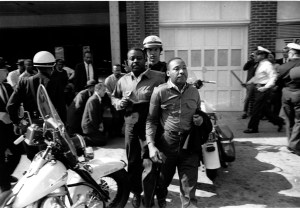
2. Who was King writing to in his “Letter from Birmingham Jail”? Broderick Greer gives the answer, quoting from “A Call for Unity,” the 1963 letter from white Alabama clergymen who sympathize with civil rights protestors’ “natural impatience” but call their continued direct actions, demonstrations, and protests “unwise and untimely.” King’s letter, smuggled from his cell, is his reply. The voice of the sensible middle never, ever changes. More and more I think of social justice work in terms of strategic radicalism: not “how can we reach across the aisle to create a compromise that will satisfy everyone,” but “how can we tactically force our sorta-allies in the middle to join our moral stand against what we find intolerable”?

1. And: live your best 1:14 by watching this clip of King on the origins of entrenched racial inequality, and the sole demand that will undo it. I showed this one to Finn.

Comments Off on The Ten Best Things on the Internet: February 2019

Filed under music, poetry, politics, spirit

Readings

“Takes,” poems, Tweet threads, reviews, and editorials I’ve read over the last six months that have stuck with me, and why. Punctuated with pictures so no one’s eyes have to cross with exhaustion.

Mary Margaret Alvarado, “On Memory with No Devices.” This is an essay you will never want to end.

Dan Arnold and Alicia Turner, “Why Are We Surprised When Buddhists Are Violent?” While I take issue with the piece’s implicit “we,” the authors make an important point about secular-dominant progressive American political consciousness. Most of us know Buddhism primarily through the ecumenical, culturally-mixed forms of Buddhism introduced in the last 50 years in colonizer states, which emphasize individual meditation and mindfulness and largely forego the religion’s incredibly varied forms of belief and ritual life throughout Central and East Asia. Because of our American context, it can be difficult for secular progressives to fathom how Buddhism— in Sri Lanka, Thailand, and now certainly in Myanmar— is used to justify horrible mass ethnic-national violence. The causes of this bloodshed are never simply religious, but in each case involved ethnic and state power; and in each case, the violence had passionate Buddhist critics. But Arnold and Turner are at pains to remind readers that any religion can be an instrument of nationalist violence.

Emily Bazelon, “When the Supreme Court Lurches Right.” Though this survey understates its own major point (that the Supreme Court has spent most of its history as a fundamentally reactionary and anti-egalitarian body), it remains a good overview of the shifting history of the court in American public life.

Peter Beinart, “American Jews Have Abandoned Gaza–and the Truth.” Beinart deeply identifies as a Zionist— he rejects the idea that the formation and expansion of Israel is intrinsically a settler-colonialist project, and strongly opposes the B.D.S. movement— but he’s been a consistent progressive critic of settlement expansion and of the corrupt, reactionary presidency of Benjamin Netanyahu. He’s also filled with moral horror at the consequences of Israel’s blockade of Gaza, and the spiritual costs to Israel of the human suffering that the state has brought on Palestinians. (His association with Israeli peace groups and his authorship of pieces such as this one are likely behind his recent detention at Ben Gurion Airport.)

Patrick Blanchfield, “The McCain Phenomenon.” This is the best piece I’ve read— free of sentimental glow but also of contrarian reflex— on the meaning of McCain in American public life: it’s a progressive’s examination of McCain as a symbol of America’s reverence for individualism, military honor, and matured rogueishness.

Zach Carter and Paul Blumenthal, “Former Obama Officials Are Riding Out the Trump Years by Cashing In.” Lockheed Martin, Uber, Covington and Burling, Booz Allen Hamilton, Morgan Stanley, Amazon: as soon as their government tenures ended, many of the most powerful figures from Obama’s administration stepped through the revolving door into comfortable positions selling weapons, subprime loans, union-busting regulations, and more.

Jeff Chang on De La Soul’s 3 Feet High and Rising. A joyful essay, an in-depth history of a unique cultural text: a work of incredible lyrical skill and bonkers musical invention, one that you still can’t get on Spotify.

Thomas B. Edsall, “The Democrats’ Gentrification Problem.” Educated middle-class white people and urban black communities exist across a widening fault line of money-mobility, neighborhood history, and a wealth gap deepened by racist housing policies. While this article says little about the role of organized multiracial communities in pressuring lawmakers from the bottom up to create housing equity, it’s still a top-down view of a deep tension between two important Democratic constituencies and the continuing power of white racial kinship networks in maintaining a black economic underclass.

Eve Fairbanks, “Well-Off Millennials Are All Julia Salazar. I Wish We Weren’t.” This piece diagnoses a real social problem— affluent folks feeling they have to exaggerate, or invent, a hard-luck biography to be seen as authentic, especially in high-stakes elite institutions— but avoids looking right at the sources of, or responses to, this phenomenon. My response is: yes. But privileged folks also just need to stop lying about our privilege. First, because it trivializes the reality of suffering we pretend to have experienced. Second, because it’s built on the cancerous belief that a safe, materially-comfortable upbringing makes us inauthentic. But how can we believe this, if we hope to create a world that (while growing beyond capitalist definitions of safety and comfort) actually is safe and comfortable, rich in possibility and relationship for all people? A sense of possibility and comfort isn’t the toxic aspect of privilege: emotional numbing is. The cost of buying in to privilege is choosing to ignore the dehumanization of those on which our comfort depends. (I also think that this habit of exaggeration leaves us less likely to honor the actual pain, our own or others’, that comes with any life. This is its own form of dehumanization.) Fairbanks does describe the transmutation of pain– into visible, nameable forms— she witnessed among her privileged cohort. But I wish she’d gone way, way further– and perhaps even ventured into encountering lives characterized by the suffering our material comfort is built upon. Or questioning the social value of high-stakes elite institutions altogether.

Max Fisher, “Israel Picks Identity over Democracy. Other Nations May Follow.” We’re in a global moment of parliamentary democracies shifting toward autocracy and ethnically-defined nationalism. The question for radicals is: what does the call to solidarity look like as states contract toward reactionary politics? How can we ourselves live out an alternative to the deep comfort of seeking company only in others like us? What is genuinely collective about collective liberation, and how can we articulate the value of the collective when compared to the shortfalls and exclusions of parliamentary democracy?

Paul Gilroy interviewed by George Yancy, “What ‘Black Lives’ Means in Britain.” Gilroy speaks about the power of corporate multiculturalism in Britain and the US; argues that inequality is a relationship, not the possession suggested by the term “privilege”; and describes the difficulties in black-solidarity organizing in a country defined (as Britain is) by economic-imperialist ventures and migration pressures different from the US importation of chattel slaves.

Jack Goldsmith, “Uncomfortable Questions in the Wake of Russia Indictment 2.0 and Trump’s Press Conference with Putin.” Bush II’s former Assisant Attorney General (who left in the wake of the Iraq War and the revelations of torture at Abu Ghraib) asks: What rules of international espionage did Russia break, that the US is willing to pledge to respect? What blowback or unwelcome reciprocity is the DOJ inviting by issuing subpoenas to foreign nationals? What vulnerabilities remain in our e-mail and voting systems? And: what unthinkable disasters are journalists inviting on themselves by encouraging the prosecution of Wikileaks?

Briahna Joy Gray, “How Identity Became a Weapon against the Left.” Gray has argued, here and in The Intercept, that as center-left institutions become fluent in the language of intersectional politics, they employ the signaling characteristics of that language to attack the left as racist and sexist for its emphasis on class. Doing so requires erasing the women and queer folks of color active in movements for (e.g.) single-payer healthcare, fighting Wall Street corruption, strengthening the green economy, or raising the minimum wage, but the center-left has a fabulous track record of doing so already.

N.K. Jemisin’s acceptance speech for her third consecutive Hugo Award win for the Broken Earth trilogy. It’s “a massive, shining, rocket-shaped middle finger” and a reflection on creative and spiritual survival against a steady deluge of racist shit.

Tim Maudlin, “The Defeat of Reason.” Phew, there’s a lot here. This article reviews two huge, argumentative, intellectually ambitious books: Adam Becker’s What Is Real?: the Unfinished Quest for the Meaning of Quantum Physics, on the puzzles, obfuscations, and final hope for clarity in quantum mechanics, and Errol Morris’s The Ashtray (or the Man Who Denied Reality), an attack by a former student on the philosophical and cultural legacy of anti-foundationalist intellectual Thomas Kuhn. In the first part of Maudlin’s review, he explores Becker’s historical work and conclusion that the conclusions popularly attributed to a quantum mechanical view of reality— fundamental smeariness, observer-dependence, and inconsistency— are bogus, the result of Niels Bohr’s Kantian dogmatism in defense of his version of QM and the physics community’s shut-up-and-calculate attitude. But Becker suggests that, though quantum mechanics may in fact be more deterministic than Bohr believed, it’s still spooky: electrons must be able to change from waves to particles in an instant, even if the waveform showing the electron’s possible location is immense: a faster-than-light change effected at a distance. Meanwhile, Morris, who despises his onetime teacher Kuhn as a relativist who discounted the importance of reason and evidence, charges at the legacy of Kuhn’s 1962 book The Structure of Scientific Revolutions. Kuhn introduced the notion of paradigms (the rules, practices, and examples that bound a theory of reality) and their importance in shaping scientific thought. A paradigm never wins out “by logic and experiment alone” but by power, persuasion, and culture. Further, no two paradigms are commensurable: the inhabitants of two different theoretical frameworks live in two different realities. Therefore, no neutral adjudication is possible– only conflict, and later history written by the winners. In a time where politics and philosophy were questioning the legitimacy of received authority, this idea was a sensation. Morris, now an investigative documentary filmmaker, hates it: “It is one thing to remark how hard truth can be to establish,” Maudlin writes, “and quite another to deny that there is any truth at all.” Morris’s book explores the nature of the reference of terms (the theory of how any noun picks out or denotes something in the real world) and ultimately argues that a belief in shared, neutral, objective truth is a moral issue. “If… we all live in worlds of our own manufacture, worlds bent to conform to our beliefs rather than our beliefs being adjusted to conform to the world, then what becomes of truth?” What are the consequences of believing that we impose, rather than discover, structure in reality? Maudlin’s essay falls short of exploring the appeal of Immanuel Kant’s Transcendental Idealism at the root of both Bohr and Kuhn’s philosophies. I want to hear his argument for why we’re tempted to believe that we merely impose, rather than actually experience, things such as time or cause-and-effect, etc.

Philip Metres, “Imagining Iraq: on the Fifteenth Anniversary of the Iraq War.” How can Americans hope to understand Iraq as more than a backdrop of our imperial history? Metres, author of the intricate and morally damning poetry collection Sand Opera, explores possible paths out of imperial memory.

Ann Pettifor, “Irish House Prices Sky-High Due to Finance Not Scarcity.” Dublin’s housing crisis is even worse than Seattle’s. And, as in Seattle, this is generally justified in microeconomic terms: massive demand on a limited supply. But in reality, the main driver is macroeconomic: housing is such a good investment that there’s a worldwide rush from the wealthy to buy in. If you buy a house, you don’t need to live in it to make money off it, especially if its value grows 6-10% a year. If you invest in a townhouse block and all six units are bought at 10-20% over list price in two months, you’ve just made a handsome return. Until we start taxing investment in things like condo development (or in buying a home you don’t intend to occupy or rent out), house prices will keep exploding.

Hilary Plum, a poem I love called “Lions” and an essay on war, Orientalism, historical memory, and the moral position of citizens in empire “Narrating Forgetting.”

Sebastian Purcell, “Life on the Slippery Earth.” An introduction to what’s survived in the historical record of Aztec moral philosophy, especially its emphasis on group– rather than individual– virtue.

EDIT to add this single tweet from Dana Regev, which– out of the whole spectacle of vicious male backlash and horrible retraumatization for women and femme folks in Kavanaugh’s nomination, Dr. Blasey Ford’s testimony, Kavanaugh’s ugly response, and his subsequent appointment to the Supreme Court– felt like the thing that I as a man/cismen most needed to sit with, journal about, talk with other men/cismen about, let haunt me.

Nate Silver, “There Really Was a Liberal Media Bubble.” It’s incredible the extent to which many professional journalists and think tank intellectuals are able to make a living having opinions while talking to almost no one but one another. Silver is, of course, not exempt from this himself, but it’s to his credit that he includes his own organization, FiveThirtyEight, in the scrutiny of this article.

Tim Urban, “The Fermi Paradox.” Why don’t we see evidence of the presence of other intelligent species in the Milky Way? This article, chirpy listicle style and all, is a good look at a scientifically and philsophically significant question, a different perspective on literally every sort of human problem I can imagine.

Blanca Varela, “Material Exercises” (tr. Jeannine Pitas). A great, strange poem, beautifully translated.

Bonus feature, “now without clip art!,” on the institutional Catholic Church: The Church as an institution is in a state of huge crisis; here are some readings about it.

A grand jury report of widespread, decades-long sexual abuse by priests, and coverups by leadership, in Pennsylvania coincided with the revelation that Cardinal Theodore McCarrick had preyed for decades on seminarians and altarboys.

A bomb-toss of a letter from pissed-off former Papal Nuncio (ambassador) Carlo Maria Vigano alleged in August that Pope Francis was aware that Cardinal McCarrick was a serial predator, and that Francis had nonetheless lifted the sanctions imposed on McCarrick (a lifetime of prayer and penance and withdrawal from public life) by the previous pope, the traditionalist Benedict XVI. Vigano claimed that Francis was willing to tolerate McCarrick’s behavior as he sought McCarrick’s help as an ally in fundraising and the appointment of more-progressive archbishops.

So: what to make of it? Well, Vigano’s letter is full of awful homophobic sinister-gay-mafia bile equating gay relationships, same-gender sexual abuse, and pedophilia. In its direct attack on Francis himself the letter is clearly intended as a means for right-wing European and American Catholics to concentrate their rage at Francis’s attempted reorientation of the church (toward suspect things like mercy, political egalitarianism, inclusivity, environmental stewardship, and concern for migrants and the poor) and build power for their own political projects. Finally, Vigano’s letter has since been revealed to be wrong in its particulars: it now seems that Benedict had never formally sanctioned McCarrick, but as of 2010ish informally asked him to keep a low profile. Nonetheless, there’s strong circumstantial evidence that Francis, like popes before him, was willing to trust his advisers in overlooking credible evidence of abuse to rehabilitate a potential political ally.

Here’s a Tweet thread from a Catholic with whom I imagine I’d agree on very little except for the moral parallel between two clubby, secretive institutional cultures that would tolerate those credibly accused of abuse: the Catholic hierarchy’s welcome for McCarrick and the Yale-Federalist-DC world’s support of Brett Kavanaugh.

And, you ask, where are the voices of actual gay clergy, in the midst of a shitstorm of fingerpointing, secrecy, and homophobia? Here’s one voice, from Fr. James Alison.

Comments Off on Readings

Filed under music, poetry, politics, science, spirit

Readings

Essays, “takes,” news articles, and one Twitter thread that have affected me in the last three months. Curious as always for your thoughts and reflections.

Carsie Blanton, “The Problem with Panic.” A sex-positive musician and educator reflects on sexual autonomy, #metoo, and the moral power of sex in our culture. Sex remains one battleground in which patriarchy controls, devalues, and silences women. But sexual assault also weaponizes a shame already present in our culture’s understanding of all sex. Blanton is fearful that the left may come to believe that we can legislate our way to “prudence” or “temperance,” without working to undo this sexual shame by talking honestly and specifically about the complexity of sex. “Sexual assault is about power; sex works as a method of control because sex and its attendant cultural narratives are so powerful.” Sex offender registries– enacted in a moral panic– do not deter first offenders or reduce recidivism. These punitive systems also fail to make important distinctions between different “sexual offenses,” in a way that Blanton feels destroys lives and also ultimately trivializes rape and assault. Blanton ends by reflecting on the work of undoing sexist socialization, toward a fuller sense of agency for women, that will make both sexual autonomy and intersectional solidarity more possible.

Agnes Callard, “Can We Learn to Believe in God?” Callard invites readers to consider openness to religion not as self-deception, but as an act of aspirational faith, similar to the fragile, doubt-filled hopes we hold about things such as our friends’ fidelity or our dreams’ likely success. As with sharing any new pleasures with a skeptical acquaintance, “you want him to try to believe them to be more valuable than he has currently has reason to, in order to learn their true value.” It takes openness to believe that there could be something utterly wonderful– something that could connect us with a more profound sense of meaning, kinship, and durable joy– waiting for us in life. Callard encourages us to view that openness as something other than self-manipulation.

Google researcher Francois Chollet posted this thoughtful, scary Twitter thread on Facebook’s use of AI. As algorithmic curation gets more pervasive and AI gets smarter, humans’ innate vulnerability to social manipulation is more and more under the power of systems such as Facebook that control what information we consume. He ends: “If you work in AI, please don’t help them.” I add: please consider getting the hell off of Facebook!

Terry Eagleton, “‘Cast a Cold Eye’: How to Think about Death“: An article from my favorite Christian Marxist theorist, on the liberating possibility of the acceptance of death. The call to “act always as if you and history were about to be annihilated” can be a call toward the radical affirmation, not negation, of value. Since no act can be undone, each act can be a preparation for the finality of death. So, in pursuing a moral commitment to liberation even to death, we can wrest meaning from death, in an assertion of the durability of the virtues we’re ready to die for. “Resurrection” promises not perpetuity, but an unimaginable transformation and redemption. Death itself, meanwhile, remains both unremarkable and inconceivable. “…Like love, death searches out what is most singular about a person, poignantly highlighting their irreplaceability. One of Plato’s objections to tragedy is that by furnishing us with images of death it reminds us of our apartness, thus undermining political solidarity. For Hegel, death, like law, is a universal truth that nonetheless confronts us with our utter irreducibility as individual selves, at once leveling and individuating. Like the human body, it is both an external fatality and radically one’s own, a mode of distinction but also a shared condition.”

Andi Grace, “Power under Abuse: What It Is and How to Heal.” How do we have mutual accountability in relationships when there are profound differences in power? This article asks extremely tough, complex questions about survival mechanisms from trauma and oppression; about comfort, entitlement, and shame; and about compassion.

Shaun King, “Philadelphia DA Larry Krasner Promised a Criminal Justice Revolution. He’s Exceeding Expectations.” When I saw scholar, professor, and activist James Forman Jr. speak in Seattle, he stressed that mass incarceration was constructed not by a single cultural turn but by countless small, often local, policy decisions. Forman said, too, that undoing it would require similar small, local steps, and encouraged activists to work not just for noble public defenders and City Council members, but enlightened and anti-racist prosecutors and DAs. Such people are out there and should be encouraged to run, Forman said. Larry Krasner has been a spectacular example of this: since taking office, he’s fired 31 prosecutors for opposing a civil rights agenda; he’s permanently prohibited 29 of Philly’s most tainted police officers from ever being called as witnesses; he’s ordered his prosecutors to decline charging marijuana possession or sex work; he’s increased diversions and softened the plea-bargain process; and he’s mandated that post-release probation be shortened to 12 months or less. Institutional transformation is, of course, vulnerable to rollback; it’s also not the same as structural transformation. (Like, does Philly have the staff in its diversion programs necessary to accept the flood of those newly referred to them? Does the police chief support Krasner enough to stem the plainly predatory and racist police practices that lead to arrests in the first place? What would it take for Philly’s schools to also adopt a diversion-based, civil rights vision of discipline?) But damn, it’s something.

Esther Perel, “The Secret to Desire in a Long-Term Relationship.” In this TED-ish chat, Perel examines the cultural uniqueness of modern Western coupledom— the strained belief that a partner can be one’s village, co-parent, friend, lover, and life partner— and then talks about the work of cultivating a space for the erotic– the playful, selfish, exploratory, resistant, vibrant– amid the commitment and responsibility of love. Some cool Freudian stuff as well about the messages our child self receives about the danger and joy of the world beyond the parents’ arms.

Evan Rytlewski looks back to an album I used to love and now can barely stomach, Sublime’s 40oz. to Freedom. Its eclecticism still feels utopian; the genres it sponges up I still adore; the musicianship is outstanding. But Brad Nowell’s lyrical boorishness and shameless copycatting wear me out. Why did this album strike the chord it did? Read on…

Rebecca Traister, “This Moment Isn’t (Just) about Sex. It’s Really about Work.” One critique of #metoo is the movement’s focus on violations in professional, rather than domestic, spaces. But, Traister says, this economic emphasis is important to examine for its own sake, beyond our patriarchal culture’s fascination with perceived threats to women’s virtue. “What makes women vulnerable is not their carnal violability, but rather the way that their worth has been understood as fundamentally erotic, ornamental; that they have not been taken seriously as equals; that they have been treated as some ancillary reward that comes with the kinds of power men are taught to reach for and are valued for achieving.” Traister notes that spaces and professions populated by poorer POC women haven’t been examined in this movement’s moral reckoning; she ends with the hope that this moment may begin the work of “addressing and beginning to dismantle men’s unjustly disproportionate claim to every kind of power in the public and professional world.”

Jenna Wortham, “Is RuPaul’s Drag Race the Most Radical Show on TV?” An awesome, nuanced profile of RuPaul. Wortham looks hard at some of the critiques of drag– from the malleability that drag assumes of femininity, to its fraught relationship to trans rights, to its roots in the interpretation/satirization of black womanhood– and also at the cultural earthquake that Drag Race has precipitated. Wortham points out the risks drag performers take on in a patriarchal society, the contempt aimed at those seen as willingly giving up the protected domain of male privilege. She also reflects on the profound generational shift around questions of identity that RuPaul reflects: from the 90’s-rooted idea that liberated communities could arise from satire and free play, to our current relationship to identity where “sharpening categories [is] a means to demand inclusion and recognition.”

Matt Yglesias, “Everything We Think We Know about the Political Correctness Debate Is Wrong.” The assumption among nervous liberals, outraged right-wingers, and everyone who absorb their thinkpieces– that college kids increasingly reject reasoned argument, that righteous young people mob-attack dissent, and that media echo-chambers have left us all less tolerant– isn’t supported by survey data. “”Overall public support for free speech is rising over time, not falling. People on the political right are less supportive of free speech than people on the left. College graduates are more supportive than non-graduates. Indeed, a 2016 Knight Foundation survey showed that college students are less likely than the overall population to support restrictions on speech on campus.” But dig the utterly unsurprising exception: “Among the public at large, meanwhile, the group whose speech the public is most likely to favor stifling is Muslims.”

Comments Off on Readings

Filed under politics, science, spirit

Readings

It’s easy for me to devour news analysis and critical writing online, respond to it with a strong emotional flare (“Yes!” “How awful!”), then forget about it. Trying to check that consumerist impulse by taking time here to share notes on things I’ve read online that affected or struck me, whether or not I agreed with the author’s arguments.

Philip Blond reviews John Milbank and Adrian Pabst’s The Politics of Virtue: Post-Liberalism and the Human Future. Blond is a conservative Catholic; his review favorably examines Milbank and Pabst’s assertion that liberalism is responsible for both dissolving social ties and duties on an individual level and creating a market authoritarianism on the social level. The authors argue that social liberalism, asserting that the most important freedoms are negative (“freedom from“), and economic liberalism, giving every realm of social life over to the market, are inextricably linked. But how to imagine a post-liberal politics that not just, say, reactionary populism or proto-fascism? These particular conservative authors are stumped. Too bad the review doesn’t meaningfully engage liberalism’s critics on the left.

Charisse Burden-Stelly, “Why Claudia Jones Will Always Be More Relevant than Ta-Nehisi Coates.” Burden-Stelly critiques what she sees in Coates’s writing on whiteness as a metaphysics– an unbreakable magic spell, intrinsic to America– rather than as one instrument of an oppressive social and economic order. “[A]ntiblackness is inextricable from the suppression of labor, the deportation of ‘alien’ progressives, the incarceration of anti-capitalists, the indictment of communists and ‘fellow travellers,’ the censure of demands for fundamental redistribution, and the overall repression of the left.” If racism is primarily an innate American wound instantiated in individual racist behaviors, there is no room for a structural analysis of inequality or the development of counterpower. Burden-Stelly paraphrases Claudia Jones, a 50s intellectual, that “white supremacy was not a matter of attitude or morals, but rather of property rights, access to resources, and the hierarchical organization of American society.”

Robert Cottrell reviews Masha Gessen’s The Future Is History, a study of Russian society under Putin seen through the lives of seven contemporary Russians. Gessen claims that Russia’s society has retained an orientation toward totalitarianism, which persists even in the absence of a totalitarian leader; Putin’s government is instead closer to a “Mafia state.” And in modern Russia the persecution of gays serves a similar purpose to Russia’s persecution of Jews: destroying an “enemy within” to strengthen state control of the social order.

Ross Douthat, “Is There an Evangelical Crisis?” Douthat looks at the white evangelicals who elected Trump even though he was a Godless bully and sexual predator. Won’t Trump drive away young evangelicals who care deeply about character and orthodoxy, and fissure white conservative political power? Douthat has his doubts. Many seem to be sticking with white Christian tribalism, no matter how partisan and anti-intellectual its results. And perhaps, in fact, it’s in this ghastly tribalism that evangelicalism had its strength all along.

Henry Louis Gates, “Let Them Talk: Why Civil Liberties Pose No Threat to Civil Rights.” From (of all places) The New Republic, originally published in the late ’90s. This is the most thorough and detailed argument against the idea of criminalizing/censoring “hate speech” I’ve ever read by an intellectual conversant in critical race theory.

Kenan Malik, “In Search of the Common Good.” Malik examines the notion of the “common good” and the role it plays in underpinning the possibility of solidarity. He notes that the common good has traditionally been defined by who it otherizes and excludes; and he also notes how liberalism has both weakened and widened this concept. “[L]iberal individualism has helped both undermine the idea of community, and hence of the common good, and expand our conception of the moral community which defines the common good.” In the US and England, both the left and right are currently deeply critical of the concept of the common good. We live in a very socially fragmented society, which makes solidarity across lines of ethnicity, culture, and faith (and meaningful engagement with one’s opponents) increasingly difficult. Where do we go from here?

Steven Mithen reviews James C. Scott’s Against the Grain. Humans’ transition from hunting and gathering to agriculture was messy, often disastrous: it increased the spread of disease among animals and humans; it wore down laborers’ bodies; and it promoted centralized hierarchy (made possible by taxation of grain), slavery, and war. By contrast, many centers of hunter-gatherer activity (Scott discusses Hongzhou Bay and Mesopotamia) had abundant resources, sometimes enough to permit a sedentary lifestyle. So why switch? Mithen’s review doesn’t mention Marvin Harris’s thesis in Cannibals and Kings, that most hunter-gatherer societies intensified their resource extraction until non-farmable resources were exhausted; they were thus forced to adopt agriculture. Mithen and Scott focus instead mostly on massive sites of worship as a justification for a transition to cereal-based agriculture. One aside from the article I loved: the term “Dark Age” is an elite invention. Before around 400 years ago— when there were still non-city-state areas left for outcasts and rebels to flee to— democracy, culture, and overall human health flourished precisely when city-states collapsed.

Charles Mudede, “Vancouver Study Shows Why Seattle’s HALA Is Doomed to Fail.” HALA– the Housing Affordability and Livability Agenda– is a Band-Aid on a huge problem: that Seattle’s bonkers housing boom is fueled, not by supply and demand, but by debt-driven finance. New condos are a speculative commodity making developers tons of money, and mandating that 10% of them be “affordable” will do nothing to slow an upcycling of all of Seattle’s new housing stock. The only realistic way to dampen this would be a high tax on speculation, something Seattle doesn’t have the power to enact.

Keeange-Yamahtta Taylor, “No More Charlottesvilles.” As the racist right enjoys unprecedented sympathy and moral support from federal government, anti-racist resistance needs to turn up, without the belief that the state will play any role in dampening reactionary violence.

Michael Wear, “Pro-Life Voters and Pro-Choice Politicians.” Wear’s political background is obviously not mine, but he makes a point about voting that has stuck with me. It’s tempting, and common, to think of voting as primarily a personal expression, a statement about our identity (as in “voting one’s conscience”). But if we really believe that our engagement with politics can be a form of loving one’s neighbor, our voting should reflect not primarily what we believe about ourselves, but about how we want peace, well-being, and empowerment to come to our communities.

Comments Off on Readings

Filed under politics

Speaking of Which

oscar-wildeA thought that ties into my post here Monday. From Oscar Wilde’s essay “The Soul of Man under Socialism”:

“The message of Christ to man was simply ‘Be thyself.’ That is the secret of Christ.

“When Jesus talks about the poor he simply means personalities, just as when he talks about the rich he simply means people who have not developed their personalities. Jesus moved in a community that allowed the accumulation of private property just as ours does, and the gospel that he preached was not that in such a community is is an advantage for a man to live on scanty, unwholesome food, to wear ragged, unwholesome clothes, to sleep in horrid, unwholesome dwellings, and a disadvantage for a man to live under healthy, pleasant and decent conditions. Such a view would have been wrong there and then, and would of course be still more wrong now and in England; for as man moves northwards the material necessities of life become of more vital importance, and our society is infinitely more complex, and displays far greater extremes of luxury and pauperism than any of the antique world.

“What Jesus meant was this. He said to man, ‘You have a wonderful personality. Develop it. Be your self. Don’t imagine that your perfection lies in accumulating or possessing external things. Your perfection is inside of you. If only you could realize that, you would not want to be rich.

“‘Ordinary riches can be stolen from a man. Real riches cannot. In the treasury-house of your soul, there are infinitely precious things, that may not be taken from you. And so, try so to shape your life that external things will not harm you.'”

Comments Off on Speaking of Which

Filed under politics, spirit

My Queerness, My Male Privilege, and My Catholicism

Reflecting on a responsibility to myself I’ve failed to fully keep: living my full self candidly in all my communities.

Part of my reverence for Catholicism, my embrace of it as a worldview, has to do with the deep importance of the body in Catholic faith life. The standing and kneeling. The dousing with holy water and the heavy earthy reek of real frankincense and the real flowers wilting and the real bloody sweetness of the wine. The weak and emaciated body on the cross instructing us in God’s willing embrace and redemption of all that’s bodily: our physical infirmity, our historical contingency, our subjection to arrogant power, our radical weakness, our possibility of freely-chosen solidarity and our passage into death: death the darkest shadow of all those cast by this beautiful and bleeding creation, the shadow twinning all its light, and God passing through it. I revere communion as a foretaste of our unity, body and soul, with God. We know God in our bodies: our bodies are not a shell or a sinker dragging our featherweight spirits into temptation: they’re braided up with our souls.

This is important because, in my experience of sexuality as well as of spiritual ecstasy, I feel brought close to the edge of my finitude. Karl Rahner said once that humans are incomplete beings oriented toward completeness. In spirituality as in sexuality, I feel a deep intimation of a unity that I as an incomplete being won’t definitively achieve in life but I can sense, unbearably close, overpowering and out of reach.

I feel all this wisdom in Catholicism, so deeply that it breaks my heart how deeply dehumanizing church teachings are on queer sexuality (especially queer sexuality, I should say) and women’s reproductive freedom.

Friends who I love– friends who are radically open to God, friends doing the work on Earth I’d call kingdom-building, friends in touch with a profound awe at the mystery of our existence– can’t find a home in my faith community. Who could blame them, when Church teaching calls queer sexuality “intrinsically disordered” and Francis compares the spectrum theory of gender to nuclear weapons for how both harm “the order of creation“? My parish is blessed to be home to an open, affirming, and progressive community; our families look many different ways; our parishioners and pastors were deeply involved with the “Catholics for Marriage Equality” campaign; but the weight of the Church’s own teachings hangs over all of us and our work.

And I, for my part, have made my home in my parish while hedging on a deep part of myself: I’m a queer person in a loving partnership with a woman. I’m queer in my range of attractions, queer in my romance, queer in my relationship’s experience of and agreements around intimacy– a queer person who passes, often willingly, as straight in much of my faith community (plenty of other spaces too). I’ve passed by choice and habit and a deeply internalized fear of exposure: an invisible fear, a matter of adjusting my habits and managing others’ expectations, rather than fleeing or explicitly denying anything.

The consolations of this act of passing– fitting in and tending to others’ expectations– are bogus. Can I pretend my heart is hidden from God? (Thinking of Luke 12:3.) This choosing to pass is also a failure of responsibility to friends who can’t choose to pass: I let them stay other in the eyes of my faith community, even of prospective allies in my faith community. This consolation also can’t compare to the joy I feel when I truly acknowledge and welcome my whole extravagantly sissy, tender, outrageous self. There’s a simplicity in this acknowledgement that I’m taking a deep breath and embracing. I believe doing this will bring me more harmony with the embodied qualities of Catholic faith I love, and more courage in speaking up against the aspects of the Catholic understanding of the body that I resist.

Speaking of which, I’m feeling more and more acutely the cost of being a man in an institution as foundationally sexist as the church. The Catholic church is the church of Mary, Ruth, Miriam, Julian of Norwich, St. Theresa, Flannery O’Connor, Sr. Mary Antona Ebo, Teresa Forcades i Vila OSB, Dorothy Day, Mairead Maguire, Milet Mendoza, Eleanor Josaitis, Sr. Helen Prejean: women on fire with the Spirit. But the Church’s name and might has also been, again and again, a means of controlling women throughout history, relegating them to a smaller humanity than men. The Church’s denial of the priesthood to women is offensive. It’s one of the distortions– like Augustine’s justification of forced conversions from, of all things, Christ’s parable of the great banquet– that come from rationalizing the arrangements of power in the societies where the Church had been invited to share that power.

The practice of church doctrines on sexual responsibility are, I believe, one aspect of this diminishment and devaluation of the female. Instantiated in everything from the Church’s extensive charitable work to its Sunday school, this doctrine falls punitively (and almost exclusively) on women, on the female body as a site of male power and control. For repeating the sin of Eve, a woman’s atonement will be acceptance of a child she may have no means to care for and no support in raising. In my stinging conscience, I’m aware of how my comfort as a man in a male-dominated institution has sometimes dulled my resolve to speak out about sexuality, female empowerment, and abortion to my Catholic spiritual siblings, and my resolve to show visible solidarity with others who do so.

I love Catholicism for the age and weathered grandeur and extravagant patchiness of its cultural and ecclesial life. It reflects many societies, many ways of knowing. The Church’s very human overelaboration– of ritual, artifice, decoration– doesn’t match the grandeur of God. But this overelaboration is, to me, a more beautiful sort of failed attempt than that of the hard-pew, bare-cross Presbyterianism I was raised in. I feel I belong in the Church. I write candidly about sexuality and institutional sexism here not out of a fantasy of reshaping the church to suit my experience, but because it feels poisonous to belie my conscience by omission. “He who acts against his conscience always does moral evil.” My resolution is to risk discomfort more in search of truer harmony and joy, and to give more labor and solidarity to those doing kingdom work in the church itself.

Thanks to A and G who urged me to find the courage to speak all this. Thanks to J for shining a light for me on women leaders, lay and religious, in the church.


Comments Off on My Queerness, My Male Privilege, and My Catholicism

Filed under politics, spirit

Songs I Like #9: Dead Kennedys, “Moon Over Marin”

Our normal is another’s crisis: our tank of gas puts Tuvalu under water; our cheap tropical fruit grows in a rain of Guatemalan bullets. We— the we of the educated and decently-secure Global North– don’t experience this directly, not without a certain counter-socialized moral effort. But then, there will always be people who don’t notice that the world has ended. Marin: unthinkably expensive fixer-uppers, chilly moss-blanketed redwoods, virtuous grocery stores, sheer red rock, hideous traffic (since 50 years ago upscale neighbors turned down the chance to have the BART come) dotted with nonpolluting cars. It takes seeing another’s comfort sometimes for me to remember that my, like anyone’s, comfort is breathtakingly fragile, and is also a force that gives me meaning, a frame for life, a sense of what’s normal. “Moon over Marin” is a serious, stark tune, an outlier amid the laughing hysteria and vivid contempt of the Dead Kennedys’ Plastic Surgery Disasters. A solemn and comfortable last survivor– park ranger of the ruined shore? a last resident whom this life suits just fine?– walks their section of the oil-choked, poison-leaching beach in uniform and gasmask, then returns home for a sacramental cleanse in a “scalding wooden tub.” Above it, the clean bright unspoiled Moon is as permanent as our life, its tidiness and predictability and comfort, is transitory. We have more power than we realize.


2 Comments

Filed under music, politics

First Thoughts for My Beloved Community

I.

Concentrate on this feeling. The hopelessness, the feeling of entrapment, the thought of flight, the heart-tugging fear you feel looking at your children asleep and imagining the world they’ll grow up in. This is a feeling– and I’m addressing my urban white lefty community– that’s attended every election (every police shooting, every teargas canister, every widening of surveillance, every gotcha drone strike) for our Muslim neighbors, our black neighbors, our trans neighbors, our immigrant neighbors. Now we urban white lefties can feel it too. That fear.

Concentrate on it– really invite it, so you can recall it in your body when your own moment for showing up in solidarity comes. Or for more than a moment, when you’re making the countless small decisions that orient a life as a whole. We’re called to be bread for each other, to transform ourselves, to lift up and love the humanity of those whom this new president will almost certainly surveil, incarcerate, disenfranchise, assault, degrade, bomb, and torture.

II.

If this is your thing, pray, listen to meditative music, read something sacred (for me today it’s Psalm 73), remember that we’re held in a mystery that we can never master, carried in a movement and a love that’s bigger than us. That feeling of awe isn’t the same as passivity.

III.

Just as politicized organizers of color have been saying for decades, our white lefty cynicism and hopeless contempt won’t protect us, our inaction won’t protect us.

And just as politicized organizers of color have been saying for decades, racism is a potent force in American politics. Concentrate on that feeling, the way that knowledge feels. Poor and working-class whites have felt the sting of exclusion from decades of urban neoliberal policymaking. Its fruits have been poverty, deindustrialization, wage stagnation, drug abuse, suicide. Now, given years of assiduous right-wing organizing; and given a candidate who ran as an outsider, who embraces a cult of action and victory, who’s too tough to brook civility, compromise, or dissent, who calls back a nationalist rhetoric of greatness to be reclaimed; these voters have embraced him.

And just as politicized organizers of color have been saying for decades, the “normal” of privileged folks is another’s crisis. It is easy to intellectually sympathize with those crushed by globalized capital (or for that matter by white supremacy, patriarchy, and empire) without really understanding in our bodies what it’s like to live in fear, uncertainty, powerlessness, and alienation. Trump harnessed those emotions among whites and is willing to weaponize them. Now urban white lefty folks, many of whom are insulated from the shocks of neoliberalism, suddenly feel the ground moving under us, too.

But I’m remembering too something Stokeley Carmichael said: “You can’t organize people if you don’t like them.” Urban white lefties, this is our call to do organizing with rural whites. They are not an implacable, homogenous enemy, but are, just as much as any community, a source of potentially liberatory energy: as a hotbed for labor organizing, as a community of potentially welcoming and justice-oriented Christians, as people who don’t want to see their homeland polluted to death.

And please remember, as I’m trying to remember, that most poor white people voted for nobody: disenfranchisement of those on the economic bottom has been as important to Republican power as gerrymandering and Citizens United. Categorical enlightened-white loathing of a fictitious single category of poor bigoted-white is poison.

IV.

It seems likely that, with majorities in both houses of Congress, the new president will have the means to push the Supreme Court back to its essentially reactionary/pro-Big Guy role of the pre-Marshall Court era; further restrict access to abortion; further militarize the police; surveil and detain Muslims and possibly radical Black organizers as well; significantly weaken programs like Medicaid and TANF; roll back all protections of the Voting Rights Act; enable industry capture of the EPA; embolden (with his violent rhetoric) racist cops, transphobic legislatures, and anti-immigrant bullies.

And that’s just domestically.

None of this requires an explicit authoritarian power grab– arresting opposition senators, shutting down media outlets, cultivating enemy lists– but who knows? In four years, will America look more like England or Poland does now? Or more like Argentina or the Philippines did in the 1980s?

Or, with Trump’s bluster matched by indiscipline and deep personal ugliness, he may simply get hammered by a change of political tide (in organized opposition and mainstream institutional resistance) in two years. But if that happens, it won’t be because we checked out, gave up in disgust, or stuck to our politically-liberal cities.

It’s time to organize.

V.

The next days, weeks, months will show how the Democrats react. There’s an actual possibility that they may have to shift toward being a multi-racial populist coalition party, with a fifty-state strategy, to survive. But they may take exactly the wrong lesson, blaming (say) Black Lives Matter and Sanders for daring to criticize the genteel East Coast neoliberal-moderate consensus that’s dominated the party for 20+ years; they may attempt to drag the party back toward some imagined “center.”

I don’t want to discount the simple power of reactionary sexist hatred in Clinton’s defeat. It’s also important to remember that— from her hawkishness to her association with her husband’s crime bill to her friendliness with Wall Street— many people found reasons to simply distrust her as a leader.

VI.

I’m no great fan of the liberal state. But the right-wing push toward hard partisanship, the exacerbation of inequality, and intentional dysfunction has served to drain any sense of comity, shared commitment, or common aspiration out of civic life.

I want to build the power of the people whom this president will seek to crush. At the same time, as much as any other anti-authoritarian, I want a country whose processes and politics encourage us to build relationships with one another; not just fight. I hope the rhetoric of those in resistance to Trump is about healing and solidarity as well as power.

VII.

Here are some things I’ve read and heard since Tuesday night that have grounded me and given me perspective.

Glenn Greenwald, “Democrats, Trump, and the Ongoing, Dangerous Refusal to Learn the Lesson of Brexit

Damon Young, “This is What White Supremacy Looks Like

Ruby Sales interviewed by Krista Tippett, “Where Does It Hurt?: the Spiritual Crisis of White America

Eric Posner, “Are There Limits to Trump’s Power?

Charles Mudede, “I Thought America Would Never Become a Zimbabwe. I Was Wrong.

Would love to know what’s done so for you.

1 Comment

Filed under politics