Category Archives: music

(2015 and) 2016: Songs

Life is basically sad and hard as well as a sublime gift, a cliffdrop as well as a stargaze, and this year I tried to be less consumerist in my relationship to finding new music since why let capitalism pollute more in me than it already has. This was the year, of course, of groundshifting political cataclysm as well as death after death; it was also the year, for me, of Jimmie Dale Gilmore, Anonymous 4’s medieval Marian hymn anthology The Lily and the Lamb, Captain Beefheart’s Doc at the Radar Station, Billie Holiday’s Solitude, Ornette Coleman, Atrium Musicae’s Al Andalus, Unwound, Incredible String Band’s Wee Tam, Augustus Pablo, Paul McCartney’s Run Devil Run, and finally getting the hang of Elvis through his Valentine Gift for You collection. So through it all I chose not to rush or cram; I listened, then, to less new stuff. Here’s what I loved best of what I did hear.

First, songs I loved this year (including songs from last year I got around to in the last twelves months) that I loved even if I didn’t love, or never heard, the rest of the albums they were from. Playlist here. Starred songs aren’t on Spotify.

Edit: In talking about a few of these songs I shared stories of folks’ experiences that weren’t mine to share. These have been cut.

Songs: “Doing my face with magic marker”

jeffrey_lewis

Adele, “Send My Love (to Your New Lover).” Seattle’s Top 40-ish, silly “hip hop and hits” station, KUBE, got amoeba’d into the even more Top 40 “Power 93,” where you can hear a lot of Justin Bieber and Juicy J and Taylor Swift and Drake and, it turns out, Adele, who I’ve never intentionally listened to, until this song made something more joyful out of a rainy drive home in a borrowed car with a cranky kid and groceries.

Afous D’Afous, “Tarhanine Tegla.” I knew this Sahara-wide hit only because of Sahel Sounds. C cried watching the music video for how it made her miss what she knows is her heart’s home.

Beyonce, “Sorry” and “Formation.” My two from Lemonade.

blood-orange-dev-hynes-west-drive-leadBlood Orange, “Best to You.” Dev Hynes, like few other male singer-songwriters besides Tricky, can write R&B for women singers that (in this one male listener’s opinion) centers their own emotions and their own consciousness– treats them, in other words, like subjects— instead of as props for male ego or furnishing for male fantasy. This was my favorite from Freetown Sound. Honorable mentions: “E.V.P.,” “But You.”

Jherek Bischoff, “Ca(s)siopeia.” The least filmic and for me most affecting from this record of ambient chamber music. Really this whole record stirs my heart when I put other things down and attend to its big visual gestures and eerie textures, but this is the song whose emotional effect was biggest for me.

Christine & the Queens, “Tilted.” 

Chromatics, “In Films.” The second pre-release single from a record by now more than a year delayed, one of those hooks where the doubled-keyboard-and-guitar has been compressed into one big heavy blur of sound and Ruth Radelet floats over the whole thing.

chrDIIV, “Dopamine.” Still trying to understand what to make of this self-mythologizing martyr wreck of an artist, but I get this one now. This song, trebly and echoey and delicate and nervous and sexless and circling back on itself, sounds like drugs to me.

Missy Elliott, “WTF (Where They From)” (ft. Pharrell). Finally got this one at Dance Church.

Ariana Grande, “Into You.” Whenever I listen to it, I wind up listening to it three times in a row. Max Martin’s clockwork sense of song construction complements Grande’s impeccable vocal control (which I find annoying on her plentiful dippier material) and I nod along until there I am lipsyncing. Honorable mention: “Greedy.”

*I.F.O., “Nibiru” (ft. Afrika Bambaataa)Afro-futurist old school party music building to a single hot-blooded climax/blastoff.

Janet Jackson, “No Sleeep” (ft. J Cole). Honorable mention: “Dammn Baby.”
youngthug-thefuturefmJulia Brown, “All Alone in Bed.” My favorite from the last album by Caroline White and the busy Sam Ray (also of Ricky Eat Acid) under this name. An Abundance of Strawberries feels a little historical— a “notes on the canon of bedroomy indie pop”-type record, with less ecstasy and sparkle than (say) Unrest or the Spinanes or Saturday Looks Good to Me— but this song’s unprepossessing lift and joy still moves me.

Junior Boys, “Over It.” I like how these guys, album by album, refine and tend to their sound in that studious, grownup way of studious, grownup bands; I like the move on Big Black Coat toward chilly, Detroit-ish techno, though the sound means that Jeremy Greenspan is more reserved about his desperation and mopeyness than on their earlier records.

Jeffrey Lewis & Los Bolts, “Back to Manhattan.” Sometimes a single emotional moment can contain a whole world; sometimes very gentle and gradual change is best at conveying a shock or unexpected loss (I won’t spoil this song’s).

Main Attrakionz, “My Story.” My favorite from a whole album of rapping over New Age!

Massive Attack, “The Spoils” (ft. Hope Sandoval). Now that Daddy G Marshall has rejoined Robert Del Naja, “bringing the black back to Massive Attack,” my hopes and longings for their next full-length are currently astronomical. This one, with Hope from Mazzy Star over a slow-moving hibernal melody, is my favorite from their stuff this year.
0002327945_10*Joanna Newsom, “Time, as a Symptom.” I wish I were different, but a decent chunk of Ys, half of Have One on Me, and most of Divers missed me completely. I connect with Newsom’s presence live, and her empathy means the preciousness of the music doesn’t feel self-absorbed, but only when the tune is perfect (“’81,” “Cosmia”) or she’s seized and shaken by her own poetry (“Sawdust and Diamonds”) do I love it on record. This one’s the latter. Dig the Finnegans Wake quote!

DeJ Loaf, “Hey There” (ft. Future). Liz! Remember driving across the California desert in our rented gas-monster listening to rap on satellite radio?

Frank Ocean, “White Ferrari.” I love the weird paradoxes of Frank Ocean’s music— luxury blues alongside sensory pleasure; gnawing loneliness alongside grownup reflection; musical asymmetry and refined, detailed production— but I wind up finding the albums too subtle and slippery when I take them as a whole. This tune, movement by movement (Cait pointed out the Beatles quote to me, and now we sing the title to each other during any odd pauses in conversation), is my fave from Blond. Honorable mention: “Self Control.”

Rihanna, “Needed Me.” Honorable mention: “Kiss It Better.”

0008025823_10Swet Shop Boys, “Zayn Malik.” Haven’t listened to the new full-length. Honorable mention: all of these guys’ recent singles are fantastic.

Tinashe, “Ghetto Boy.” The difference, I guess between an album and a mixtape-you-pay-for, like Tinashe’s Nightride, is expectation, I guess: “this till the next thing.” Tinashe is a great, weird, mystically-inclined R&B singer stuck treading water with poppy material (so-so features with Juicy J and Chris Brown) while her label looks around for a way to make her big; Nightride‘s neither as broad as Aquarius or as idiosyncratic as Amethyst, but I’ll take it till the next thing, especially this sublimely beautiful tune. Honorable mention: “Company.”
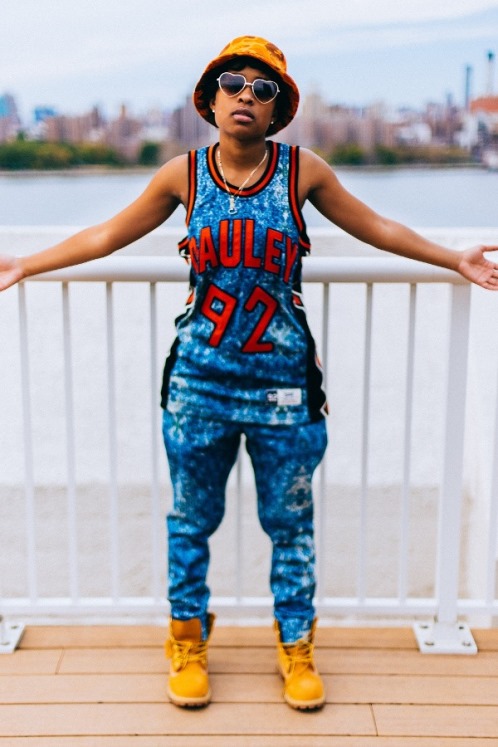
4d7453a830e4d3d16c5e20e803d863ccWaxahatchee, “Summer of Love.” Gabe finally got me to listen with open ears. Honorable mention: “Under a Rock.”

Wimps, “Old Guy.” I’m 33; my already huge forehead is growing into a widow’s peak; I fall asleep after three drinks; my sister-in-law had to explain to me what “turnt” meant; I’m the old guy at the party. Honorable mention: “Take It as It Comes.”

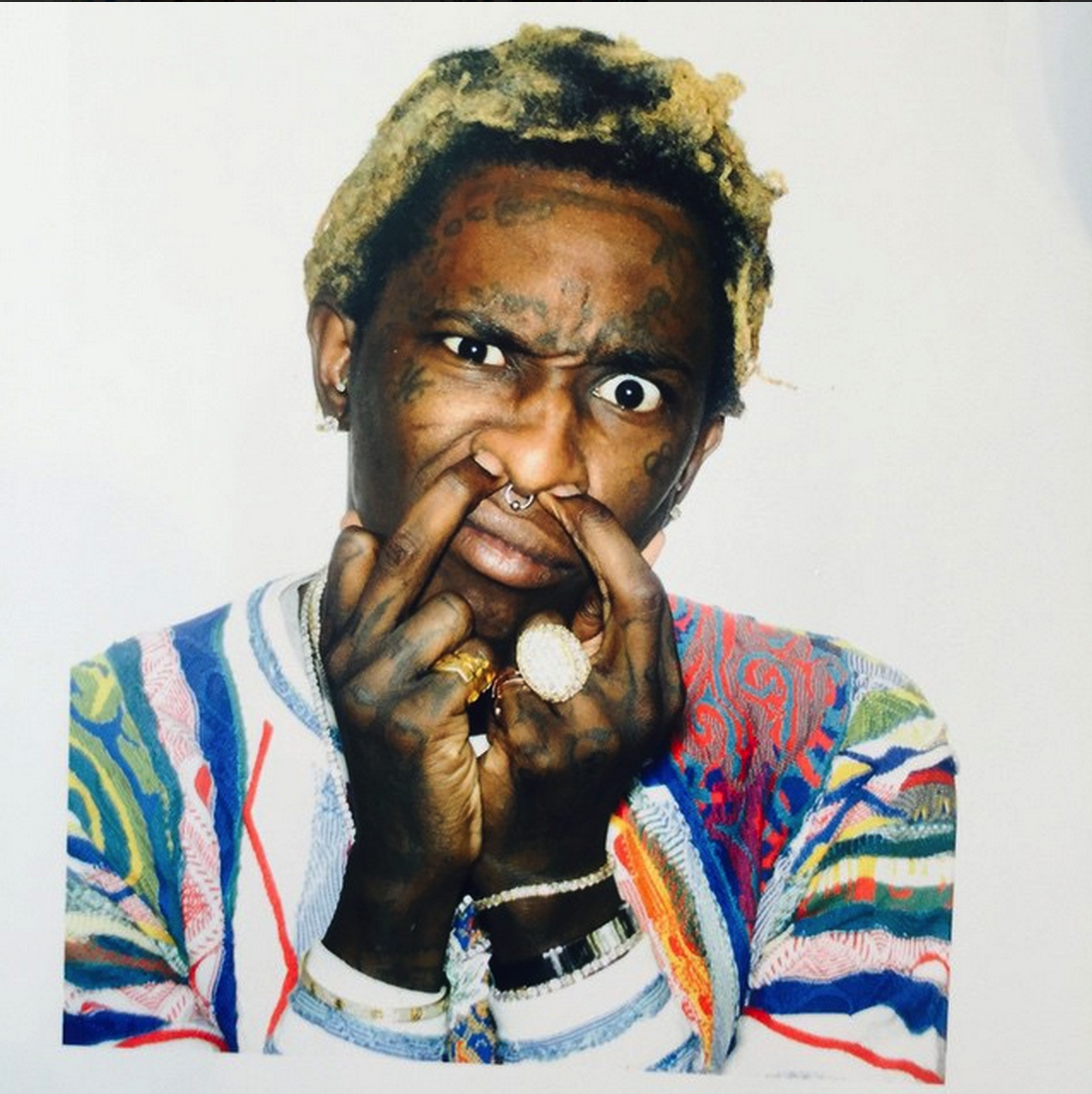
Young Thug, “RiRi.” JEFFERY was the first of these syrup-thick Auto Tune’d contemporary Atlanta rap records I could fathom. The loopy childish brutality of Thug’s lust and neediness are sometimes too much for me, but the guy has a sound out of which he can sculpt endless musical shapes and he sounds so happy doing it– like E-40. This one (maybe named, with fannish enthusiasm, because of that hook?) was my fave. Honorable mention: “Webbie.”
Comments Off on (2015 and) 2016: Songs

Filed under music

Songs I Like #9: Dead Kennedys, “Moon Over Marin”

Our normal is another’s crisis: our tank of gas puts Tuvalu under water; our cheap tropical fruit grows in a rain of Guatemalan bullets. We— the we of the educated and decently-secure Global North– don’t experience this directly, not without a certain counter-socialized moral effort. But then, there will always be people who don’t notice that the world has ended. Marin: unthinkably expensive fixer-uppers, chilly moss-blanketed redwoods, virtuous grocery stores, sheer red rock, hideous traffic (since 50 years ago upscale neighbors turned down the chance to have the BART come) dotted with nonpolluting cars. It takes seeing another’s comfort sometimes for me to remember that my, like anyone’s, comfort is breathtakingly fragile, and is also a force that gives me meaning, a frame for life, a sense of what’s normal. “Moon over Marin” is a serious, stark tune, an outlier amid the laughing hysteria and vivid contempt of the Dead Kennedys’ Plastic Surgery Disasters. A solemn and comfortable last survivor– park ranger of the ruined shore? a last resident whom this life suits just fine?– walks their section of the oil-choked, poison-leaching beach in uniform and gasmask, then returns home for a sacramental cleanse in a “scalding wooden tub.” Above it, the clean bright unspoiled Moon is as permanent as our life, its tidiness and predictability and comfort, is transitory. We have more power than we realize.


2 Comments

Filed under music, politics

Songs I Like #8: King Tubby, “Hijack the Barber”

I started this during a music-writing activity I did during the July swelter with my students at King County Jail.

These last couple weeks have been so steady-hot that I’ve had to cultivate the art of slow: slow moving, slow eating, slow love and slow days so I can (hopefully) not break that first sweat; club soda with lime, strawberries, rose wine, frozen coconut bars, and, finally, dub reggae.

I’m probably one of the only non-stoned people in Seattle to love dub–the languorous, liquid species of instrumental reggae that cuts the vocals into echoing shreds, turns the horns into punctuation, and soaks the drum accents until they sound like they were played in a cathedral, adding a third dimension to the music and making its tricky editing sound sensual, and above all easy. In a dub track, only the bass remains untouched, the song’s heartbeat and soul, and I have a subwoofer that turns the bass into a kind of heavy massage.

Dub was the only music my dad forbade; he forgave Suicide Machines screaming “I don’t give a shit about you stupid motherfuckers!” and Sublime’s porn samples and Snoop Dogg and Dre spelling out their revenge on Luke, but when I put on Lee Perry’s Arkology box, he said, “God, please turn off that mind-rotting stuff!” Up to my room with it I’d slink. But now, I think even he’d agree that it’s just too damn hot for verses and choruses.

One day I’ll convince Cait that we need to put a $1,000 stereo into the $2,000 Camry we share with our housemate, but until then, I can get rattled and stretched and beaten by my dub LPs only at home on my couch, letting our ceiling fan stir my hair, letting the music accent the dreaminess and dusty heat of these summer days.

Comments Off on Songs I Like #8: King Tubby, “Hijack the Barber”

Filed under music

A Premature Eulogy for Robert Christgau

Robert Christgau isn’t dead. He slips on his orthotics and goes to shows; he listens closely to many hundreds of new records a year and writes beautifully about dozens of them. I don’t want to wait until the 75-year-old rock critic kicks the bucket to consider his virtues and talk about how much I love him.

Christgau at home. Image lifted from Brooklyn Magazine profile "The Dean's List"

Christgau at home. Image lifted from Brooklyn Magazine profile “The Dean’s List”

Christgau’s lifelong affection for the rock and roll’s collective cultural appeal, physical pleasure, and black-led but deeply integrated racial history has made him prickly toward those who apply high-art ambitions to the genre. It’s also made him unusually sensitive, as white critics go, to the ways that race and racism play out in rock and roll.

As early as 1967, mainstream tastemakers began to embrace the more ambitious white West Coast and English rockers as “geniuses” making “art” in the mixed idiom of rock and roll, conferring a cultural legitimacy (and a European Modernist heritage) on their cryptic lyrics and heady, baroque arrangements. This legitimacy would long elude, say, black geniuses in the rock and roll tradition, from James Brown to Holland-Dozier-Holland. Surveying the white-dominated, “forward-thinking” scene at that year’s Monterey Pop Festival, Christgau noted that he didn’t see anyone there who felt their music had a kinship “with, say, Martha and the Vandellas.” As rock became “art,” with the racial baggage this implied, Christgau stuck with his own sense of pleasure as a critic, refusing to take surface opacity for depth.

And as recently as last year, he noted that the much-maligned hit-factory style currently dominating pop—where beatmakers shop their rhythms to producers who match those backing tracks to a series of hookwriters and then to a singer—had at last undone the Eurocentric tradition of songwriting credits (and royalties) being divided between the lyricist and melodist. For decades, the rhythmmakers—the crew that carries the song’s heartbeat, the people who make a good tune a hit—being consigned only to per-session payment, or at best a small slice of royalties. Now, thanks to the hit factory, they’re the first ones getting paid.

101382-full

1978. Lifted from Pacifica’s website: http://www.scpr.org/

He has the kind of beautifully subtle distinction in his listening that comes from paying close attention to his own sense of pleasure ahead of—and sometimes against—critical chatter. His acuteness means he can find things to admire and enjoy even in records that make him uneasy or that he’s inclined to strongly dislike. He’s not afraid to speak in moral terms about records he finds revolting. Plus, of course, his writing’s polish and concision means he can say/evoke/riff on/crack wise about a lot in very few words. It remains damn refreshing to read criticism that (to echo a formulation from writer Carl Wilson) works hard to locate for whom, to whom, and by what channels a work of art speaks: Christgau’s criticism is social, free of bohemian chauvinism. It’s also refreshing that, though Christgau has zero interest in making himself like something, he’s willing to ask himself what it’s like for him to like something, and share the fruits of this question with his readers.

(This is not to cover up some obnoxious moments in his writing—at one point referring to Hendrix, an artist he adored, as a “psychedelic Uncle Tom”; making a nasty sexist quip about the Donnas; chastising Nas and Damian Marley’s critical Afrocentrism by informing them that critical dissent is protected thanks only to the European Enlightenment. And, of course, sometimes I find his reviews reactionary or misguided or etc. He’s written a lot.)

And then, of course, there are the fruits of his work. Through his inimitable and seemingly inexhaustible Consumer Guide (14,000 reviews there to browse), I’ve discovered easily a hundred completely-new-to-me-at-the-time records I now adore. (Surely I’m not the only one to trawl Spotify with his A-pluses in a separate tab?) This spring alone I’m getting to know Wussy’s Funeral Songs, Kate & Anna McGarrigle’s Tell My Sister rarities collection, the Three Tenors of Soul’s All the Way from Philadelphia, Sly & Robbie Present Taxi, Sam Mangwana’s Maria Tebbo twofer, Amy LaVere’s Hallelujah I’m a Dreamer, and Ornette Coleman’s Of Human Feelings. He hates metal; he’s grossed out by most jazz fusion; he detests prog rock. But he’ll listen attentively to it three times before he tells you so.

Christgau, I look forward to years of not-having-to-miss-you-yet.

Love

JAT

Comments Off on A Premature Eulogy for Robert Christgau

Filed under music

Songs I Like #7: Papa Wemba, “Adida Kiesse”

A decade ago, someone left a CD of Franco at the zine library where I volunteered, shelving and cleaning, and I fell in immediate soul-stirring, body-tingling love with it, the way as a teen I lost it at first listen to Giant Steps, London Calling, The Indestructible Beat of Soweto, Country Life, feeling in the physical flow and vibrancy of the music something that fit an exact place in my spirit. Franco, a guitar colossus, declamatory singer, and ace bandleader, led the transition of Congolese music from lilting Cuban-inspired rumba to the punchy, virtuosic, sensual-then-brisk dance music called soukous. He and his rival/pal/fellow continental superstar the sweet-voiced Tabu Ley Rochereau so completely dominated the soukous scene in Kinshasa that they’d absorb nearly every gifted player and singer into their own rotating groups. One of the few exceptions to the creative duopoly was the prickly and independent-minded bandleader and composer Papa Wemba, who roared out of his Zaiko Langa Langa band in the 70s to create hard-edged, funky solo music.

Wemba, who died onstage in Abidjan three days ago at 66, could bark and wail and keen and serenade, sometimes all in the same song; he could quote village chants in a Saturday-night dancefloor tune. “La ville et le village,” he once wrote: “deux visages que j’aime!” I first met his music on the 1977-1997 anthology, then on the Peter Gabriel project Molokai. This tune– from the 90s, long after most soukous giants had fallen silent– is my fave.


Comments Off on Songs I Like #7: Papa Wemba, “Adida Kiesse”

Filed under music

Prince: First Last Thoughts

When an artist you love dies, what do you mourn exactly? I can’t mourn like Prince’s family will mourn, his close friends and collaborators, his church friends, the people who knew and loved the person.

What I mourn is the possible generative future of a damn inconsistent and still wonderful artist—the next “Breakfast Can Wait” or “Black Sweat” or “1,000 X’s and O’s” that there’ll never be, much less all the stone-cold classics (I cleaned my writing studio just this morning to “Housequake” and “Slow Love,” danced just last night to “Raspberry Beret”) whose source will never conjure them up for us live. (Missed him last year here in Sattle; played four nights at a small club, $250 a ticket, extraordinary from what I heard, a 3-hour show of classics and B-sides and requests melting under the heat of his tireless energy and the crowd’s love.)

But mostly what I mourn is the projection of a possible way to be, a Prince I could live inside and love and shock myself as, a Prince that refreshed the courage of my community of weirdos queers artists mystics Christians and forever reshaped our big culture’s borders around racial and sexual identity and music.* I don’t know almost anything about what Prince was like personally. But I do know that an artist can be incredibly difficult in person but still, by extending their “I” to contain the longing and lust and will for freedom and psychedelic dreams and invention of the people who adore their art, give a gift of radical possibility. People could close their eyes and put themselves inside his music, his persona, his Prince-ness and be changed.

It’s different, I think, with the writers I love: the emptying of the personality into the written work means that there’s something primary, still-living, in their books even when they’re gone. (I still wanna take a moment and recommend round-the-clock health monitoring and security for Samuel Delany.) But Prince, now, belongs to a time that’s no longer quite reachable by the people whose lives and imaginations he changed. So that’s what I mourn.

*: Clarification added, after a few hours’ reflection, to the original post. Prince’s radical push against a homogenized white perception of black culture—his refigurement of blackness in the eyes of his pop audience—is a huge part of his art. And it’s an aspect of his work that, I wanna be clear, I can never “live inside,” as a POC fan of Prince’s music could. Prince was an artist of color in a racist society; I’m white. I can love this dimension of his work, and be challenged by it, and learn from it, but it’s not my role to inhabit.

Prince3

1 Comment

Filed under music

(2014 and) 2015: songs

Twenty-five songs for twelve (twenty-four) months, heartache and ecstasy and death and ordinary days wiping noses, catching buses, patching flats, cleaning the kitchen after everyone’s gone to bed. Here’s the Spotify playlist for this one, again missing songs with the (*). Please note the random peppering of artist photos that has nothing to do with the artists they happened to be wedged next to.

Songs: “cuddle buddies on the low”

alabama shakesAlabama Shakes, “Shoegaze.” On Sound & Color, these guys absorbed some of the chilly timbres and sharp dynamics of post-punk, much to the delight of my hometown’s indie station; but my favorites on the album are still the warm, punchy, soul-derived tunes, this one and “Future People.”

Mary J. Blige, “Long Hard Look.” An impossibly brave and robust singer whose guest spots I’ve often liked better than her albums, Blige here completely puts over a song that I could scarcely imagine a younger singer having the courage to touch.

Buena Vista Social Club, “Lagrimas Negras” (feat. Omara Portuondo). My favorite from their odds-and-ends collection this year.

The Chemical Brothers, “Wide Open” (feat. Beck). Consoled me on a rainy drive, helped me think of the future during a sad hard conversation.

incDisclosure, “Good Intentions” (feat. Miguel). Finally feel like I get the hang of house vocalists, why they sound so far off. In R&B, the singer’s drama and storytelling is the song’s emotional center; in house, the singer’s another instrument, an underlining of (or counterpoint to) the song’s energy and emotion. The distance of Miguel’s regret here isn’t a sign of an aloof performance: it’s his response to house’s history of anonymous, coolly-lonely divas, the same way Miguel’s own “Kaleidoscope Dream” responded to Shuggie Otis, “Adorn” to Gregory Abbott. And, of course, distant regret has been one of my winter’s dominant feelings, so this song couldn’t be more appropriate.

Drake, “0 to 100/The Catch Up.” Surprising no one, I find I love love love this song: a statement on the state of the art.

Ty Dolla $ign, “Saved” (feat. E-40). The better the speakers I’ve listened to this one on, the more I’ve found in it: the chorus’s bass drop, the shifting filter on the synthesizer arpeggio that brings it closer and farther, wrapping around you then drawing back. Yeah, Ty seems like a cad, but at least he’s repeatedly honest about it, and in E-40 he welcomes an elder who’s spent years expressing the same sentiments. “I ain’t gonna save her,” he says, but the music itself is a restorative joy.

whitesunsinc., “A Teardrop from Below.” My song of the year. As obsessed as I am with No World, inc.’s record from a few years ago, this song improves on it in every way— the whispered vocals, the nimble guitar, the skittery soothing drums. This band certainly deserves to be huge; if they follow up the collaboration they’ve begun with FKA twigs, maybe they will be.
Nick Jonas, “Jealous.” Look, not every great pop song can be “Call Your Girlfriend”— it can feel new without enlarging Top 40’s emotional vocabulary, or even in doubling down on gendered sentiments I don’t much like when an actual human being expresses them.

Kelela, “Rewind.” Kelela couldn’t be emotionally farther from it as a singer, but her taste in beats still reminds me of Yeezus— abrupt, dark-toned, almost skeletally simple.

Natalie La Rose, “Somebody” (feat. Jeremih). Back before our Corolla went to heaven, this song leaped out from our local hip-hop/Top 40 station’s endless cycling and kicked me right in the ears. A knockoff-DJ Mustard beat I like better than most DJ Mustard beats.

(*) Led to Sea, “Mossy Stone.” My favorite from Alex Guy’s new record is this stinging and swirling download-only B-side…

joanshelleyThe Milk Carton Kids, “Getaway.” Like the Everly Brothers, these guys’ harmonies are almost too perfect; the live warmth of their Monterey record is what saves it from an unbearable buttoned-up neatness. This is my favorite from the album.

M.O, “For a Minute.” My mom got me a subscription to Rolling Stone as a present for my 14th birthday, just as the last echo of male entitlement-bellowing was fading from mainstream radio and Puff Daddy and the Spice Girls one-two’d my middle school and shared a Rolling Stone cover. At the time, my teenage allegiance to punk rock and nerd-boy anti-sentimentalist sclerosis— why didn’t more bands sound like the Clash?— led me to hate Bad Boy and Euro-pop. But, almost two decades later, I love “I Need a Girl” when it comes up on our local all-throwbacks radio station, and I turn up any female-led R&B tune calling back to those euphoric late-90s groups (All Saints, En Vogue). Like this one!

Modus-Operandi-Girl-BandNicki Minaj, “Truffle Butter” (feat. Drake & Lil Wayne). Alex and Sayer, remember the drive to the healing stone scar of the Elwha and back where we listened to nothing but this? And: Is that a Burial sample?

Joan Shelley, “Stay on My Shore” (feat. Will Oldham). I wish I’d loved this whole album of poetic Americana— it even has guitar from Nathan Salsburg!— but only this song shone out through Shelley’s melancholy, musical referentiality, and lyrical reserve. Still looking for new music alive to (mostly) New England folk forms that admits all the originals’ hellfire, longing, jubilant lust and savagery, rather than playing like a reverent reflection of a narrowed past. (Should I just remain content with Palace and Cordelia’s Dad?) But still, all this to say: this song is unspeakably beautiful.

kelelaJazmine Sullivan, “Let It Burn.” I have this fantasy where the dozen visionary women currently destroying and enlarging my conception of R&B— from old-school-not-conservative Sullivan to Dawn Richard who’s growing on me to love-drugged android-cool Kelela– are all on a private plane together and spend the flight taking stock of what geniuses they all are.

Tame Impala, “The Less I Know the Better.” My uncle, a music fanatic who used to choose his Seattle apartments based on their ability to pick up KCMU and who loves X so much he got politely kicked out of their last Seattle show, first turned me on to Tame Impala, sending me a link to “Half Full Glass of Wine” and calling them “the future of psych.” But five years later, on Currents, their dry close-mic’d sound and Kevin Parker’s Lennon-on-Revolver vocal timbre move away from psychedelic and closer to big-screen 80’s synthesizer pop.

Vessel, “Drowned in Water and Light.” I wanted to love Punish, Honey like I loved Drop the Vowels– noisemakers sculpting heavy, bleakly-sexy body music– but this is the only tune that stood out amid the album’s diminishing returns of rattle, squall, and squonk.

omaraportuondoFetty Wap, “Trap Queen.” Didn’t really get this one until I danced to it with a hundred buzzed beautiful revolutionaries, queers, and future-bodies a half hour after we staggered out from seeing Braids down the street.

The Weeknd, “Can’t Feel My Face.” A whole album of Abel Tesfaye’s moping, coldness, and sexual ego wears me (and others) out, but on single songs this good the combination of his persona, his hurt-but-agile tenor, and his great taste in beats is bracing. Five years out, this no longer sounds new, but it does sound good.

White Suns, “Priest in the Laboratory.” A certain species of musician, for whom the spiritual possibilities within music are immediate and vital, can scream, sail, or whirl themselves into an ecstasy that makes those transcendent possibilities into immediate felt realities that have little do with “spiritual music” as the idea is commonly received. Look at America: it makes perfect sense that many of us experience sublimity only in music of pre-rational regression, nauseating dynamics, and horrified clarity. Maybe it makes me a pervert, too, but I still dearly love this shit, even though I find plenty of less-violent music transcendent too, and even though the spiritual possibilities I find outside music are the opposite of absurd and are inescapably relevant. Put one song on here rather than the album because that’s all I can take at once.

jazminesullivanWussy, “Halloween.” The worst thing about the two-camp model of music criticism— seeing the “mainstream,” and then an everything-else, defined generally in the negative and pegged to concepts of coolness and of speaking intentionally to a select group— is that its elitism keeps it from developing a language for musicians whose cultural signifiers, legacy, and influences come from both. Wussy, after ten-plus years and five albums, only now get cred from the hipster tastemakers they’re too big-hearted for anyway. Attica! mixes up Sweetheart of the Rodeo and “I’m Waiting for the Man” and “Ramblin’ Man,” and even though the ponderousness of the rhythm section sometimes wears me out (I don’t really like the Drive-By Truckers either), the tunes Lisa Walker leads are all splendid, with this cinematic and sweet and yearning song being my absolute fave.

Jamie xx (ft. Romy), “Loud Places.” When’s Romy gonna have a solo album? As Jamie xx’s productions turn into party music, big-screen and bright-colored, I get bored and miss that first album they did together. Maybe Jamie misses it too? Because this song’s dope: there’s regret and openness both in Romy’s voice and the song’s big movie-journey moves me because of it.

Young Money (ft. Tyga, Nicki Minaj & Lil Wayne), “Senile.” Piers put me on to this one. Thanks Piers!

Comments Off on (2014 and) 2015: songs

Filed under music

(2014 and) 2015: albums

How willing am I to try to practice my own sort of anti-consumerist consumption of culture? That I’m willing to publicly give a shit about the recent past!

In my year-end posts on music, I’ve tried to resist the temptation to be aspirational– raving about stuff I hope I get around to liking– but this means that, each year, there’s lots of stuff I intend to listen to and don’t, or stuff that I only get to loving once the year’s gone. So, in 2015, I decided to stick with those records: I didn’t listen to any new music at all until April, and have stayed with 2014 songs and albums that were just beginning to grow on me when the year ended.

My second-round 2014 keepers– maybe like cake from last week’s birthday party, but I think more like a pair of comfortable shoes– are mixed in with my 2015 favorites, both in this post and the next one (on favorite songs, which’ll be coming in a few days). Albums with a (*) next to them aren’t, thank goodness, on Spotify, so they aren’t part of this playlist; instead, I’ve added links to Bandcamp, Youtube, or artist download sites.

(2014 AND) 2015 ALBUMS

allodarlinAllo Darlin’, We Come from the Same Place. I can’t believe what a douche I was as I tried to dismiss this record. My first line was like, “eh, it’s Belle & Sebastian but less melodically nimble and sexually ambiguous.” Then I was all, “it’s Camera Obscura but less poised.” But I didn’t know what the hell I was talking about: Elizabeth Morris projects hope, nostalgia, and real un-winsome longing in a way that just destroys other indie pop frontpeople. The music is simple, the album is paced like a good film, I’m done trying to resist.

braidsBraids, Deep in the Iris. Partying in the winter means partying even though you are either wondering if you’re getting sick, or getting over being sick. In October, I had the joyful experience of taking an ibruprofen, packing Kleenex, and being D.D. to four healthier friends for the chance to see this fierce and weird band play their hearts out for a little crowd at a Seattle gallery. Braids’s show and album share a physical intensity and joy that I rarely feel in bands who use so many synths; and, more than their (thanks Alex for this description) Feels-y first two records, Iris is about the lyrics– and what fucking lyrics!

(*) Katie Dey, asdfasdf. Like the first half of Pure Guava, I listen to this to be reminded just how little you can give a shit as you still labor over every detail…

exhexEx Hex, Rips. One night, in a foul and preoccupied mood, the only thing that made me happy was Rips‘s chugging and irresistible put-down, “How You Got That Girl.” Feeling much better, I cleaned the kitchen and let the record spin out, thinking: Mary Timony is a lot sharper and tougher than the clingy, narcissistic goofballs she sings to on her latest band’s latest record. Rips‘s musical resources aren’t as abundant as other hooky loud old-school guitar-pop albums I love (Majesty Shredding comes to mind): Timony’s voice is narrow and gruff, the performances are unflashy. But it’s the toughness (Timony’s and her band’s) and the melodies that make it stick.

freemanFREEMAN, FREEMAN. After years of worsening addiction, Aaron Freeman had his life saved by his wife and his beloved soft rock; so, on his latest post-Ween album, there’s a lot of both. Without Deaner along, the musical imagination is diminished, but I still love Freeman’s goofy and uncompartmentalizeable temperament: check out the run from the confessional “(For a While) I Couldn’t Play My Guitar like a Man,” the wheeling fake-Arabian “El Shaddai,” and the dippy pubes-inclusive kid’s song (love song?) “Black Bush.” And with less emphasis on timbre, the music is more about Freeman’s temperament, how he loves things— Loggins and Messina, stallions, chipmunks— by pretending to love them. Don’t we all?

hurrayfortheriffraffHurray for the Riff Raff, Small Town HeroesIn a fairer world, Alynda Lee Segarra would be big-time famous, and her hard-luck, queer-love, murder-back, life-on-the-road record would be everywhere.

imarhantImarhan Timbuktu, Akal Warled. An unbelievably good record of contemporary Saharan dance-band music: complex, funky, engrossing in its flow and its tunefulness both. Leader Mohamed Issa Ag Oumar is front and center— that’s his stinging snaking guitar, his nimble voice, his songwriting— and the personality he projects is not as somber as that of, say, Tinariwen. Instead, he floats and leaps joyfully, and his band (who’ve kept nightly live gigs for years) follows him upward.

kendricklamarKendrick Lamar, To Pimp a ButterflyStill struggling with how to write about this album, in all its freewheeling grandiosity and rage and love. Lamar is celebrated as a rap “spokesperson” by institutional powers that would be happy to defang his politics and undermine his assertion of the right of Black people to liberation, dignity, or majesty. “Hood Politics” explodes, “Alright” is a heartbeat-hit of a political moment, but this album doesn’t otherwise slice up well: it’s a single 79-minute experience. Give yourself the time and listen to it straight through.

low_bandLow, Ones and Sixes. In their twenty-plus years, Low have sounded a lot of different ways, but Ones and Sixes is the first of their electronics-based (as opposed to rock trio-based) albums I’ve liked: the first time the airy guitars, rumbling un-pianoish synths and drum programming have gotten to my heart. In fact, it’s my favorite album of theirs since the all-analog Things We Lost in the Fire. It sounds like Midwest winter, but what else is new? It’s nice, too, when two people have been harmonizing as long as Alan Sparhawk and Mimi Parker have, to hear them learning brand-new maneuvers with their voices, as they do on “Kid in the Corner” and “Gentle.”

lowerdensLower Dens, Escape from Evil. Veering toward an indie idea of accessibility, some bands– I think of the Mynabirds, High Places, or the Eternal Summers– sacrifice what was wonderful about themselves in the first place. But as Dens frontwoman Jana Hunter (who I’ve loved ever since this weird song fell on my head from the internet) brings synthesizers and straight grooves to her band’s third album, her songs get better and the band seems to find more of itself. I’ve had four different people catch twenty seconds of this record from my laptop and ask, “–hey, wait, what was that?”

ronmorelliRon Morelli, A Gathering Together. Only a snob would say this album– a noise-artist sensibility grinding, stretching, pounding down and warping techno sounds— is a devolution of techno. You don’t have to buy composer (and head of the similarly-musically-fucked and harsh L.I.E.S. label) Ron Morelli’s pessimism, any more than you do old-school black metal’s satanic spew, to let his music shake your soul or chill your bones.

neelNeel, Phobos. From the co-creator of Voices from the Lakeone of my all-time favorite techno records, a record that is Voices‘s anti-type: rather than wading with you into a midnight river, this one lands you a dusty gray moon, one with a surprise in store (since this is not just an ambient album, but, in its own way, a narrative ambient album).

oughtOught, Sun Coming Down. Blaring and circular, nihilistic and gleeful, working itself into a rapture that then crumbles into chaos, Ought’s music possesses what Robert Christgau once called “the rock and roll virtue of sounding like you mean”: there’s nothing in Tim Darcy’s lyrics that the music won’t tell you already, but Darcy’s own sneering, yelping voice– stretched on this record until it sounds like Tom Verlaine’s or Jimmy Stewart’s– is its own sick pleasure. Play loud.

JessicaPratt(*) Jessica Pratt, On Your Own Love Again. I loved this record from first listen– it’s a physical pleasure to listen to it. But I took it as nostalgia– for English folk or English psychedelia or something. Then, the more closely I listened, the less I could place the details: Pratt’s keening mumbly voice; those close-mic’d, double-tracked nylon guitars; the dabs of clavinet or droney organ; the painterly abstraction of the words. Who did I think she was imitating or following exactly?

sleafordmodsSleaford Mods, Chubbed Up: the Singles Collection. England’s musical tradition of white working-class lefty rage runs a lot deeper than America’s. These Nottingham mates are dropping albums and singles all over the place— here’s where I started, but Chubbed Up is where I’ve stayed longest— and I hope Jason Williamson’s poetry and bile don’t eat a hole in his liver before they succeed in burning Downing Street to the ground.

Sunstrom Sound, AutumnalThe autumn entry of a season-keyed series of digital-only ambient albums: warm drones and percolating synthesizers that hiss occasionally into icy dissolves and crackles.

tinashe(*) Tinashe, AmethystAn EP-sized tape from my favorite new R&B singer, a hitmaker who’s also a bedroom daydreamer. Get it here.

vtflVoices from the Lake, Live at MAXXI. I’ve listened to music more and more on vinyl since my son was born: it works to spend forty-odd minutes in one place, drawing pictures or reading books or building trains, with a break in the middle and a big beautiful not-too-destructible sleeve to handle for his entertainment. I love the warm and slightly squashed sound of vinyl; I love that I’ve inherited half my mom’s beautiful collection; I took Helen’s tip on a player with an exceptionally good stylus and cheap everything-else— but I don’t think I’m a vinyl fetishist. Not, at least, a fetishist like Editions Mego, Spectrum Spools, Modern Love, or any of the other labels who release my favorite techno. Their records are big, handsome coffeetable-book things, often broken, I suppose for extreme-audiophile reasons, into double-LPs. The result is pretty to look at but runs completely counter to my immersive, environmental aesthetic experience of actually listening to this music. Like Live at MAXXI: a liquid, suspended-hours composition Donato Dozzy and Neel created for a museum exhibition in Rome. Broken into fours, the music means less. Taken together, it runs like a midnight river.

yolatengoYo La Tengo, Stuff like That There. My album of the year. I can’t think of another active band as complete as Yo La Tengo. They’re crate-diggers and consummate musical craftspeople, but their music is never remotely impersonal or “professional”; Ira and Georgia are a going-on-thirty-years couple, but the sentiments of their lyrics are never cozy or facile; their range of timbres have been established at least since 1994’s Painful but “Ohm,” say, or “Rickety” still sound utterly fresh. This album– like the show Helen and I saw caught promoting it– is joyful and omnivorous, wise and never less than loving.


Comments Off on (2014 and) 2015: albums

Filed under music

Recent Publications

An interview with critic and editor Eric Weisbard on the twentieth anniversary of his editorial project, the monumental, contrarian and delightful SPIN Alternative Record Guide, up now at Berfrois.

A meditation on death, time, oppression, lost loved ones, and God up now at Young Adult Catholics in honor of All Souls’ Day.


Comments Off on Recent Publications

Filed under music, politics, spirit

Songs I Like #6: The Stingers, “Give Me Power”

Do suburban white kids still listen to reggae? Before the internet, and without a radio station to show me myself and goad me to a scene, music was my brother’s school jazz band, car rides with my parents’ home-dubbed cassettes (Rubber Soul, Hank Williams, old tapes of Ruth Brown’s Harlem Hit Parade radio show) and afternoons with my best friend Drew at the city library music shelves.

I still think of Everett’s library. There must have been a lonely and brave soul somewhere in their purchasing office behind the stacks, because their music selection was weird, brave, and beautifully cosmopolitan, a cry into the vacant vast surrounding of Navy yards, shady cul-de-sacs, and slumbering malls. Drew and I fixated on Rounder and Trojan’s old reggae anthologies. Ska was cool that year, so, thanks to our anonymous librarian, we followed it backward to its Jamaican progenitors– groups like the Skatalites, who played commercial dance music, a hard-offbeat open-air-dancehall take on American R&B– but where we really sank in was into rocksteady.

That slowed-down (Jamaica’s summer 1966 was supposedly too hot for ska’s quick clip), re-Africanized, and increasingly political reorientation of Jamaica’s music spoke to us. Our vague alienation felt some answer, I guess, in the tension, urgency, and militant stirrings of the music. As a suburban youth-grouper, I found the might of Rastafarian prophecy transgressive and familiar at once. And, of course, we worshipped Lee Perry, the ranting mystic and studio wizard, whose beats sounded tough and whose productions sounded (in its parched vocals, sudden bursts of found sound and toasting, and dissolves into echo) three-dimensional. Give Me Power, one anthology said simply. The harmonies on its title track (from one of Perry’s many one-and-done groups) were delicate, the sentiment was mighty, and the strength couldn’t be shaken off.

Comments Off on Songs I Like #6: The Stingers, “Give Me Power”

Filed under hometowns, music