
Hello dears! Here’s what I’ve got this year: vitality, oddness, fury, pleasure, the continued beating of our shared hearts. No song-by-song story this time— the slow December drafting/chiseling time I’d given over to this writing in years past was spent, instead, grading my students’ wonderful work— but I hope you love wandering through the music with me. A few from 2020 that caught up to me late (Roisin Murphy, Arbor Labor Union, ChocQuibTown, mid-century Indian violin), many songs that were gifts from particular friends and particular moments, a few hours of good life. Enjoy!
Category Archives: music
The Fourteen Best Things on the Internet: May 2020
Hey dears, long time coming: a post of the podcasts, essays, music videos, beautiful internet jetsam/takes that I’ve been thinking about and wrestling with since shelter-in-place began. As I noted when I started this post series, it’s way too easy for me to retweet-broadcast-resonate with something I read online without actually digesting it, learning from it, or responding fully to it; this series is my attempt to do more justice to challenging thinking, human complexity, and good art I encounter online. Many of these articles are old-ish; I grind slowly. Look for another post like this one soon.
*
 1. Journalist Connie Walker’s CBC limited series Missing & Murdered: Finding Cleo is the best podcast I’ve ever heard. Finding Cleo brings historical research, bloodhound sleuthing, structural political analysis, and shattering emotional power to a story of a missing Cree girl: Cleopatra Semaganis Nicotine, forcibly taken from her mother in Little Pine, Saskatchewan, and forced into foster care by white social workers in Canada’s “sixties sweep” of Indigenous children and teens. Cleo was separated from her siblings, given a new name, adopted into the United States, and then– as her siblings heard secondhand– died under mysterious circumstances. But US and Canadian governments offered the family no further information on her short life: no death certificate, no information on her series of foster and adoptive families, and no information on where Cleo was buried. Finding Cleo is the attempt by Walker (also a Cree woman from Saskatchewan) to find answers for the Semaganis siblings on what happened to Cleo. Thank you to Bri for telling me about it.
 2. Bernard Avishai, “By Barring Two Congresswomen, Trump and Netanhayu Set a Trap for Democrats.” This take is seven months old, but Avishai’s take on authoritarian populism, American Jewish politics, B.D.S., and Trump’s relationship with Netanhayu has stuck with me. Avishai– an Israeli liberal who seems to have moved toward supporting a one-state “confederation” of Israel and Palestine and a right of return for all Palestinian refugees– writes of Trump’s long-term plan to paint Democrats as anti-Semitic and Israel and the United States as partners: partners not around “shared democratic values” and civil rights for oppressed minorities, but around “hard nationalism,” military might, and “traditional, populist, wall-building” majoritarian politics. Last summer, Trump publicly pushed Netanyahu to take the unprecedented step of banning Democratic Congresswomen Ilhan Omar and Rashida Tlaib, both Muslim, from visiting Israel. Netanyahu’s government, which has passed legislation barring supporters of Boycott, Divestment, and Sanctions (B.D.S.) from entry to Israel, was willing to comply. Both Omar and Tlaib have expressed qualified support for B.D.S., which calls for a boycott of “Israel’s apartheid regime, complicit Israeli sporting, cultural and academic institutions,” and “all Israeli and international companies engaged in violations of Palestinian human rights.”
 What does Avishai think of B.D.S.? “It has never been clear,” Avishai points out, “whether the external pressure that the leaders of the movement are trying to mobilize is aimed at ending the occupation or at ending the state of Israel itself.” B.D.S., Avishai concedes, makes a clear moral point: the Israeli occupation of Palestinian territories is cruel, authoritarian, and hardening by the year; Israel remains in the control of fundamentalists and it continues to deny Palestinian national and civil rights. Progressive Americans, including Jews, increasingly believe that Palestinian refugees deserve a right of return to a secularized and reconstituted nation; that Israel’s current policy represents “a civil-rights violation on the world stage”; and that “B.D.S., for its part, seems… a reasonable, nonviolent way to confront it.” Through a B.D.S. campaign, “[y]ou boycott Israeli institutions and agitate for disinvestment from Israeli businesses, or from global companies that partner with them; you agitate to sanction Israeli government officials, and threaten to take them to the International Criminal Court,” making Israelis “hurt until they get the message.”
But, Avishai writes, “B.D.S. is an unexamined, contradictory bundle, because boycott, divestment, and sanctions are three very different things, hurting very different slices of Israeli society.” (This comment echoes Noam Chomsky’s sober criticism of B.D.S.’s aims, given while also affirming its goals: boycott, divestment, and sanctions are divergent strategies with differing likelihoods of success.) If Omar and Tlaib had been permitted to visit Israel, Avishai imagines, they would have seen a nation whose internal divisions seem “utterly familiar”: a “comparatively élite, cosmopolitan—and frustrated—Tel Aviv coast up against poor, pietistic Jerusalem and the rest of the country.” This, Avishai seems to believe, would have shown them the nuances of Israel’s domestic politics and thus softened their support for B.D.S.
There are better tools than B.D.S., Avishai believes, to economically challenge injustice inside Israel: “One can imagine governments sanctioning Israeli settlement policies, much like George H. W. Bush did, in 1991, when he warned that he would deduct any sum that Israel spent on settlements from American loan guarantees. One can imagine international organizations setting telecommunications standards sanctioning Israelis for hogging bandwidth from Palestinian telecom companies.” But a boycott, Avishai argues, would undermine, not empower, Israel’s progressive constituencies and leadership: “[B]oycott the Hebrew University and you boycott scholars trying to bridge the studies of the Holocaust and the Nakba. Boycott Israeli chipmakers and you boycott companies setting up research offices in Palestine.” Instead, Avishai believes, American progressives need to better educate themselves on, and work to empower, their Israeli counterparts. “In both places,” he admits, “it will be a long haul.”
Left out of Avishai’s analysis is a look at support for B.D.S. among Israelis sympathetic to Palestinian demands for justice, or a cost-benefit analysis of politically isolating Israel’s current government (and possibly empowering Netanhayu’s nationalist us-versus-a-threatening-world rhetoric) as a consciousness-raising strategy to educate and mobilize fence-sitting moderates.
*
3. When something is neither blessed nor cursed, it’s blursed:
*
 4. How can municipal governments make their police forces less violent, and what policy changes can activists demand that most effectively reduce state violence in their communities? I first heard about scholar and policy analyst Samuel Sinyangwe from an admiring tweet by DeRay Mckesson; he’s an insightful presence who thinks empirically and intersectionally about justice issues. Here’s a thread of his research-based solutions to police violence. (Kudos to him too for updating his conclusions slightly since he first posted his research on this topic.)
*
 5. Troy Vettese, “Sexism in the Academy.” It’s not getting better. The representation of women in academia shrinks the higher you go; the percentage of female full professors in the US is just 32%, and there are two tenured men for every tenured man. Women have been the majority of undergrads for decades– it’s not that the pipeline hasn’t let them through yet. Male scholars “are more zealous about safeguarding time for research, they are skeptical of women’s competence, and they endanger and demoralize female scholars through sexual harassment.” Undoing sexism in the academy, Vettese writes, requires confronting a “vast ramshackle machinery” that pushes men up the ivory tower while pushing women out.
What does this this machinery consist of? First, a skepticism of women’s talent at all levels of mentorship: there is “a widespread assumption that only men can be brilliant.” This toxic belief is especially prevalent in elite life science labs (where male PIs ensure that women make up only 31% of their postdoc workforce), but it shows up as well in fields as diverse as literature, musical composition, and philosophy. In all sciences, women lose time “proving a result again” to skeptical supervisors. (The data are inarguable: female scholars as a whole are asked to spend 9-12% more time making revisions when preparing work for publication.) In the world of grants, the gender gap in awards is about 7 percent and “when women are successful in their grant applications, they usually receive less funding, about eighty cents to a man’s dollar.”
Second, the widespread and naked ugliness of sexual harassment: “women often have to change field sites, topics, or even departments to avoid predatory men, diversions that eat up precious time for scholarship, not to mention the stress of such experiences.” One fifth to one half of female postgrads experience sexual harassment from a colleague, mentor, or supervisor.
Third, the power of citation. This is pervasive and pernicious. It shows up as skepticism of entire fields of study, where “[m]ethods pioneered by female scholars, such as feminist critiques of science or constructivism in international relations, are seen by male peers as ‘soft,’ and these peers are less likely to cite works employing such approaches.” It also shows up in male self-citation: “[a] male scholar is nearly twice as likely to cite his previous work [accounting for a tenth of all citations] than a female peer is to cite her own… Self-citation builds up the base of a paper’s citation count, leading other scholars to cite that paper at a rate of about four new citations for every self-citation.” This might seem like harmless ego-stroking by male scholars, but the simple numerical weight of citation matters for tenure. And unsurprisingly, men are overall less likely to cite women: “In one study of economics articles, men were half as likely as women to cite the work of female scholars, while women manifested no such bias.”
Fourth, let’s not forget students. Course evaluations are critical for advancement to tenure, and male students overwhelmingly privilege male faculty and peers. Male students expect maternally-coded care from female professors: “students tend to evaluate a female instructor according to how well prepared she is in the classroom, which forces women to spend significantly more time preparing than men… By comparison, students expected their male teachers to be charismatic and knowledgeable, traits that require much less preparation to perform. Again, the widespread expectation held by boys and men is that only boys and men can be brilliant.” This, of course, trickles down to peer relationships among students as well: “In a study of three US undergraduate biology courses, students voted for their most intelligent peer during the semester. Generally the women gave a very slight edge to other women in their voting, but men favored other men by a nineteenfold margin.” (My emphasis.)
Fifth (for fifth column), husbands and male partners of female academics. Men are much, much less likely to sacrifice a work opportunity or research time, to take on childcare, or to explicitly value the career of a female partner than vice versa. “A woman was much more likely to say that her career was as important as her partner’s. This was true a majority of the time, even if women were making more money than their male partners, while the obverse was much less common.”
Finally, the simple fact that academic advancement is often conducted informally and secretively. A system that permits men to advance the colleagues in their networks they most admire, without any public or standard evaluation process, will inevitably favor other men. Most academic job applications are noncompetitive or unpublicized. “The problem in the academy comes down to men’s relative advantage over women, rather than any absolute gains women may make.”
Vettese examines the effects of having women in positions of academic leadership. It’s indispensable, he concludes, “though not a complete solution.” When women became chairs, deans, or central administrators, writes one scholar, “a woman’s holding of this position would devalue or minimize it somewhat, casting it into the service mode, not the power mode. We heard this comment so frequently across all disciplines that we finally named it gender devaluation.” Further, “When women step in to help other women, such as when they act as ‘diversity czars’ in the US to ensure hiring and tenure reviews are equitable, they risk provoking a backlash from men... The high risks and scanty rewards of feminist solidarity are likely why the levels of politicization among female faculty tend to be surprisingly low. Many scholars seem to see the burdens they carry as the result of their own choices or the behavior of individual misogynistic men, rather than as structured by a larger patriarchal system.”
What current models exist for alternatives? Vettese cites Turkey. At least before the AKP ascended to power, “the Turkish academy employed proportionately almost twice as many female full professors as the EU average.” This is not because Turkey is less sexist than other countries. Rather, it’s due to a mix of factors: first, the country’s universities have strict, open, and competitive guidelines regulating the appointment of professors. Turkey’s universities also mandate “that all competitions must be announced in a major newspaper, and applicants are judged on the basis of a defined portfolio.” An academic career is also considered a “safe” choice for Turkish women, serving as an outlet for “the career aspirations of bourgeois women denied other options.” Of course, as elsewhere in the world, bourgeois Turkish women’s advancement is dependent on cheap women’s labor: “servants [who] relieve female professors of the burdens of cooking, cleaning, and child care.”
So what can be done? Vettese is blunt: new rules at all levels of the academy. The struggle against sexism in the academy is zero-sum– women’s advancement depends on power being taken from men– and so, Vettese argues, strong rules to destroy informal sexist networks of advancement are the only way to break men’s strong resistance. “Courses on women’s history or feminist philosophy should be mandatory. Until male students are taught to reflect upon their biases, they should be barred from evaluating peers and teachers. Similarly, male scholars’ power to evaluate female peers and students should also be restrained. At the very least, mixed panels for a scholar’s career assessments ought to be required… [R]ising quotas should be in place for hiring more female scholars in all stages of the tenure track.” Universities should make salaries public to help ensure pay equity, and they should publish “referees’ reports to journal editors to reduce vitriol and bias. Spousal-hire programs could persuade more husbands to follow their wives.”
Further, “[f]ree state- or university-run crèches, day care centers, after-school activities, and canteens” would be a valuable partial remedy to theunequal distribution of social labor. A shortened workweek would also be an across-the-board gift: “Reducing the workweek to thirty-five hours would allow those within the academy time to enjoy their intellectual endeavors and carry out social reproduction, while spreading work among more colleagues and absorbing the glut of underemployed doctoral graduates — a group that is composed mostly of women because they drop out of the academy at every career milestone at twice the rate men do, according to one study of women in the sciences.”
This is a matter of individual suffering, not just institutional self-impoverishment: “like all scholars, women eschew potential riches to seek their intellectual fortune, motivated by a passion to learn and teach. That so many are forced to relinquish this goal because of condescending or lewd supervisors, selfish spouses, smug students, and prejudiced hiring committees is in every case a personal tragedy of an unfulfilled life.” Thanks to Lindsay Turner for tweeting about this article and letting me know it existed.
*
6. Robyn’s video for “Ever Again,” a Labyrinth re-enchantment: you know that kind of desire where you want someone and want to be them at once?
*
 7. Jeet Heer, “Leftists Shouldn’t Go on Tucker Carlson.” One of my beloved “irresponsible Twitter clowns” and a fan of my bottom-dollar favorite science fiction author, Heer is also a serious-minded and big-picture lefty national-affairs writer. And, since I once semi-admiringly shared here a conservative anti-war-machine essay that Carlson wrote, I thought I owed some attention to Heer’s argument that leftists shouldn’t grant Carlson a platform, or accept a space on his Fox News show. Heer argues that it’s still sometimes worthwhile for leftists to go on Fox News generally: for politicians and candidates, “politics inevitably involves convincing those outside the fold.” But for activists and writers, “there’s a delicate balance to strike between getting the message out while also making sure that bigotry isn’t normalized.” Carlson is crafty, “as insidious as he is odious,” and is skilled at channeling anti-war and grassroots anti-business rhetoric to serve an isolationist politics and an ideological hatred of immigrants and of “coastal elites.” On the other hand, CNN and MSNBC are hostile to anti-war leftists; on which other cable show can you criticize hawks, or to argue against intervention in Syria or Venezuela? How can you not “agree with someone [such as Carlson] in a way that lends itself to bigotry”? It’s a complex dance, but Heer insists that leftists should engage it carefully, lest they build the platform of a very dangerous figure, a true American proto-fascist.
*
8. Jasper Bernes, “Between the Devil and the Green New Deal.” Bernes takes a hard look at the supply chain of supposedly renewable energy: the fossil fuels needed for the steel and concrete of new high-speed rail, new “green” power infrastructure, etc., yes, but also the costs of extracting copper, selenium, and lots and lots and lots of lithium for electric cars, solar panels, and wind turbines. These elements are rare– they’re as subject to exhaustion as fossil fuels– and they’re also incredibly toxic to mine and process. “In exchange for these terrestrial treasures—used to power trains and ships and factories—a whole class of people is thrown into the pits.” Bernes is skeptical that the Green New Deal’s target– zero emissions in the US by 2030– can be met: throwing open the doors to industry to meet this goal would begin “a race… likely to be ugly, in more ways than one, as slipshod producers scramble to cash in on the price bonanza, cutting every corner and setting up mines that are dangerous, unhealthy, and not particularly green.” And to build this green infrastructure, what would power the mining equipment, the container ships, the construction machinery, and the remediation needed for cleaning up the radioactive tailings ponds the mines leave behind? Probably fossil fuels; maybe biofuels, but growing these “requires land otherwise devoted to crops, or carbon-absorbing wilderness.” And reducing emissions, while still using pesticides and further extending human development into animal habitat, will do little to slow rates of species loss. The growth demanded by capitalism is going to be fatal for our species. “There is no solution to the climate crisis,” Bernes flatly says, “which leaves capitalism’s compulsions to growth intact.”
But could the Green New Deal be implemented to begin with? To force a transition to green power would “require far greater power over the behavior of capitalists than the New Deal ever mustered,” especially now that, thanks to fracking, the price of oil is going to stay low. Renewables are getting cheaper. But to be a good investment, renewables will need to be not slightly cheaper than fossil fuels, but vastly cheaper, since there are trillions of dollars sunk into fossil fuel infrastructure, “and the owners of those investments will invariably choose to recoup some of that investment rather than none of it.” There is $50 trillion worth of oil still in the ground, and forcing investors to leave it there will be an unbelievable battle: “If you propose to wipe out $50 trillion, one-sixth of the wealth on the planet, equal to two-thirds of global GDP, you should expect the owners of that wealth to fight you with everything they have, which is more or less everything.” They will fight not because they’re villains, but because they’re helpless: “Even if these owners wanted to spare us the drowned cities and billion migrants of 2070, they could not. They would be undersold and bankrupted by others. Their hands are tied, their choices constrained, by the fact that they must sell at the prevailing rate or perish.”
Some see advocacy for the Green New Deal as a transition (never named as such) to a socialist economy. Bernes is skeptical that the capitalist institutions that the Green New Deal would build up would be open to a sudden change of plans: “Beware that, in pursuit of the transitional program, you do not build up the forces of your future enemy.” And the Green New Deal’s core assumption– that its world “is this world but better—this world but with zero emissions, universal health care, and free college”– is an impossible one.
So what, besides the nightmares of geoengineering or the fortressing of the wealthy against the tides of the poor, is possible? “A revolution that had as its aim the flourishing of all human life would certainly mean immediate decarbonization, a rapid decrease in energy use for those in the industrialized global north, no more cement, very little steel, almost no air travel, walkable human settlements, passive heating and cooling, a total transformation of agriculture, and a diminishment of animal pasture by an order of magnitude at least.” But this wouldn’t be a gray, bleak world. “An emancipated society, in which no one can force another into work for reasons of property, could offer joy, meaning, freedom, satisfaction, and even a sort of abundance. We can easily have enough of what matters—conserving energy and other resources for food, shelter, and medicine. As is obvious to anyone who spends a good thirty seconds really looking, half of what surrounds us in capitalism is needless waste.” Bernes would rather work for this than for what he believes the Green New Deal is: a fantasy.
*
9. Cecil Taylor, “Spring of Two Blue-J’s (Pt 1).” What a holy and electrifying racket!
*
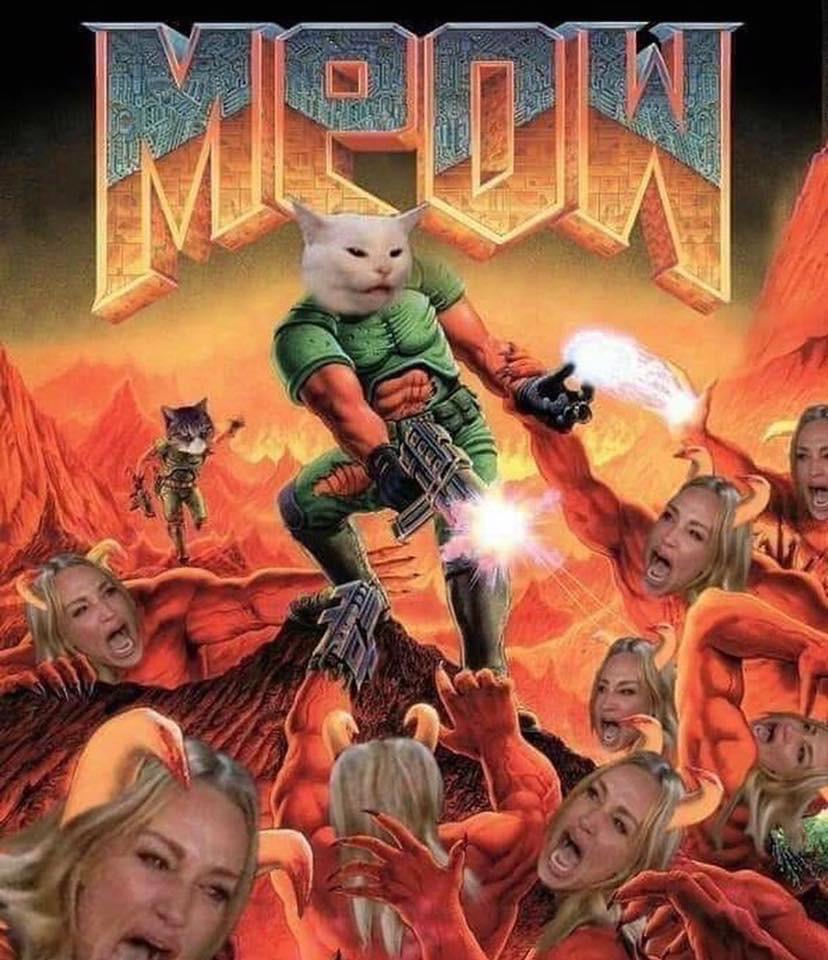
10. Meme upon meme upon meme: source.
*
11. Always read Kary Wayson’s poems:
https://therumpus.net/2019/12/rumpus-original-poetry-three-poems-by-kary-wayson/
*
 12. Isaac Ariail Reed, “The King’s Two Bodies and the Crisis of Liberal Modernity.” What is it, exactly, that’s propelling right-wing populism and revealing the tattering of the social fabric of western democracies? We’re economically exploited and spiritually alienated, yes, but Reed’s answer to this urgent question doesn’t draw mostly from (say) Marx’s understandings of the dynamics of capitalism, nor from Weber’s theories of modernity’s disenchantment and its differentiation of the individual (into a being of many communities, spheres, and sources of meaning). Instead, Reed focuses on the ongoing relevance of “ancient human tendency to imagine that in the leader is contained the community.” Kingship in medieval times stretched far beyond the life and death of a given monarch; the “second body” of the king was seen as present in statecraft, commerce, ideology. Medieval lives were constituted by a felt relationship to “king and country.” When mourners cried, “the king is dead, long live the king!” they were embracing the presence of kingship beyond the life of an individual monarch.
This myth was rewoven in modernity. The American and French revolutions of the 18th century were fought against the king and on behalf of the people, a new binding and mystical body. But who, exactly, got to be people, and what is their common good? The longing of the modern era is for a good society where “every individual has two bodies… [and is] imbued with the dignitas that formerly accompanied the king.” But this longing has never been made real in a modern liberal democracy: slavery and colonial violence underlies the modern state. And it’s no accident that in modernity racism and ethnic hatred became increasingly potent as instruments of “denying access to democratic politics,” since the question of delegation of political agency in the new states was foundational to these states’ senses of themselves. “To secure delegation in a world in which every citizen is a king in his own castle, the distribution of personhood became fiercely, violently strict about its boundaries.”
And in the 20th century, we’ve seen further blurrings or complications of personhood: “Corporations become legal persons, cars have personalities, and information wants to be free.” We’ve also seen the draining of that royal dignitas from offices, institutions, and collective representations of all sorts: belonging no longer confers meaning as it used to. We are in a “crisis of all of the institutional developments that replaced the image of the king as the defender of the weak against the strong, and, in their very development, made social life not only about the strong and the weak, but also about justice as fairness, and equality as the precondition for the pursuit of distinction.” These assumptions are decaying in every modern society.
Reed also suggests that, since the Cold War ended, America has returned to a pre-modern re-enchantment with the person of our president (as opposed to the office of the presidency): George W. Bush’s cowboy shtick shaping American response in Iraq; Obama’s race as a source of a liberal’s fantasy of healing racial wounds or a racist’s nightmare of usurpation; and of course Trump’s boorish ugly “authenticity.” And Trump now (like Orban, like Netanyahu) makes himself available for a kind of hero worship, founded on explicitly racial and nationalist appeals, that invites again a medieval “incorporation of the individual in the authority of the leader.” Bigots see themselves in Trump as medieval subjects saw themselves in their king, and this identification makes brutality against excluded persons easy.
Can this crisis be resolved? Reed, a sociology professor at UVa and a Jew, saw neo-Nazis marching out his window in 2017 chanting “Jews will not replace us.” The horrors of the last century are close by. He quotes political philosopher Danielle Allen in the wake of that spectacle: “The simple fact of the matter is that the world has never built a multiethnic democracy in which no particular ethnic group is in the majority and where political equality, social equality and economies that empower all have been achieved. We are engaged in a fight over whether to work together to build such a world.”
But can such a fight be won? “It is possible for popularly elected leaders to respect the authority of reformable institutions, for open societies to meet demands for equality and fairness, and for the rule of law to find its moral grounding in an ethically pluralistic society. It is even possible—though it has not yet been tried—that every single living individual can be recognized as sacred, and understood as a flourishing, inevitably contradictory, and wonderfully human author of action. But what is the language in which these possibilities for sacred dispensation will be articulated?” This is the crisis Reed names and leaves us twisting in. A leftist response might be that capitalism undermines the power of social tie and institution in any society it takes root in. Until it’s checked, both authoritarian nostalgia and social decay are inevitable. A conservative (or communitarian leftist) response might be that liberalism’s empowerment of the autonomous individual as the center of society ultimately leaves that individual plummeting through space: that a world where we’re all “king of our own castle” would be a place not of equality and fairness, but of total war.
*
 13. Rachel Kushner, “Is Prison Necessary? Ruth Wilson Gilmore Might Change Your Mind.” This is the best article I’ve read in a mainstream publication on the philosophy of prison abolition. I wonder how many minds it changed? Gilmore, a lifelong activist and a scholar at CUNY, explains that “abolition means not just the closing of prisons but the presence, instead, of vital systems of support that many communities lack. Instead of asking how, in a future without prisons, we will deal with so-called violent people, abolitionists ask how we resolve inequalities and get people the resources they need long before the hypothetical moment when, as Gilmore puts it, they ‘mess up.'”
Gilmore is also at pains to complicate some of the shorthand other activists use in discussing the carceral state. First, she says that mass incarceration is not about profit, but about the competition among state agencies for government revenue. “Under austerity, the social-welfare function shrinks; the agencies that receive the money are the police, firefighters and corrections. So other agencies start to copy what the police do: The education department, for instance, learns that it can receive money for metal detectors much more easily than it can for other kinds of facility upgrades. And prisons can access funds that traditionally went elsewhere — for example, money goes to county jails and state prisons for ‘mental health services’ rather than into public health generally.” The DOC isn’t an avaricious corporation, but an almost uniquely powerful lobby group that has captured the “surplus state capacity” of investors in public finance.
Gilmore also speaks of the violence and degradation of mass incarceration but disputes that it is “a modified continuation of slavery,” the uncompensated extraction of labor under threat of punishment. “The overwhelming problem for people inside prison,” she says, “is not that their labor is super exploited; it’s that they’re being warehoused with very little to do and not being given any kind of programs or resources that enable them to succeed once they do get out of prison.” Those incarcerated are “surplus labor,” carved out of the economy by urban deindustrialization and rural decay brought on (in California at least) by declining land values and lack of irrigation water. Until our economy is radically transformed, these people will remain an abandoned and abused surplus, whether behind bars or not. Gilmore argues that prison abolition is a structural, not an institutional, struggle, encompassing labor, wealth distribution, conflict resolution, racism, and the allocation of state dollars.
*
14. Shoutout to you for reading this far! Below, the true work of art speaks for itself:
2019: My Year in Music
Hi dear hearts, this comes to you late after a month of a broken computer, a thumb I split while splitting kindling, and some good deep hard work in my community and relationships that kept away from my beloved nerdy pleasures.
But so: here’s the music that kept me alive from this year, plus an accompanying playlist. As always, it includes some treasures from last year that I just now got to.

 First thing is that this is a year that contemporary jazz really opened up for me with three very different records I adored. Steve Lehman’s The People I Love is presented as his tribute to the classic saxophone-quartet format, but the record starts out with a severity that I had to reach for my limited antecedents for: Dave Liebman’s scorching live show I saw in a big churchy stone space a decade ago with other slack-jawed grad students. Lehman’s playing is dextrous, fast-moving, and extreme; I love the conversations he locks into with digressive and tuneful pianist Craig Taborn on “qPlay” (dig too the skittering synthesized drums below it) and drummer Damion Reid on “Beyond All Limits.” Music about energy, not narrative; solos about dialogue, not commentary. (Lehman’s on Bandcamp, but not on Spotify.) I also loved the Marta Sanchez Quintet’s El Rayo de Luz; Sanchez’s sense of harmony in her horn charts is eerie and exquisite, and the music’s emotional center is in the way the piano will answer, tug at, twist up, and return a melody back to her two saxophonists: it’s subtle, brainy, tender. It makes my ribcage ache. For presence and aural pleasure, I love Gerald Cleaver’s Live at Firehouse 12: again, the limitations of my listening history don’t leave me much to draw on, but I love that jazz-drummer thing of keeping the beat and commenting on it at once, riffing back to his soloists or shifting suddenly under them and forcing them to duck after him. The piano is mixed low: the attention is much less on underlying chordal structure than on all on the ideas Cleaver tosses up to his horns and gets tossed back. The horns’ melodies are sometimes twisty, sometimes downright jolly: the climax of “Detroit” is as polyphonic as Dixieland.
 Two jazz reissues this year I also loved: the rangy small-group playing of Charles Mingus’s Jazz in Detroit, recorded live (with accompanying interviews) at a short-lived collective space, the Strata, in 1973. After the fun gigantism of his big-band comeback, Let My People Hear Music, Mingus seemed to be in the mood for exploring wider spaces with a smaller group: his players here are all young, some new to playing with him, and they all stretch. By contrast, Eric Dolphy’s Musical Prophet: the Expanded 1963 New York Studio Sessions feels not like rovings but like musings. Dolphy’s playing could be fiery-intense and rough and there are a few big full-band tunes, but for most of these recordings, Dolphy seems to deliberately downplay forward motion: instead, the music keeps collapsing into self-reflection, irony, melancholy (“Come Sunday”‘s moaning bass floating alongside Dolphy’s murmuring bari sax), buried self-assertion (the theme of “Alone Together” doesn’t fully show up until 12 minutes of musical conversation between Dolphy and his bassist), and a cerebral exploratory quality held up by an inexhaustible melodic creativity. Dolphy contained multitudes; he died of undiagnosed diabetes less than a year after these recordings. How many other jazz musicians died of health conditions aggravated by structural racism?
 The mood of our big quiet hemlocks and swift icy creek are caught by Emily A. Sprague’s Water Memory, a beautiful ambient project from a musician best known in her singer-songwriter work as Florist. Sprague doesn’t wear down listeners’ distinct attention under reverb or drones: instead, each instrument is a small clearly-rendered organism– or a small repeated movement, like the flickering of a flagellum, inside an organism– and the songs’ colors vary across the album. A meeting with a perfect musical creature in 40-plus minutes.
 I absolutely can’t get enough of Jamila Woods’s LEGACY! LEGACY!, an album of subtly shifting influences and musical colors, driven by Woods’s arching twisting sense of vocal melody. She’s a queenly, sharp presence (“shut up motherfucker, I don’t take requests”), and her sense of pride stretches way back– her companions and lovers and “holy books” are all drawn from way back, from a deep sense of musical and communal history. I especially treasure the little skirls of jazzy guitar on “BASQUIAT” and the soothing-then-strutting two-part “GIOVANNI.” Also word to Earl Sweatshirt’s Some Rap Songs, out at some extreme where hip-hop meets avant-garde jazz and experimental poetry; Earl may still be in his Xany-gnashing, Caddy-smashing youth but he’s making a world of his own around it if so. My bangers of the year were Lizzo’s “Tempo,” with the inexhaustible and self-possessed Missy Elliott, and Normani’s perfect “Motivation,” who I first heard alongside Doja Cat, thank you Sayer for introducing me. Let’s take a moment too and be grateful for how much good pop there is right now about easy, confident pleasure in material flash or in guilt-free, un-power-tripping free-agent-type sex: if you want to, it’s easy to avoid bellows of lost entitlement, emotional blackmail, stray shots or empty bottles and stay in the Top 40. Oh and I give up, I also loved Katy Perry’s “Never Really Over.”

 I looked forward to a dozen-plus indie rock albums this year but wound up adoring only a few. Frankie Cosmos’s Close It Quietly is Greta Kline’s absolute best work so far, a work on tip-toe balance between assertion and minimalism, small acts of emotional courage and small touches of self-deprecating humor. Kline’s songs are mostly tiny, so when she repeats a chorus (as on “So Blue”) you really feel it, and when a hook kicks in (as in the B section of “Rings [on a Tree]”) it hits you right in the shoulders. Laura Stevenson’s The Big Freeze is finally a whole album of hers I’ve loved as much as I loved 2012’s single “Runner.” But where that song’s dynamism and surge thrilled me, Freeze is more austere and spacious: it’s a big roomy recording of overdriven electric, fingerpicked acoustic guitar and an underlining of low harmony. Its sound reminds me of Brian Paulson’s groundbreaking production on Spiderland, letting distorted and acoustic instruments speak to each other without violence. I also loved (Sandy) Alex G’s House of Sugar. Alex Giannascoli’s earlier records were characterized by a lo-fi slacker shrug that, when pushed, stiffened into open resistance. He’d blast off synth rackets, snip songs short just as they took off, process instruments through a tin can. The musical ingredients on House of Sugar have evened out a little: the listener can expect close-mic’d and often double-tracked acoustic guitar, hanging looped-up synthesizers, violin, far-off wailing or pitch-shifted backing vocals, some nostalgic sax, and a fake accent or two, not easy but not self-undermining either. There’s a self-enclosed musical richness to these arrangements and a good-enough-for-me roughness that’s belied by the pathos and grief of the lyrics; Giannascoli is absolutely soaked in a fear of death and split by gender-ambiguous heartbreak. Most lo-fi albums feel smaller as they go on; House of Sugar widens instead into something big and melancholy.
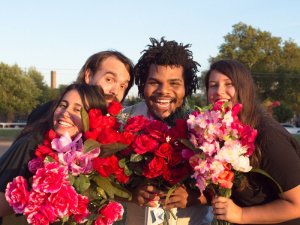
 I spent a week of evenings in the kitchen getting electrocuted by Mannequin Pussy’s Patience, an album of romantic longing, heartsickness, and rage all together, and a lot of drives with the New Pornographers’ In the Morse Code of the Brakelights. Brakelights is an album dominated by gigantism: cliffs of big bright reverby guitar, abrupt bangs of processed snares, melodies impossible to trace as lines of overlapping gray mountains, strings and ah-ah-ahs that swoop by like mountain wind. A.C. Newman is the last songwriter left in the group, and he’s stayed cerebral as he’s aged: he’s not particularly heated, cynical, disillusioned, etc.; he writes more about patterns of relationship than about relationships. I guess this is one way to age contentedly. Please also do not neglect the stunning big kingdom of Helen America’s Red Sun. One-off songs I loved this year: Pedro the Lion’s “Clean Up,” Big Thief’s “Cattails,” Black Ends’ “Sellout” (a freaky math-rock jam from my favorite new Seattle band), Jay Som’s “Tenderness” (though also shoutout to “Superbike” and “Devotion”: Melina Duterte’s guest-packed ensemble playing evoked less personality than she did playing every instrument on Everybody Works, but the gleaming compressed guitar and her small turned-inward voice are still a pleasure everywhere in her music), and Priests’ “I’m Clean,” an arch and nervy kiss-off that helps me feel human and brave when I need it.
A PS for the truly riveted: here are the older albums I’ve completely fallen for this year: Donato Dozzy’s K, Fiona Apple’s Idler Wheel, Jonathan Richman’s Action Packed compilation, lots and lots and lots of 80s and 90s dancehall reggae, Bach’s violin sonatas and partitas, Schubert’s piano sonatas, Team Dresch, Joe Lovano’s I’m All for You, Hank Jones’s The Trio (the 1978 one), the Spinanes’ Manos, PJ Harvey’s Rid of Me, Orchestre Baobab’s Made in Dakar, Mingus’s big-band record Let My Children Hear Music, Arthur Blythe’s Lenox Avenue Breakdown, John Prine’s Sweet Revenge and Storm Windows, Velocity Girl’s first compilation and Copacetic, Al Green’s I’m Still in Love with You, Dave Edmunds’s Repeat When Necessary, Bonnie Raitt, Luther Vandross’s compilation The Best of Luther Vandross… The Best of Love, Emmylou Harris’s Roses in the Snow, George Jones’s All Time Greatest Hits Vol. 1, John Fahey’s Of Rivers and Religion, Teddy Pendergrass’s TP, Pharoah Sanders’ Message from Home (produced by the mighty Bill Laswell), the Fastbacks’ Answer the Phone, Dummy, Sonny Rollins’s Sonny Plus 4 (his first album as a bandleader, the final studio recording Clifford Brown made before his death), Miles Davis’s 70s electric albums Black Beauty and Big Fun, the many treasures of Gary Giddins’ two-part “Post-War Jazz: an Arbitrary Roadmap,” The Indestructible Beat of Soweto, Vol. 4: Kings and Queens of Township Jive, and— on the turntable right now— The “King” Kong Compilation collecting Leslie Kong’s pioneering early reggae productions.
Comments Off on 2019: My Year in Music
Filed under music
The Ten Best Things on the Internet: February 2019
10. The opera teacher Salvatore Fisichella’s master class with tenor Andrew Owens: when Cait showed this to me, she said, “This is why I hope humans don’t go extinct.” I don’t understand more than few phrases of what he’s saying but when his (very famous!) student gets it right, I feel it too.
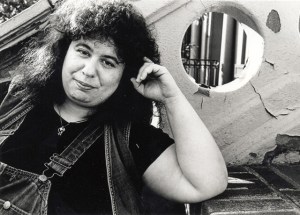 9. Moira Donegan, “Sex During Wartime: the return of Andrea Dworkin’s radical vision.” In college, I knew from my radical friends to dislike and disparage Andrea Dworkin, the unfun dogmatic anti-porn scold, without having read more than a few pages. But ideas central to her work are now being shone back to our larger culture, and I was very grateful for Moira Donegan’s reflection on Last Days at Hot Slit, a new selection of her work. Donegan, summarizing Dworkin’s thinking, writes that “[rape is] not an anomaly, but the fulfillment of a foundational cultural narrative. Rape is not exceptional but common, committed by common men acting on common assumptions about who men are and what women are.” Male power-over, our reduction of women to compliant or brutalized objects, for Dworkin prefigured all other forms of oppression and societal violence; but Dworkin also remained intersectional in her thinking, advocating for accessible trans healthcare and charging middle-class white women to reject the false comforts of their relative privilege to stand alongside, and support, women of color and poor women. And what is the spiritual work of men in undoing the antagonism, humiliation, and violence we’re taught to apply to women? In 1983, she addressed a male audience: “Have you ever wondered why we are not just in armed combat against you? It’s not because there’s a shortage of kitchen knives in this country. It is because we believe in your humanity, against all the evidence.” Can we men imagine and work for a world where non-men are equal historical selves? Our humanity depends on it.
8. A cheat/double: a special shoutout to bad reviews. Most big juicy bad reviews are fun but pointless— critics implicitly flattering their own taste, giving themselves over to purple writing whose insults aren’t as evocative as they think they are. Youngish critics, in their bad reviews, tend toward an overstated outrage at the violation of their precious sensibility; oldish critics in their bad reviews turn “shrill and stale at once” (James Wood on Harold Bloom), pounding at the same advancing targets long past anyone caring. Both types of reviews are fun are fun to nibble on and have next to zero shelf life.
 But there are exceptions. Literary critic Andrea Long Chu reviews Jill Soloway’s way-acclaimed memoir She Wants It, on Soloway’s self-discovery as a director and her work creating the TV show Transparent. Chu’s tone is a measured disbelief at the narcissism, sloppiness, and vacuity she finds in Soloway’s book. In Soloway, Long Chu writes, “one finds the worst of grandiose Seventies-era conceits about the transformative power of the avant-garde guiltlessly hitched to a yogic West Coast startup mindset”; on Soloway’s own performance of identity, Chu writes that “all we need remember is that being trans because you want the attention doesn’t make you ‘not really’ trans; it just makes you annoying”; as to the book’s damage-control subtext, Chu decides that “Jill Soloway has an unstoppable, pathological urge to tell on herself.”
 And an ever-relevant good oldie: Eugene McCarraher, a history professor at Villanova, produced what’s still my favorite critical response to the New Atheism, a scrupulous dismantling of Christopher Hitchens’ God Is Not Great called “This Book Is Not Good.” I went back to McCarraher’s essay after reading John Gray’s Seven Types of Atheism, curious to see if I still loved it, and boy I do. Hitchens’ book, McCarraher says, is a “haute middlebrow tirade” that has nothing insightful or honest to say about theology, philosophy, or history and is fed by “a gooey compound of boosterish bromides and liberal nationalism.” As to a dreamt-of world free of religion, Hitchens’ moral imagination sees only “in terms of professional and managerial expertise,” a world given over to technocratic bosses who are in reality every bit as capable of obfuscation, domination, violence, and backwardness as theocratic states. Our war in Iraq, McCarraher says, should show us the brutality and ideological folly our secular, capitalist state is capable of; Hitchens’ delighted assurance in the virtue of that very war sickens him.
7. Our president, wayward and flatterable, has wandered off from his own stated intent to withdraw troops from Syria. Too bad. But Matt Taibbi’s piece in Rolling Stone on the planned withdrawal is still outstanding. Taibbi describes the outrage Trump’s decision drew from our two war parties, and he captures the absolute mind-boggling scope of our venality, violence, and never-ending military mission drift in the Middle East. It can be easy for those of us resisting imperialism to assume our enemies are cunning and all-powerful. It’s not true. Read Taibbi to be reminded just how dumb empire can be. (See also this essay from a genuine conservative on the credulousness and bullying self-importance of two extremely famous pro-war #nevertrumpers.)
6. Obsessed— obsessed obsessed obsessed— with Tierra Whack’s 15-minute, 15-song music video.
5. Journalist Jesse Singal, with Freddie de Boer’s permission, returns to online availability three of de Boer’s bombthrowing essays on the state of Left cultural and academic discourse. I don’t agree with everything in these essays, but de Boer’s moral rage at the left’s internalization of cop culture– what Sarah Schulman would call the equating of conflict with an existential assault, complete with a pile-on on the offender led by a mob of virtuous citizens— is a tonic.
 4. Just how much does it cost to call out love-and-light good-vibes spiritual thinkers for their ignorance of racism, persistent inequality, and state violence? Black Muslim feminist spiritual educator Layla F. Saad answers: “I Need to Talk to Spiritual White Women about White Supremacy” part 1 and part 2. The culture industry Saad identifies is associated with female entrepeneurs, but the apothecary-nice-guy subculture is just as guilty of checking out, repeating platitudes, and getting ugly when confronted. Dig the workbook on Saad’s main site too.

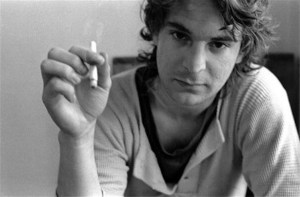 3. Lindsay Zoladz is one of my favorite music critics, a brainy and nimble writer who can set a scene in just a few sentences and who’s unafraid to fan out on her loves; her “December Boy: on Alex Chilton” taught me a lot about the lost years of this mercurial genius and reminded me of what I freaking love about Big Star. Growing up weird in a Navy town, my 12-year-old self found in indie music the immense relief of knowing my sensibility wasn’t alone. But most of what I found– John Fahey, Kate Bush, Aphex Twin, Husker Du, Sleater-Kinney, the Velvet Underground– wasn’t remotely utopian. These temperaments had survived, but they didn’t have an imagined better world out there to point me to. Big Star felt different: what was so cool about Big Star’s first two records was how they posited a whole alternate adolescence. In their music I could hang out, fall into a crush, break up, get my ears blasted in the backseat, watch the sunrise.
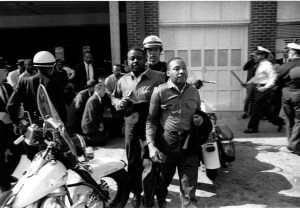 2. Who was King writing to in his “Letter from Birmingham Jail”? Broderick Greer gives the answer, quoting from “A Call for Unity,” the 1963 letter from white Alabama clergymen who sympathize with civil rights protestors’ “natural impatience” but call their continued direct actions, demonstrations, and protests “unwise and untimely.” King’s letter, smuggled from his cell, is his reply. The voice of the sensible middle never, ever changes. More and more I think of social justice work in terms of strategic radicalism: not “how can we reach across the aisle to create a compromise that will satisfy everyone,” but “how can we tactically force our sorta-allies in the middle to join our moral stand against what we find intolerable”?
1. And: live your best 1:14 by watching this clip of King on the origins of entrenched racial inequality, and the sole demand that will undo it. I showed this one to Finn.
2018: the Year in Music
This is the music that got me through the year, that disrupted or seized or soothed me. As always, includes a few records from the previous year I came to late.
 This year the instrumental music I’ve loved best has foregrounded somatic emotional experience, bodily sensation. I absolutely cannot get enough of PAN’s compilation Mono No Aware: it’s ambient music that foregrounds not concepts or memory-qualities but big feelings and strong transformations. Its songs can be as hot and close as tears, as intimate as a lover pressed up against you, or as creepy as feeling yourself grow hooves or wings. Some of the textures/moods near the middle are too extreme and abrasive for me to do anything else to but listen, but that’s its own kind of ambience.
 Speaking of bodily pleasure, Four Tet‘s New Energy, especially “Scientists,” is a further step in a good direction for Kieran Hebden, away from the skittering nerves of his first few records, toward a beating heart and a sense of collective ecstasy: there are at least two or three other songs on this record that are on my permanent dance playlist. Jazz drummer Makaya McCraven’s Universal Beings (tied for my favorite record of the year) is body-music too. It’s some of the most rich and joyful ensemble playing I’ve heard in a long time, each of its four sides–London, New York, Chicago, LA–edited from popup studios and live jams into a distinct mood. Side two, knotting itself into the breathless “Atlantic Black” (Tomeka Reid and Shabaka Hutchings twisting and feeding off each other) is the funkiest and my favorite, but each has an everything-here-now urgency, even when the soloists play harp or cello. I’ve loved to go back to again and again. A smaller-scale pleasure has the been the totally out-of-the-box improvised duet/duel from pianist Irene Schweizer and drummer Joey Baron on Live! This record is gymnastic, violent, childlike, playful, and exhilarating.

 Speaking of timbre, I had to love it as a lullaby first but I’ve come around to Yo La Tengo’s sleepy subtle new record, There’s a Riot Going On: I couldn’t pay any direct attention to it on its first few plays but its presence has stayed with me, a blanket I can always crawl under even as the lyrics suggest uncertainty, dread, the brevity and fragility of consolation. And then songs started coming out of the sound: “Forever,” “Polynesia #1,” “Let’s Do It Wrong,” “For You Too.” I similarly took awhile to love the new Ought, Room inside the World. I was puzzled and put off by the polish and spaciousness of the production after loving by the loose wires and crumpled metal of Sun Coming Down, but that smooth coating covers some good medicine and Tim Darcy, writing gorgeous lyrics I like even better than his old taunting chants or aspirational cries, still sings like someone clowning on Jimmy Stewart. They’re growing into grandeur.
 It’s so easy to tap through on Spotify, try the next of the million flavors, that I have to browse new music in a way that’s less attentive but more feel-sensitive if I want anything to sink in or spur a response for me: when I browse, it’s not for argument but for appetite. Popping out in a long shuffle, Maximum Joy‘s glorious new reissue (seven singles on four sides of vinyl) I Can’t Stand Here on Quiet Nights was delicious right away– spaceyness and heavy bottom of the dub bass, kiddish chanting of Janine Rainforth, spikes of guitar. There’s a sense of communitarianism, utopian hope, in the music’s borrowings and interpolations (reggae, shrieks, guitar jangle, dumb squawking sax) that makes me think of second-wave ska or African Head Charge, defiant of its desperately bleak, individualist political moment of England in the early 80s.
 I loved Maximum Joy because its roominess and blending was aspirational: one of my other favorite records of the year, Mountain Man’s Magic Ship, I loved for how it too felt like an invitation to a way to live. Three-part harmonies and a single guitar around a single mic, songs to the Moon and friends named Stella and naked bodies swimming. Speaking of moods, Kacey Musgraves’s “Slow Burn” projected a serenity that’s pure gift, when you can bless and thank all of life from eight miles above it. And (Sandy) Alex G’s “Bobby” twisted on the knifepoint of its desire: my favorite crush song in years. I spent a plane flight to Cleveland completely swept up in the grief and lean hard economy of Big Thief’s Capacity, music that takes its strength from the urgency with which it treats its material.

 I finally loved a Nicki Minaj record all the way through this year! Praise the Queen! Maybe it’s because on this one the best stuff is the hard stuff and there’s more hard stuff (though there’s one ballad I love too, “Come See about Me”); maybe it’s because I’m finally getting the hang of dancehall reggae; maybe all her rivalries and beefs have sharpened her writing; but the cold-eyed pride of the record is a single mood and I’m in love. Also loved Rapsody‘s album, Laila’s Wisdom: the record has old-school virtues (gospel backing vocals, live guitar) and an old-fashioned sense of legacy (Laila’s her grandmother), and Rapsody shines out with all sort of emotional colors rare in modern hiphop: curiosity, loneliness, loving exasperation. Off of albums that didn’t catch me as a whole, I really loved Janelle Monae’s “Django Jane,” Future’s “Incredible” and GoldLink’s “Have You Seen That Girl?” I grudgingly also adored Drake’s “Nice for What” (New Orleans bounce) and “Passionfruit” (something more nocturnal and sad, love that pulsing drum): his played-up tenderness and silly tough-guy routines are annoying but as a synthesist of sounds, Drake is hugely capacious, sensitive, and ambitious: he listens widely and sounds completely natural in a huge international variety of sounds. Lastly, although Finn got obsessed with “Walk It Like You Talk It,” my own recent favorite Migos single was the just-pre-Culture one-off, “Cocoon.”

 My beloved pop records this year were Christine and the Queens’ Chris and Ariana Grande’s Sweetener. Chris is cocky, lonely, charged by pride and scarred by old trauma, and I didn’t know what to expect from her show when Cait and I went to Showbox Sodo. Watching Christine/Heloise, I realized she’s an entertainer rather than a witch– holding a mirror back up the audience’s longing and desire (like, say, Michael Jackson) rather than performing a transformation on herself for the sake of the audience’s soul (like, say, Anhoni or Perfume Genius). But that’s cool, the world needs more entertainers as good as her! And Sweetener, damn! Now that Grande’s not trying to Disnefy/naughty-kitten herself anymore, something superhuman has emerged in her— that incredible virtuosic voice, her poise and reflectiveness in the face of awful tragedy and ordinary pain, her radiant confidence in great song after great song. Other bangers close to my heart this year were Selena Gomez’s “Bad Liar” and (speaking of superhuman maturity) Lorde’s “The Louvre.” And just to agree with everyone, Robyn’s “Honey” is a gorgeous sacramental song about sexuality, the way deep shared pleasure is a sinking into time.
 A special shoutout to Bob Dylan’s Trouble No More: the Bootleg Series, Vol. 13 (1979-1981), the recent live collection of his gospel years. Dylan’s songwriting had always prized instinct, conviction, and heat over subtlety, irony, and intellect, so I guess it’s not surprising that, when he became a Christian, he chose Protestant austerity and fundamentalist hellfire. I’ve never loved the gospel albums all the way through, but this collection gathers the best from this whole period and shows off outstanding backing vocalists and an absolutely dynamite band. The liner notes from the mighty Amanda Petrusich are a welcome close-reading and contextualization too. Trouble ends with Dylan’s dissatisfied live tinkering (new lyrics, new arrangements) with some of his best late-gospel songs, “Caribbean Wind” and “The Groom’s Still Waiting at the Altar,” tunes he’d later abandon, but the first three-quarters of the set is delivered with fearsome conviction and swing. I can’t get enough of it.
Randy Newman is a singer of inversions: at his worst, he’s sentimental or he curdles into the passive ironic pessimism of rich liberals, but at his best he makes songs out of undersides and shadows, out of feelings most of us are scared to even put words to (“I Want You to Hurt Like I Do,” “Rollin’,” “Same Girl,” “God’s Song,” “Lover’s Prayer”). Dark Matter is otherwise mediocre late-career “mature record”: over-reviewed like recent Nick Lowe or Marianne Faithfull, because few critics can resist writing about their fondness for an artist’s legacy rather than the actual art in front of them. But “Wandering Boy” is a tender song for a grief I hope I never experience: at a celebration of your long life, remembering the child you lost, not to death but to life. The other songs of impossibly delicate beauty this year: Frank Ocean’s “Moon River” (points to any singer who can outdo Jerry Butler’s version of anything), “I Wonder If I Take You Home” from Meshell Ndegeocello‘s covers album, and Sampha’s “(No One Knows Me) Like the Piano.”
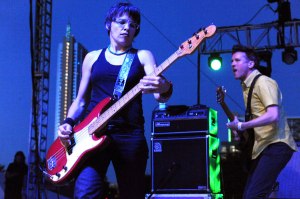 My bolt of left-wing disbelief, rage, and hope this year was Superchunk’s What a Time to Be Alive. Unlike most long-lived groups, Superchunk’s overpraised “grownup” phase came mid-career, with four albums of stuffy overproduced 60s-ish classical pop. Then, somehow, miraculously, they aged out of it backward into the righteous Majesty Shredding, the death-haunted and youthfully heartbroken I Hate Music, and now this incredible bright-burning sparkler of a punk record. Speaking of lefty rock, I believe Merrill Garbus and I wish I loved all of Tune-Yards’ I Can Feel You Creep into My Private Life, but it’s hard to make communitarian and body-moving art from the kind of chastened, newly-awoken, and frequently paralyzed white-anti-racist perspective of the record: “Colonizer” sounds like some true pain went into it, but I just can’t bear to listen to it, a guilt-plumbing that plays like reverse self-obsession. But a few songs did get me– “Honesty” is my favorite– and I still can’t wait for the next record. Other rage to dance to: !!!’s “Five Companies.”
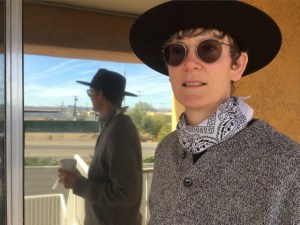 Ending with my (see Universal Beings above) tied-for-first: Dear Nora’s Skulls Example. Katy Davidson began their career fully-fledged making subtle complicated funny indie that called back to Henry’s Dress, Tiger Trap, and Sleater-Kinney. Over a decade, their band has grown into something more spartan and more preoccupied with Davidson’s obsessions: our eerily-fake social reality, weird cacti, climate change, and the impassive barren gorgeousness of nature. What else do you need?
Comments Off on 2018: the Year in Music
Filed under music
Readings
“Takes,” poems, Tweet threads, reviews, and editorials I’ve read over the last six months that have stuck with me, and why. Punctuated with pictures so no one’s eyes have to cross with exhaustion.
Mary Margaret Alvarado, “On Memory with No Devices.” This is an essay you will never want to end.
 Dan Arnold and Alicia Turner, “Why Are We Surprised When Buddhists Are Violent?” While I take issue with the piece’s implicit “we,” the authors make an important point about secular-dominant progressive American political consciousness. Most of us know Buddhism primarily through the ecumenical, culturally-mixed forms of Buddhism introduced in the last 50 years in colonizer states, which emphasize individual meditation and mindfulness and largely forego the religion’s incredibly varied forms of belief and ritual life throughout Central and East Asia. Because of our American context, it can be difficult for secular progressives to fathom how Buddhism— in Sri Lanka, Thailand, and now certainly in Myanmar— is used to justify horrible mass ethnic-national violence. The causes of this bloodshed are never simply religious, but in each case involved ethnic and state power; and in each case, the violence had passionate Buddhist critics. But Arnold and Turner are at pains to remind readers that any religion can be an instrument of nationalist violence.
Emily Bazelon, “When the Supreme Court Lurches Right.” Though this survey understates its own major point (that the Supreme Court has spent most of its history as a fundamentally reactionary and anti-egalitarian body), it remains a good overview of the shifting history of the court in American public life.
 Peter Beinart, “American Jews Have Abandoned Gaza–and the Truth.” Beinart deeply identifies as a Zionist— he rejects the idea that the formation and expansion of Israel is intrinsically a settler-colonialist project, and strongly opposes the B.D.S. movement— but he’s been a consistent progressive critic of settlement expansion and of the corrupt, reactionary presidency of Benjamin Netanyahu. He’s also filled with moral horror at the consequences of Israel’s blockade of Gaza, and the spiritual costs to Israel of the human suffering that the state has brought on Palestinians. (His association with Israeli peace groups and his authorship of pieces such as this one are likely behind his recent detention at Ben Gurion Airport.)
Patrick Blanchfield, “The McCain Phenomenon.” This is the best piece I’ve read— free of sentimental glow but also of contrarian reflex— on the meaning of McCain in American public life: it’s a progressive’s examination of McCain as a symbol of America’s reverence for individualism, military honor, and matured rogueishness.
 Zach Carter and Paul Blumenthal, “Former Obama Officials Are Riding Out the Trump Years by Cashing In.” Lockheed Martin, Uber, Covington and Burling, Booz Allen Hamilton, Morgan Stanley, Amazon: as soon as their government tenures ended, many of the most powerful figures from Obama’s administration stepped through the revolving door into comfortable positions selling weapons, subprime loans, union-busting regulations, and more.
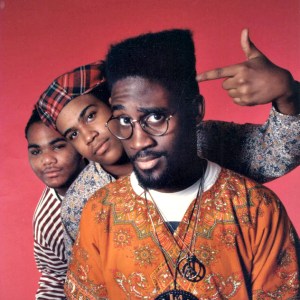 Jeff Chang on De La Soul’s 3 Feet High and Rising. A joyful essay, an in-depth history of a unique cultural text: a work of incredible lyrical skill and bonkers musical invention, one that you still can’t get on Spotify.
Thomas B. Edsall, “The Democrats’ Gentrification Problem.” Educated middle-class white people and urban black communities exist across a widening fault line of money-mobility, neighborhood history, and a wealth gap deepened by racist housing policies. While this article says little about the role of organized multiracial communities in pressuring lawmakers from the bottom up to create housing equity, it’s still a top-down view of a deep tension between two important Democratic constituencies and the continuing power of white racial kinship networks in maintaining a black economic underclass.
Eve Fairbanks, “Well-Off Millennials Are All Julia Salazar. I Wish We Weren’t.” This piece diagnoses a real social problem— affluent folks feeling they have to exaggerate, or invent, a hard-luck biography to be seen as authentic, especially in high-stakes elite institutions— but avoids looking right at the sources of, or responses to, this phenomenon. My response is: yes. But privileged folks also just need to stop lying about our privilege. First, because it trivializes the reality of suffering we pretend to have experienced. Second, because it’s built on the cancerous belief that a safe, materially-comfortable upbringing makes us inauthentic. But how can we believe this, if we hope to create a world that (while growing beyond capitalist definitions of safety and comfort) actually is safe and comfortable, rich in possibility and relationship for all people? A sense of possibility and comfort isn’t the toxic aspect of privilege: emotional numbing is. The cost of buying in to privilege is choosing to ignore the dehumanization of those on which our comfort depends. (I also think that this habit of exaggeration leaves us less likely to honor the actual pain, our own or others’, that comes with any life. This is its own form of dehumanization.) Fairbanks does describe the transmutation of pain– into visible, nameable forms— she witnessed among her privileged cohort. But I wish she’d gone way, way further– and perhaps even ventured into encountering lives characterized by the suffering our material comfort is built upon. Or questioning the social value of high-stakes elite institutions altogether.
Max Fisher, “Israel Picks Identity over Democracy. Other Nations May Follow.” We’re in a global moment of parliamentary democracies shifting toward autocracy and ethnically-defined nationalism. The question for radicals is: what does the call to solidarity look like as states contract toward reactionary politics? How can we ourselves live out an alternative to the deep comfort of seeking company only in others like us? What is genuinely collective about collective liberation, and how can we articulate the value of the collective when compared to the shortfalls and exclusions of parliamentary democracy?
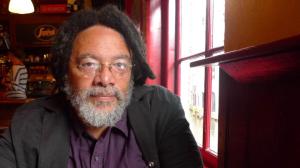 Paul Gilroy interviewed by George Yancy, “What ‘Black Lives’ Means in Britain.” Gilroy speaks about the power of corporate multiculturalism in Britain and the US; argues that inequality is a relationship, not the possession suggested by the term “privilege”; and describes the difficulties in black-solidarity organizing in a country defined (as Britain is) by economic-imperialist ventures and migration pressures different from the US importation of chattel slaves.
Jack Goldsmith, “Uncomfortable Questions in the Wake of Russia Indictment 2.0 and Trump’s Press Conference with Putin.” Bush II’s former Assisant Attorney General (who left in the wake of the Iraq War and the revelations of torture at Abu Ghraib) asks: What rules of international espionage did Russia break, that the US is willing to pledge to respect? What blowback or unwelcome reciprocity is the DOJ inviting by issuing subpoenas to foreign nationals? What vulnerabilities remain in our e-mail and voting systems? And: what unthinkable disasters are journalists inviting on themselves by encouraging the prosecution of Wikileaks?
Briahna Joy Gray, “How Identity Became a Weapon against the Left.” Gray has argued, here and in The Intercept, that as center-left institutions become fluent in the language of intersectional politics, they employ the signaling characteristics of that language to attack the left as racist and sexist for its emphasis on class. Doing so requires erasing the women and queer folks of color active in movements for (e.g.) single-payer healthcare, fighting Wall Street corruption, strengthening the green economy, or raising the minimum wage, but the center-left has a fabulous track record of doing so already.
 N.K. Jemisin’s acceptance speech for her third consecutive Hugo Award win for the Broken Earth trilogy. It’s “a massive, shining, rocket-shaped middle finger” and a reflection on creative and spiritual survival against a steady deluge of racist shit.
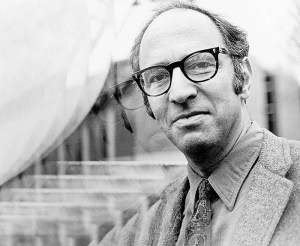 Tim Maudlin, “The Defeat of Reason.” Phew, there’s a lot here. This article reviews two huge, argumentative, intellectually ambitious books: Adam Becker’s What Is Real?: the Unfinished Quest for the Meaning of Quantum Physics, on the puzzles, obfuscations, and final hope for clarity in quantum mechanics, and Errol Morris’s The Ashtray (or the Man Who Denied Reality), an attack by a former student on the philosophical and cultural legacy of anti-foundationalist intellectual Thomas Kuhn. In the first part of Maudlin’s review, he explores Becker’s historical work and conclusion that the conclusions popularly attributed to a quantum mechanical view of reality— fundamental smeariness, observer-dependence, and inconsistency— are bogus, the result of Niels Bohr’s Kantian dogmatism in defense of his version of QM and the physics community’s shut-up-and-calculate attitude. But Becker suggests that, though quantum mechanics may in fact be more deterministic than Bohr believed, it’s still spooky: electrons must be able to change from waves to particles in an instant, even if the waveform showing the electron’s possible location is immense: a faster-than-light change effected at a distance. Meanwhile, Morris, who despises his onetime teacher Kuhn as a relativist who discounted the importance of reason and evidence, charges at the legacy of Kuhn’s 1962 book The Structure of Scientific Revolutions. Kuhn introduced the notion of paradigms (the rules, practices, and examples that bound a theory of reality) and their importance in shaping scientific thought. A paradigm never wins out “by logic and experiment alone” but by power, persuasion, and culture. Further, no two paradigms are commensurable: the inhabitants of two different theoretical frameworks live in two different realities. Therefore, no neutral adjudication is possible– only conflict, and later history written by the winners. In a time where politics and philosophy were questioning the legitimacy of received authority, this idea was a sensation. Morris, now an investigative documentary filmmaker, hates it: “It is one thing to remark how hard truth can be to establish,” Maudlin writes, “and quite another to deny that there is any truth at all.” Morris’s book explores the nature of the reference of terms (the theory of how any noun picks out or denotes something in the real world) and ultimately argues that a belief in shared, neutral, objective truth is a moral issue. “If… we all live in worlds of our own manufacture, worlds bent to conform to our beliefs rather than our beliefs being adjusted to conform to the world, then what becomes of truth?” What are the consequences of believing that we impose, rather than discover, structure in reality? Maudlin’s essay falls short of exploring the appeal of Immanuel Kant’s Transcendental Idealism at the root of both Bohr and Kuhn’s philosophies. I want to hear his argument for why we’re tempted to believe that we merely impose, rather than actually experience, things such as time or cause-and-effect, etc.
Philip Metres, “Imagining Iraq: on the Fifteenth Anniversary of the Iraq War.” How can Americans hope to understand Iraq as more than a backdrop of our imperial history? Metres, author of the intricate and morally damning poetry collection Sand Opera, explores possible paths out of imperial memory.
Ann Pettifor, “Irish House Prices Sky-High Due to Finance Not Scarcity.” Dublin’s housing crisis is even worse than Seattle’s. And, as in Seattle, this is generally justified in microeconomic terms: massive demand on a limited supply. But in reality, the main driver is macroeconomic: housing is such a good investment that there’s a worldwide rush from the wealthy to buy in. If you buy a house, you don’t need to live in it to make money off it, especially if its value grows 6-10% a year. If you invest in a townhouse block and all six units are bought at 10-20% over list price in two months, you’ve just made a handsome return. Until we start taxing investment in things like condo development (or in buying a home you don’t intend to occupy or rent out), house prices will keep exploding.
 Hilary Plum, a poem I love called “Lions” and an essay on war, Orientalism, historical memory, and the moral position of citizens in empire “Narrating Forgetting.”
Sebastian Purcell, “Life on the Slippery Earth.” An introduction to what’s survived in the historical record of Aztec moral philosophy, especially its emphasis on group– rather than individual– virtue.
EDIT to add this single tweet from Dana Regev, which– out of the whole spectacle of vicious male backlash and horrible retraumatization for women and femme folks in Kavanaugh’s nomination, Dr. Blasey Ford’s testimony, Kavanaugh’s ugly response, and his subsequent appointment to the Supreme Court– felt like the thing that I as a man/cismen most needed to sit with, journal about, talk with other men/cismen about, let haunt me.
Nate Silver, “There Really Was a Liberal Media Bubble.” It’s incredible the extent to which many professional journalists and think tank intellectuals are able to make a living having opinions while talking to almost no one but one another. Silver is, of course, not exempt from this himself, but it’s to his credit that he includes his own organization, FiveThirtyEight, in the scrutiny of this article.
 Tim Urban, “The Fermi Paradox.” Why don’t we see evidence of the presence of other intelligent species in the Milky Way? This article, chirpy listicle style and all, is a good look at a scientifically and philsophically significant question, a different perspective on literally every sort of human problem I can imagine.
Blanca Varela, “Material Exercises” (tr. Jeannine Pitas). A great, strange poem, beautifully translated.
Bonus feature, “now without clip art!,” on the institutional Catholic Church: The Church as an institution is in a state of huge crisis; here are some readings about it.
A grand jury report of widespread, decades-long sexual abuse by priests, and coverups by leadership, in Pennsylvania coincided with the revelation that Cardinal Theodore McCarrick had preyed for decades on seminarians and altarboys.
A bomb-toss of a letter from pissed-off former Papal Nuncio (ambassador) Carlo Maria Vigano alleged in August that Pope Francis was aware that Cardinal McCarrick was a serial predator, and that Francis had nonetheless lifted the sanctions imposed on McCarrick (a lifetime of prayer and penance and withdrawal from public life) by the previous pope, the traditionalist Benedict XVI. Vigano claimed that Francis was willing to tolerate McCarrick’s behavior as he sought McCarrick’s help as an ally in fundraising and the appointment of more-progressive archbishops.
So: what to make of it? Well, Vigano’s letter is full of awful homophobic sinister-gay-mafia bile equating gay relationships, same-gender sexual abuse, and pedophilia. In its direct attack on Francis himself the letter is clearly intended as a means for right-wing European and American Catholics to concentrate their rage at Francis’s attempted reorientation of the church (toward suspect things like mercy, political egalitarianism, inclusivity, environmental stewardship, and concern for migrants and the poor) and build power for their own political projects. Finally, Vigano’s letter has since been revealed to be wrong in its particulars: it now seems that Benedict had never formally sanctioned McCarrick, but as of 2010ish informally asked him to keep a low profile. Nonetheless, there’s strong circumstantial evidence that Francis, like popes before him, was willing to trust his advisers in overlooking credible evidence of abuse to rehabilitate a potential political ally.
Here’s a Tweet thread from a Catholic with whom I imagine I’d agree on very little except for the moral parallel between two clubby, secretive institutional cultures that would tolerate those credibly accused of abuse: the Catholic hierarchy’s welcome for McCarrick and the Yale-Federalist-DC world’s support of Brett Kavanaugh.
And, you ask, where are the voices of actual gay clergy, in the midst of a shitstorm of fingerpointing, secrecy, and homophobia? Here’s one voice, from Fr. James Alison.
R.I.P. Edwin Hawkins
Childhood memories of the Edwin Hawkins Singers blasting on Sundays as we cleaned the house… Crying 25 years later just from the sound of the harmonies on “Let Us Go into the House of the Lord“… That rising ecstasy of the music, that first experience of the idea that art must embody what it describes. Deeply sorry Hawkins is gone.
(2016 &) 2017: My Year in Music
This is my rain-soaked death-haunted year, in forty A-to-Z (that is, X) songs or albums I loved.
As usual, my year-in-music post includes stuff released last year. In the cultural-critical rhythms of music writing/list-making, I learn about what I missed the year before (in 2016: Elza Soares, French Montana, lots of other things on this list) only at the end of that year, so I give myself the following year to wade.
So here, first, is a playlist…
…and here’s my year.
*
When they mirror back their (and my) sexual subjectivity, not many male singer-songwriters show me something I want to see. But in the last few years, I’ve grown to love the AFGHAN WHIGS, for Greg Dulli’s soul-derived ardor and his very indie-guy fury and self-loathing. I love too the bigness and swing of the music that goes with it: there’s no bullshit in the Whigs’ rhythm and blues and no ego in their monster-size tunes. This year’s In Spades has gotten more attention than the 2014 reunion record, Do to the Beast, that I’ll always like better. I come back to Spades mostly for “I Got Lost,” its broken-down quality, a man feeling at his own torn edges. Honorable mention to “Toy Automatic.”
 AMY O, Elastic. Oh oh oh does this record make me happy. I was skeptical for the first few songs but the marvel is in the swift accumulation— less than 2 1/2 minutes per, with just about a breath between each; hook after hook, lyrical wit matched by musical, feminist space-staking and tension building to little bursts of relief or fury— and then (bang!!) the whole thing’s done in less than a half hour. In frying eggs and riding buses and drinking coffee with sad friends, I listened to lots of great homemade indie pop this year that I’m sure will stick with me into future years— Soccer Mommy, Karima Walker, Caroline Says— but Elastic was my over-the-moon, tap-my-toes fave. You have to be more skeptical than I’ll ever be to resist it. Song sibling: SOCCER MOMMY’s “Allison”: a song by someone wounded but undeterred, someone keeping a door open.
It seems to me that if you believe in magic— in a real and communicative spiritual world and in a spiritual dimension to the natural world, a dimension we can approach subject-to-subject— you must feel a lot of fucking pain at what bell hooks calls “imperialist white supremacist capitalist patriarchy,” the wounding monster ideology that, in objectifying both nature and person, plunders the material and human resources of this planet. I thought a lot about magic as I listened to ANOHNI’s Hopelessness this year and last. Hopelessness is a ritual that seeks to instantiate this very pain: the pain we inflict and the pain we (especially women, queers, the people of the Global South) endure. Some people feel this pain so acutely– the pain of the wronged earth; the violations of the state against the dignity, bodies, and freedom of oppressed persons– that you wonder: why do they make art? Do they create these hour-long ceremonial spaces for the redemption of all our damned doomed selves? For the crying ghosts of everything we’ve left murdered or degraded in the world? For their own spiritual survival? Is there even a distinction?
Since the seismic cultural shift of the Weeknd’s first album, with its late-night transactional sex and icy coked-out ego, there’s been much less room for tenderness in male R&B. Most of BELL BIV DEVOE‘s comeback album felt silly to me, but “Finally” (with SWV) is an uncomplicatedly tender song of discovery and (in the same breath) devotion. You’ll press this one to your heart too. Song sibling: KENDRICK LAMAR’s “LOVE.” (ft. Zacari), a beautifully gentle song, the clearest throwback on DAMN. and my favorite on there.
JULIE BYRNE, “Natural Blue.” One of my favorite pieces of poetry writing advice I ever got from my first mentor Rick is: conceal your strengths. Be sly about what comes easiest to you and your work as a whole will have more structural integrity, less top-heaviness. So I find I often like my music with a little more tension between elements, a little more self-imposed challenge, than there is on Julie Byrne’s Not Even Happiness. Byrne has a wonderful instrument in her voice, but it’s just the kind of voice you’d expect to sing, say, “I’ve been finding God within” amid a hushed, spacious production, so when it does it affects you less. But a few of the songs (just to demonstrate that I’m a huge ingrate) are still overwhelmingly beautiful: the calling-forth and homecoming of “Natural Blue,” especially, and the twingey regretful “Sleepwalker.”
 Sometimes you can eat the whole bag without feeling sick. Scattering bright sugar-hard crumbs all over like Weezer and a zillion other “alternative” 90s bands, CHARLY BLISS’s Guppy was cooked up by a singer-songwriter/lead-superfan, Eva Grace Hendricks, whose vocal style is deliberate throwback (to Anna Waronker especially) but whose off-handedly fantastic lyrics— “I smoked the last of the bad pot,” “I bite my hair,” “all I eat is bread and cheese”– are better than 95% of the lost-entitlement raging and sentimental generalities of the music that inspires her and that soundtracked by 7th-grade life. Have spent a lot of drives punching the upholstered ceiling of car along to this one. Song sibling: PARAMORE’s “Hard Times.” I guess I don’t quite trust the professionalism of their After Laughter, but its nostalgia for spacious bright funky 80s pop I’m very sweet on, too. Maybe I’ve just aged to the point of being touched by pretty much any nostalgia.
 As a wounded, secretive, wide-eyed child myself, I’ve come to love Martin Phillips’s music with THE CHILLS, compiled here on this expanded reissue of their 80s singles and EPs, Kaleidoscope World. Phillips, like Skip Spence or Brian Wilson, wrote in the grip of strong contradictory emotions. The geographical and creative isolation of Phillips’s native New Zealand, and the tension and idealism of early punk, both informed his music, too, in ways these earlier boy-men didn’t have access to. But he’s shared in some of their struggles: the depression and addiction that would consume decades of Phillips’s later life stalks the dreams of “Great Escape” and “This Is the Way,” and lurks in the nightmare/meditation of “Pink Frost.” Last month, feeling hope like a first ray after weeks of sinking dark grief, I made myself a cup of coffee and listened through all twenty-four songs on this reissue, held tight between my own contradictory emotions. The low winter sun shone right on me; I felt myself loving how Phillips’s child-like seriousness elevates the slight ones (“Smile from a Dead Dead Face”) and keeps the ambitious ones (“Dream by Dream”) approachable.
When LEONARD COHEN died, it was heartbreaking— the second-worst news of November 9, 2016— but now it seems hard to believe he was alive so recently at all. This was the prematurely ancient poet of eroticism, heartbreak, and death, born before Elvis, born before Buddy Holly, and, until November 2016, he was still here. The first of his albums I ever heard was, at nineteen, the new one, Ten New Songs, and I loved it. I hated its followup, Dear Heather, and checked out on the subsequent albums, but I really fell for You Want It Darker. (Finn did too, which helped.) Amid strings-piano-drums settings whose warmth send me all the way back to Recent Songs, Cohen whispers to us: whispers from the doorway to a God and love he’s contended with, disappointed, and adores: and now he’s gone, into the arms of that God and love.
SHENANDOAH DAVIS, Souvenirs. Elaborately produced, and much more beautifully recorded than her first record, Souvenirs is a record of passion, ironic flair, and attention to detail that deserves to be bought by every woeful art student, musicals fan, and vest-wearing queerdo in blue-state America. When I listen to it, I hold tight to my own heartache keepsakes. Davis is classically trained as a pianist and vocalist and it shows, in her impeccable playing and the expert’s glee she brings to her singing of endless disappointments, bad choices, and foolish lovers. Got to be there in the warm whiskey-smelling little studio space for this record’s release party, so I know which four consecutive songs are about “terrible things that happened to me in New York” and which is about a “fatal bike crash… fatal to a relationship.”
 In the decade since Oliver gifted it to us, DEAR NORA’s Mountain Rock has remained maybe the wife’s favorite record, favorite indie record at least, in constant rotation: from her high-desert living room, Katy Davidson spins little lonesome moments of crossing and distance and warmth with some guitar scribbled in between into twenty-five minutes of music. My Spotify playlist aside, Mountain Rock is impossible to excerpt, because the spell of it is the whole thing. It’s back in print this year and on vinyl now thank God, with a few added living-room-jam bonus goofs, by a label that’s put out some other really beautiful shit.
FEVER RAY, “To the Moon and Back.” Sometimes one’s desire is incendiary and sacramental at once! Sometimes the non-constructive, uncaptureable energy of sex feels like one’s only hope!
 G PERICO, the twelve best songs spread across Shit Don’t Stop, All Blue and 2 Tha Left. I feel a little helpless in my love of G Perico (emphasis second syllable): his moral and geographic world is damn narrow, his confidence is always being gnawed at by paranoia, how did I ever find my way in? But I still found a whole universe on these three records (all from the last eighteen months), from his consciously old-school beats to that amazing yap of a voice. You can get Shit Don’t Stop here.
GUCCI MANE, “Make Love” (ft. Nicki Minaj). My brother and sister-in-law put me on to this one. Gucci’s sobriety seems now just another aspect of the good life– “I just left out the gym, I’m bout to take a swim and meditate”– and his relaxed flow is as far as could be here from Nicki Minaj’s score-settling, cartoonish rip at (as far as I can tell?) Remy Ma and Azealia Banks. The backing track is unresolved– barely even in tune– and is great. Song sibling: FRENCH MONTANA, “Lockjaw” (ft. Kodak Black), a couple of tight-lipped drawls over another spooky slow beat.
HUERCO S., from the “Quiet Time” series. A warm, intimate, slowly voice-shifting 30-minute chord, sometimes like the foot pedals on an organ, other times like wind, other times like voices way off. None of the insistently theoretical exercises of his albums here, just a movement that’s soothing and inhumanly big and slow. No music so formally static has ever moved me as much as this, and no new ambient music has filled up the crevices and softened the tensions of so many moments as this has. It’s not on Spotify, not in physical print anywhere. iTunes play count: 35 times since last November.
 HÜSKER DÜ, Savage Young Dü. My first-ever post on this blog was about how much I loved this band: they were my Beach Boys: the group that gave me language to understand my adolescent self. They brought intensely personal, pained, and sweet stuff into indie, songs you’d sing yourself on an acoustic guitar. And, by playing psychedelic rock and ringing Byrds-y pop with the intensity of punk, Hüsker Dü invented the sound that, along with REM’s echoing chime, refigured the sound of guitar-based rock ‘n roll in the 1980s. This Numero Group reissue captures just their early recordings, teenagers on speed just going for it— the trio eager to blow away the bands they shared the stage with, singer-songwriters Bob Mould and Grant Hart eager to one-up each other— trying out garage rock and more classic punk before taking the challenge of Black Flag’s first two EPs to play harder faster and louder than any other band in the world. Their hardcore was hard, a rockslide, an electrocution: when I go back to it, I feel the explosive adolescent need, the desperation for a sense that art and life matters. The reissue stops at Metal Circus, the 1983 EP that began their time in creative Valhalla, but (as a bonus download) it includes five outtakes from those sessions that, along with the excerpts from the slow (“slow”) set that followed Land Speed Record‘s fast set, are my favorite discoveries on here. Favorite re-discovery: the incredibly brightened remaster of Everything Falls Apart.
ISHAWNA, “Equal Rights.” Feeling dancehall finally wind its way into my loves. I heard this one with Emily at Night Crush when Stas the Boss was DJing: a joyful and (even for someone who listens to a lot of rap) startlingly frank demand for equal treatment in pleasure. Not on Spotify.
KEITH JARRETT, Handel: Harpsichord Suites. This is the first music since my dad’s death that my heart has ached to share with him. These suites, played here thank God on piano, feel a little more emotive and musically simpler than Bach’s, but they still feel of a piece with the sort of cerebral joy he so loved in Bach: the music (the viola da gamba sonatas, the Brandenburg concertos, the two- and three-part inventions) that he’d play as he quietly worked at his desk and I sat up next to him in a big stupid Ikea lounger, under his shelves of books of Marxism ecology and astronomy, with a science fiction paperback or history homework. I’ve loved every classical piano album I’ve ever heard from Keith Jarrett— his recording of Shostakovich’s preludes and fugues is one of my favorite pieces of music ever— and this beautiful twenty-year-old album is finally reissued in print and available digitally thanks to ECM surrendering to Spotify. This will remain one of my offerings to my dad’s ghost.
 JLIN, Black Origami. It takes listening close to find what’s organic here and what’s synthesized, because of the physicality of the mix— the bass drums hit me right on the chest and the snapping tambourines and cymbals make rings around my skull— and because of the variety of sounds. I love the conviction (that I vaguely recall from the drum’n’bass I had a phase with) that percussion can do the work of melody, and I love the belief in dance music as a ritual space, one inextricably bound up with the legacy of African sounds and culture.
CARLY RAE JEPSEN, “Cut to the Feeling.” Listening to this song on the train home from seeing Cait’s folks, it occurred to me that I love Carly Rae Jepsen for the same reason I love the Go-Betweens: like those brainy, gifted Australians, Carly Rae Jepsen feels like an architect, an investigator of pop songs. Maybe her professionalism keeps potential fans at a distance and will keep her from being the world’s biggest pop star, but that very quality is why I love her: her craft is her joy.
 On SweetSexySavage, KEHLANI does ballads and put-downs, conscious throwbacks to 90s girl groups (“Piece of Mind”) and straightforwardly modern pop (“Get Like”); she’s indifferent, pragmatic, caustic, apologetic, greedy; she sounds inexhaustibly full of ideas. Like most major-label albums in the paid-per-track-streamed era, SweetSexySavage is three or four songs too long– the string of sweet ones near the end feels formally and emotionally obligatory– but this is still my favorite R&B record I’ve heard all year.
KELELA, “LMK.” Kelela’s got poise and a great consistent vision for the producers she chooses, but this one was the only tune that stuck with me from Take Me Apart. A night-drive song, blurring neon city rain. Song sibling: JESSIE WARE’s “Midnight,” a stomping soaring sweeping song I run out of limbs to move along with, the only song on Glasshouse that draws me in to a drama like those of “Champagne Kisses” or “Tough Love.”
ALICIA KEYS, “In Common.” I love the feel of this one, driven by an exciting, odd, Caribbean-indebted rhythm that refuses a climactic “Girl on Fire”-type build, and I love too her frank, rueful, self-aware lyric. Song sibling: J BALVIN’s “Mi Gente” (ft. Beyonce), because of course she can also rap in Spanish and this song sounds like it could be 500 million people’s favorite of the year.
Like with Drake, I don’t really understand how MIGOS has tapped into whatever they’ve tapped into— I’m not really a fan though I acknowledge the effects of what must be genius— but I see that they’re generating a massive amount of culture without seeming to do more than carry stacks of money and prescription bottles into their new cars. Without any love from radio, they’re everywhere, and everyone is soaking up that high-hat-led production and strong-double/strong-triple accent style of theirs. Of all their songs I’ve heard this year– blasting from car stereos and cookouts, requested by students for music-writealongs– I’ve loved “Motorsport” best. I met it when Stas the Boss played it on KEXP on the last warm evening this year, driving down to the lake to jump in after my family and it made our borrowed Corolla feel like a Bugatti. Internet burrowing question: has there been another male-led rap song than “Motorsport” to feature two female MC’s as guests? Besides Outkast’s “I’ll Call before I Come” I mean? Zkrt-zkrt!
 MAREN MORRIS, Hero. This big blocky crossover hit is, like Charly Bliss, pretty much perfect freeway music. Morris spins out a whole album of songs that have the instant hookiness and conceptual durability of very good pop, with the cultural signifiers of Americana worked in throughout: on “Rich” she phrases like Lorde, on “My Church” she fries the edges of each line like a country girl. The compressed, heavy production doesn’t suit the intimacy of “How It’s Done” but works everywhere else. After the sense-of-self adjustment required for me to do so, I’ve found that I like every single damn song on this record.
MOUNT EERIE, A Crow Looked at Me. A grief document, unguarded as a journal entry, haunted by particulars and torn up by loss and frightened of the spiritual vacancy that had been sublime, on snowy mountaintops, to conceptualize, but agonizing, in your emptied home, to face.
NAO’s “In the Morning” and SZA’s “Prom” have felt like twins since I first heard them, charged with an unguarded anguish that feels more relatable to me than the miracle-for-a-night dreams of most pop (or, for that matter, the tougher talk of their “Inhale Exhale” or “The Weekend”). NAO’s vocal is set against an anonymously loud and tense production that heightens the self-doubt of the performance: there’s no comfort in the music. SZA’s has chiming guitars and a shuffling synthesized percussion that calls up a nostalgia the singer reaches back for.
 NONAME, Telefone. Finn’s favorite rapper. Clipped keen nifty poetry, love notes, sunny day memory vibrations, a pervasive sense of egalitarianism and friendship, the beats sometimes Native Tongues-y and other times closer to just jazz. Name your price for it here.
FRANK OCEAN, “Chanel.” Never seeming to break a sweat, always seeming to get better. This piano floats along and he seems, impossibly, to feel even more serene than it does.
 PARQUET COURTS, Human Performance. Going back to the Velvet Underground this year, I’ve found I love their flair-less-ness: the matter-of-fact repetitive chug of the fast ones, the austerity of the slow ones. No bursts of passion or rhythm-and-blues delight or look-at-me dazzle, just a steady and very big-city cyclical energy: a musical quality that looks ahead to New York punk, to which the wonderful nervous Parquet Courts look back. Their music is bare, lean, offhanded. The short songs feel like epigrams, the long ones like walking home late stoned.
As a rapper, RICK ROSS gets over less on verbal acuity, bravado, storytelling, or technical intricacy than on simple presence. On the songs of his I like best, he holds court, as confident and gratified (listen to his “uh–yeah”s) as a king on his throne draped in two layers of ermine. Never has a rapper been readier to be an “elder stateman.” My favorites on the retro-ish Rather You than Me evoke the good life in sumptuous production and relaxed tone better than in their (often interchangeable and received-feeling) lyrical particulars; “Powers That Be” sounds as beautiful as Tango in the Night and, speaking of lyrical particulars, benefits immensely from a verse by “eighty-fiver enlightener” Nas.
 ELZA SOARES, The Woman at the End of the World. A singer who seems to have spent her career restless on the edges of samba and bossa nova here collaborates with some young avant-garde dudes, on a set of songs that’s some of the most busted, ghoulish, energizing music I’ve ever heard. At 79, Soares has a rough voice that, here, she’s deliberately uglified. She gargles and snarls as if beauty were always an illusion– a trap– and only in ugliness is there a vitality worth trusting. Her pipes find their equivalent in the black-and-white racket of the bass synths and overdriven guitars, but, too, there are these horns, strings, flutes, and that effortlessly complex percussion I associate with Brazilian pop. The only album I know enough to compare it to is Caetano Veloso’s plugged-in Abraçaço; Woman shares with Veloso’s record a sense of defiant libidinous vitality, but it finds a uniquely liberatory female freedom in its harshness and vigorous ugliness. Soares’s young dudes wrote Woman’s material; but she arranges them, when they sing, in a strictly decorative, smoothing role. As Leonard Cohen used his girly soul choirs alongside his rough male one, here Soares uses the sweet male voice alongside her blasted female one: the evocation of an opposite principle in pursuit of spiritual balance. But of course, the only spirituality I get from Woman is ferocious life: the lyrics I can make out go, roughly, “my body, oh my body,” “it kills, it kills,” and “to fuck, to fuck, tofucktofuckfuck.”
 This fall and winter, JAY SOM’s Everybody Works has been a consistent kitchen and living-room companion. Melina Duterte is a craftsperson at the beginning of her huge gift: she plays everything on Everybody Works, which gives the album an endearing and characteristically indie-pop-ish stiffness. It also means that the performances aren’t always quite up to a musical imagination that spins through R&B, punk, and 60s-style guitar pop. But “Bus Song” is my song of the year: 12-string guitar, chiming piano, harmonies all mixed right on top of each other and all lifting off at once when the harmonies arrive in the wordless chorus. I can’t wait for her next record!!
SYD’s “Know” reminds me that it’s hard to beat a bragging secrecy (see James Carr’s “The Dark End of the Street”) if you want to put over a song.
 THE XX, “Lips.” The bigger and more rainbowy Jamie XX’s production gets, the harder time I have clearing it away to feel the musical chemistry between Romy and Oliver— regal flamey feminine and lonely laconic masculine. Like “LMK,” “Lips” exists in a nocturnal blur, the guitar spreading out to a wide-open, dimly-lit space of desire.
*
Oh and, as a catalogue against the darkness, here too is the pre-2016 music that I first heard (or first came attentively to) this year that stretched my soul and lightened my heart: 18 King Sized Rhythm & Blues Hits, Bobby “Blue” Bland, Buddy Guy & Junior Wells Play the Blues, Bonnie Raitt’s Luck of the Draw, Fleetwood Mac’s Mirage, Van Morrison’s Beautiful Vision and Into the Music, Roxy Music’s Avalon, Bruce Springsteen’s Tunnel of Love, Dylan’s World Gone Wrong and Live 1964, Bunny Wailer, Frank Sinatra’s recordings with that bully Tommy Dorsey, Eric Dolphy, Stan Getz Plays, my great-uncle’s Duke Ellington records, Bill Laswell’s remixes of Miles Davis, the Red House Painters’ rollercoaster album, the Velvet Underground’s V.U. as well as the Complete Matrix Tapes and the bonus stuff on Rhino’s now-deleted Loaded reissue, the Raincoats, Robert Wyatt’s Shleep, Tiger Trap and Lois and the Softies and Helium and Barbara Manning, the Go-Betweens, A Tribe Called Quest’s Midnight Marauders, Pete Rock & CL Smooth, Bach’s partitas for solo violin, Street Music of Central Java, Erik Marchand and Thierry Robin’s Chants Centre-Bretagne, and Youssou N’Dour’s Rokku Mi Rokka.
Comments Off on (2016 &) 2017: My Year in Music
Filed under music
A Song & a Story #10: Pere Ubu, “Heart of Darkness”
This one goes out to Marc M.
Magenta sun here, air humid, copper-purple sky at sunrise, dark coming early, the city and its many arteries feeling frail until the subtle steady pressure of the fires global warming has set. After a day-long freeway trip back home to Seattle, I had to then catch a bus in the 7 p.m. twilight to pick up a friend’s car. Walking in the dark. Everything in Madison Valley felt drugged, cruelly neat, Stepford Wives-y: I felt around in my pockets for my headphones: this song was the only living thing in 20 blocks.
One of the untold stories of indie rock is its intersection with class. Punk’s chief myth about itself is that it is an organic, realist, proletarian artform, the musical equivalent of a spontaneous revolutionary uprising. But many of the early New York punks were actually suburban kids (Ramones from Queens, New York Dolls from Staten Island) hungry for the dilapidated mystique of an downtown culture they then helped advance: middle-class dreamers chasing a glamorous myth of urban poverty. (Twelve years later, Sonic Youth would then shift post-punk culture into something solidly middle-class-bohemian: a myth of the art-school genius replacing a myth of the junkie poet.)
But, outside of New York, in the netherworlds of tape-loop noise, hardcore, and basement roar, many more of the early indie rockers were actually poor and small-town, part of what SST Records guru Joe Carducci proudly called “new redneck.” Pere Ubu, Cleveland artistes from public housing (the buildings echoing in identical blocks like dub reggae), made music whose scorched buzzy busted rattle reflected an urban decay they’d experienced firsthand, in a city no one mythologized. It could be clownish and violent; it could be pretentious and odd; it could be desperate. It’s a thread not many later bands have picked up. Could class have something to do with it?
Comments Off on A Song & a Story #10: Pere Ubu, “Heart of Darkness”
Filed under music
(2015 and) 2016: Albums
Following my posts from this morning, here are my favorite albums from this year. Here’s a playlist.
ALBUMS: “Afraid of the cops when I was outside, afraid of my friends when I was inside”
 Camp Cope, Camp Cope. Georgia Maq’s shame and desire and excruciating self-consciousness are painfully bright— you have to squint— and our witnessing of it would all be for nothing if the space of liberation her songs long for weren’t blasted out by the big jarring drums and melodic counterpoint of the bass and that jangly basic guitar. Makes me think of Defiance OH or Your Heart Breaks: the way good music creates in moments the better world it desires.
 Car Seat Headrest, Teens of Denial. Not shame and desire on this one, but depression and falling-inward; a self-consciousness not excruciating but ironic, curious, and ultimately sort of redemptive. Will Toledo’s music is sad shit, but it’s never sluggish or stark. Teens of Denial attests to a rich imagination for arrangement: it’s rowdy and dynamic, decorated by horns and answering voices and a complex sense of construction (yes, you’ll listen to all eleven minutes of “The Ballad of the Costa Concordia” without your mind wandering). You make music like this because you survive, and maybe part of the reason you survive is your musical imagination is your friend, or it represents the sustaining power of some buried self-belief and resistance under the sinking weight of your own biochemical hopelessness, or it’s a taunt that stirs some despondency in you into raging loud life.
 Chance the Rapper, Coloring Book. Exuberance and hope. Faith and a little licking flame of anger. A gymnastic verbal gift. Open-heartedness and a sense of collective grief rather than a personal chip on the shoulder. “Giving Satan a swirlie.”
 Dr. Yen Lo, Days with Dr. Yen Lo. Modern life is war: Ka is part of a long hip-hop tradition (Genius, Rakim, the Poor Righteous Teachers) of solitary mystics cultivating secret learning and esoteric insight to actively resist, not elude, systemic oppression: “slave body, master mind.” Ka the drumless rapper: an FDNY fire captain by day deprogramming his listeners into mind-freedom out in Brownsville by night: murmuring on this record (a collaboration with producer Preservation) over cutups from The Manchurian Candidate like the last unbrainwashed POW. If you want his album, he’ll mail it to you himself, but be cool because he doesn’t make it to the post office every day.
 Grimes, Artangels. Claire Boucher’s songs are political but they aren’t built to rally around: her personae are solitary in their feminist rage, anti-capitalist dread, and declarations of freaky independence. But, as on Lemonade, you speak your truth right and other people hear themselves in your words and live bigger lives because of you. I could never get the hang of Grimes before, but here Boucher’s elastic sugar-high voice and the production– calling back with its breakbeats and bright guitars to Ray of Light and other late-90s “progressive” pop– makes me feel fifteen again.
 Kevin Gates, Islah. In rap as in rock, plenty of smart people become stars by figuring out how to make enlarged retweetable cartoons of themselves, but Kevin Gates is Kevin Gates: an unapologetically complete and contradictory character, dangerous and tender, rough and sensuous, pitiless and lonely, supremely confident in the broadness of his talent. On Islah (named for his daughter), every, I mean every, song has hooked my ears; some unsettle me, others move me, and many stick in me as aphorisms I’ll be repeating until I hear another rap album this good.
 Fatou Seidi Ghali & Alamnou Akrouni, Les Filles de Illighadad. Some of the Portland label Sahel Sounds’ collections of northwest African field recordings succumb to folkloricism: music whose interest is mostly that it’s “an enriching example of the diversity of” your topic, the best players you’d find in any dusty small-town courtyard presented in a geographic sweep. But these two Tuaregs, a guitar player and singer joined by drummers on the long single B-side track, make intricate and hypnotic music that keeps compelling my ears, played casually and recorded intimately.
 Carly Rae Jepsen, EMOTION and EMOTION Side B. Seems like she’s turning her energy toward having fun with her (huge) cult instead of trying to compete with Taylor, Katy, etc., which I think is just fantastic. Hip critics called Emotion overly professional, but at a certain level you’ve got to trust that Jepsen’s hyper-developed sense of craft is one expression of artistic personality, not a concealment she needs to grow out of. Likewise her very particular taste in collaborators (turning down multiple songs from Max Martin to work with Devonte Hynes and Ariel Rechtshaid). Her B-sides album is more idiosyncratic and giddily expert bangers: just what she wanted, and I bet a few million fans, too.
 Kelela, Hallucinogen EP. The blue-robot cover of this EP is the least human thing about it: my pleasure of replaying Hallucinogen is in the contrasts, the heat of Kelela’s hunger, regret, power, and dread over cool and spacious electronics, the wingbeat of her voice over the digital pulse and skitter. I bet the next record will be better– Kelela was first celebrated for her sound when she was still a maturing artist– but this EP is already a sign of sharpening artistic vision: the songs all sound like her, whether she’s got five collaborators or fifteen.
 KING, We are KING. Natalie and I got to see Amber and Paris Strother and Anita Bass on their second pass this year through Seattle, and seeing KING live helped me untangle the production on their debut. Through my laptop speakers, I thought it was pretty but a little gauzy and samey; with it booming in my face, I could separate out the doubled voices, feel the edges of the big washes of old-fashioned synthesizer, and let the fuller-bodied bass rumble my body. Afterward I came back to the record with more open ears, loving the drama of KING’s sense of melody, letting the lyrics’ assurance and tenderness contribute to atmosphere rather than needing them to tell me a story.
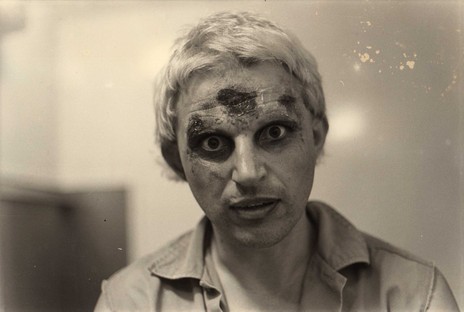 Chris Knox, Seizure reissue. This is what it takes to be the godfather of a scene: a spiritual generosity that springs out of your own generative fluency— if I can do this, why don’t you give it a try?—; a real committed child-like eccentricity and an affinity for Beatles-y melodies; a cassette machine. Knox had been pouring his heart into New Zealand indie music for a decade when he released this solo album in ’89, playing everywhere, engineering everyone who needed it, and distributing his friends. I first met most of these songs thirteen years ago, when Cait played me Knox’s anthology Meat (comprising a weirdly partial selection of this record, its followup Croaker, and a few other tunes). I met them again on Stroke, the tribute assembled by his countless admirers, friends, and mentees in and out of New Zealand to pay his medical bills after he lost his speech and much of his mobility in a grand mal seizure five years ago. In that time, my love for them hasn’t faded in the slightest. I’ve never heard a song about sexism like “The Woman inside of Me”; “The Face of Fashion” and “Not Given Lightly” are love songs, real heart-widening miracles; when you tune your ears to their timbres, you’ll whistle along with “Wanna!!”
 Kaitlyn Aurelia Smith, EARS. The sense of a huge damp respirating landscape, mossy stone and fir trees and water bluer than the sky, synthesizers creating an effect that feels pre-human: music whose rhythms reflect not an arc of bodily ecstasy but the minute motions of creeping roots and dripping rain. As far as I’m concerned, she’s the pride of Orcas Island.
 Speedy Ortiz, Foil Deer. It’s not always good news when poets are lyricists, but Sadie Dupuis’s arch, bitter, self-delighted, and swiftly-moving lyrics are a real joy, and her band’s music is awkward in a way I love, all jabbing elbows and tangled feet. I’ve always said I’m just not a child of 90s indie rock– Archers of Loaf are never gonna move me like the Replacements– but Speedy Ortiz makes me love that era’s mixture of spasmodic whiz-bang energy and delighted irony enough to make me wonder. Maybe I’m wrong!
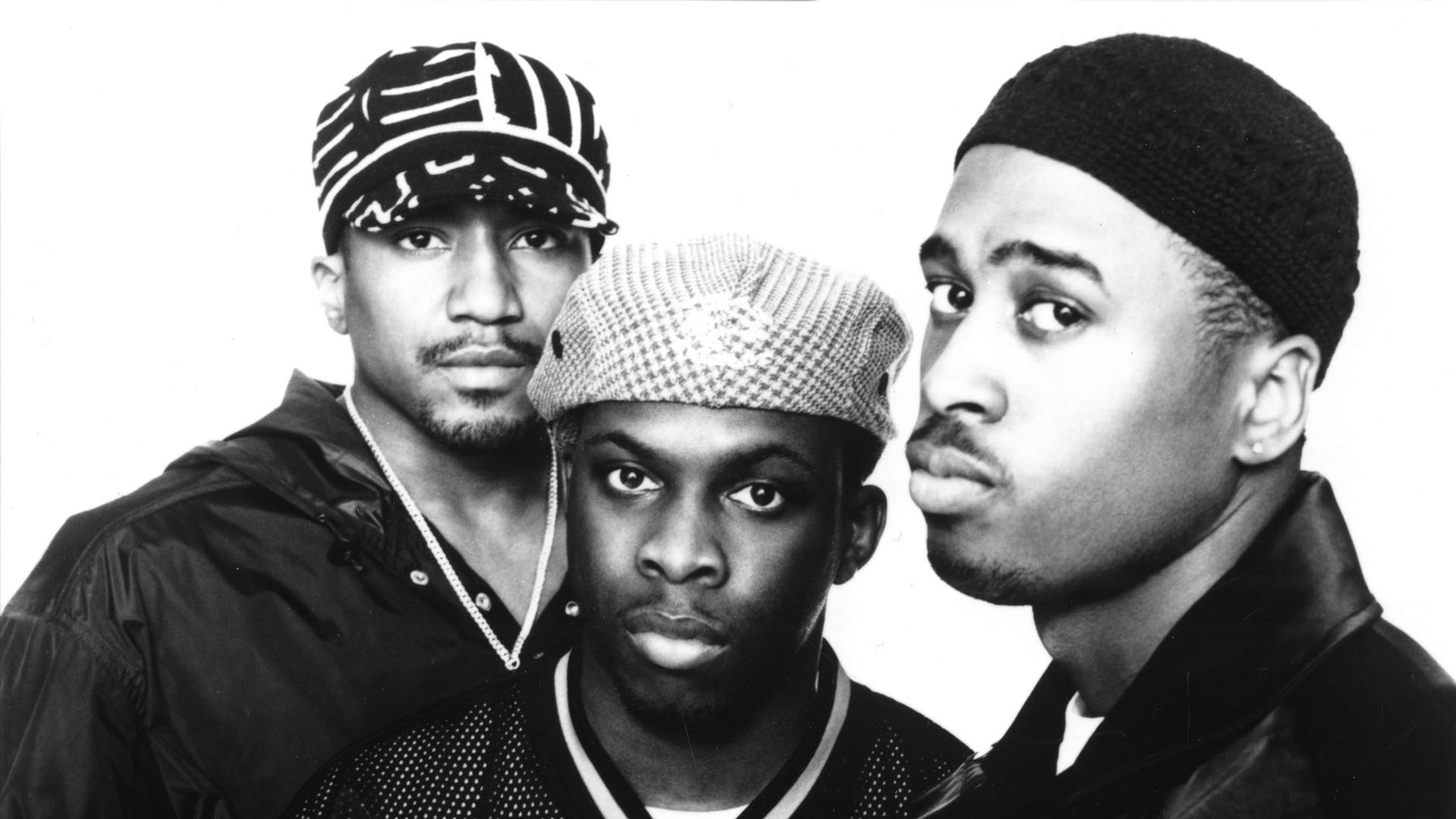 A Tribe Called Quest, We Got It from Here… Thanks 4 the Service. I was a teenager when my body was swept up by the sound of Low End Theory and an aspiring cool kid when I found Beats, Rhymes & Life and I loved them both and never expected I’d hear another, let alone one even more musically various, politically exact, lyrically virtuosic, whatever other overjoyed adverb-adjective pairs you wanna throw at this astounding thing.
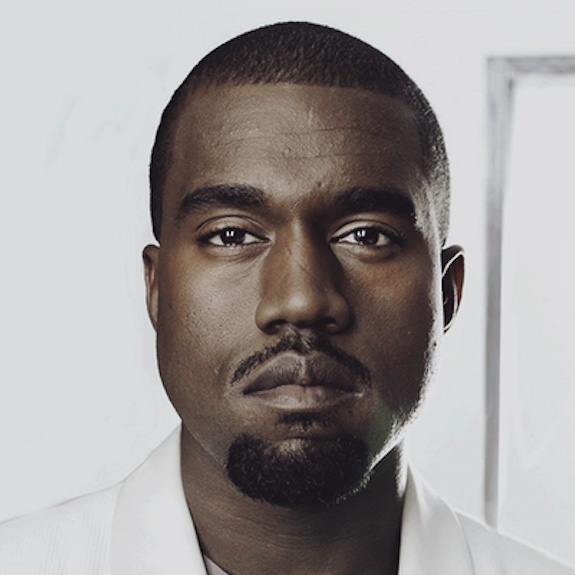 Kanye West, The Life of Pablo. I tried to hate this one and I just completely failed. Coming back to it on a car trip with my brother on a sad fucking day, I finally heard how each unpredictable production choice and every obnoxious or grace-starved lyric and off-the-wall musical element lean on each other and I put my head down on the glove compartment and surrendered to loving it. The Life of Pablo is full of loose ends and unfinished threads, but what unites it is a sense of shame and redemption: it’s religious as nothing he’s done since “Jesus Walks.” And throughout Pablo, there’s that unique genius of West’s, those reckless ingenious acts of musical balancing: cramming samples into “No More Parties in LA” until the song bursts like a torn quilt; tucking Sister Nancy’s “Bam Bam” into the last third of “Famous.”
 Rough Guide to African Rare Groove, Vol. 1. A serious damn party record: in less than an hour it hunts everywhere for pleasure, from buzzy solid-state Ethiopian funk to Tanzanian open-air dance music and a Malawian one that sounds like calypso with a drum machine, wrapping it all up with a Celestine Ukwu song that dissolves in soothing guitar and saxophone prettiness (the comedown tune?) and a really busted kooky Francis Bebey song (that’s him pictured) for your 4 a.m. seizures of inspiration.
 Imaginational Anthem Vol. 8: the Private Press. This label, which specializes in rare guitar music, here does itself one better and shares an hour-plus of rarer-than-rare guitar music: Imaginational Anthem Vol. 8 consists of selections from three decades of privately printed LPs and 45s, by artists I’ve never remotely heard of: a world of one-offs, flashes of brilliance, prayers and musical tangents. My favorites are the stuff in the British-Isles line, but there are Delta- and Latin-inspired tunes, dabs of psychedelia and jazz, multi-tracked cascades; anything you could want, annotated with fondness and curiosity (“according to YouTube…”). A treasure.
 Urgent Jumping: East African Musiki Wa Dansi Classics. From Stern’s, an East African dance music anthology that’s a little too overstuffed and (as above) folkloric/collector-y to really knock me out start to finish (as say African Pearls: Pont Sur le Congo or Golden Afrique Vol. 1 have): “twice as good if it were half as long,” as they say. But it’d be churlish of me to complain against the variety— benga, rumba, lilting Arabic-mode Zanzibarian tunes, and fuzzy soul alongside the sublime liftoff of the soukous tunes I’ll always like best. Favorites include L’Orchestre Grand Pisa’s “Oboti Kolisa,” L’Orch. Moja One’s “Dania ni Duara Pts. 1 & 2,” and Victoria Jazz Band’s “Anyanga.”
Comments Off on (2015 and) 2016: Albums
Filed under music
 Jay Aquinas Thompson
You must be logged in to post a comment.