This is my rain-soaked death-haunted year, in forty A-to-Z (that is, X) songs or albums I loved.
As usual, my year-in-music post includes stuff released last year. In the cultural-critical rhythms of music writing/list-making, I learn about what I missed the year before (in 2016: Elza Soares, French Montana, lots of other things on this list) only at the end of that year, so I give myself the following year to wade.
So here, first, is a playlist…
…and here’s my year.
*
When they mirror back their (and my) sexual subjectivity, not many male singer-songwriters show me something I want to see. But in the last few years, I’ve grown to love the AFGHAN WHIGS, for Greg Dulli’s soul-derived ardor and his very indie-guy fury and self-loathing. I love too the bigness and swing of the music that goes with it: there’s no bullshit in the Whigs’ rhythm and blues and no ego in their monster-size tunes. This year’s In Spades has gotten more attention than the 2014 reunion record, Do to the Beast, that I’ll always like better. I come back to Spades mostly for “I Got Lost,” its broken-down quality, a man feeling at his own torn edges. Honorable mention to “Toy Automatic.”
 AMY O, Elastic. Oh oh oh does this record make me happy. I was skeptical for the first few songs but the marvel is in the swift accumulation— less than 2 1/2 minutes per, with just about a breath between each; hook after hook, lyrical wit matched by musical, feminist space-staking and tension building to little bursts of relief or fury— and then (bang!!) the whole thing’s done in less than a half hour. In frying eggs and riding buses and drinking coffee with sad friends, I listened to lots of great homemade indie pop this year that I’m sure will stick with me into future years— Soccer Mommy, Karima Walker, Caroline Says— but Elastic was my over-the-moon, tap-my-toes fave. You have to be more skeptical than I’ll ever be to resist it. Song sibling: SOCCER MOMMY’s “Allison”: a song by someone wounded but undeterred, someone keeping a door open.
It seems to me that if you believe in magic— in a real and communicative spiritual world and in a spiritual dimension to the natural world, a dimension we can approach subject-to-subject— you must feel a lot of fucking pain at what bell hooks calls “imperialist white supremacist capitalist patriarchy,” the wounding monster ideology that, in objectifying both nature and person, plunders the material and human resources of this planet. I thought a lot about magic as I listened to ANOHNI’s Hopelessness this year and last. Hopelessness is a ritual that seeks to instantiate this very pain: the pain we inflict and the pain we (especially women, queers, the people of the Global South) endure. Some people feel this pain so acutely– the pain of the wronged earth; the violations of the state against the dignity, bodies, and freedom of oppressed persons– that you wonder: why do they make art? Do they create these hour-long ceremonial spaces for the redemption of all our damned doomed selves? For the crying ghosts of everything we’ve left murdered or degraded in the world? For their own spiritual survival? Is there even a distinction?
Since the seismic cultural shift of the Weeknd’s first album, with its late-night transactional sex and icy coked-out ego, there’s been much less room for tenderness in male R&B. Most of BELL BIV DEVOE‘s comeback album felt silly to me, but “Finally” (with SWV) is an uncomplicatedly tender song of discovery and (in the same breath) devotion. You’ll press this one to your heart too. Song sibling: KENDRICK LAMAR’s “LOVE.” (ft. Zacari), a beautifully gentle song, the clearest throwback on DAMN. and my favorite on there.
JULIE BYRNE, “Natural Blue.” One of my favorite pieces of poetry writing advice I ever got from my first mentor Rick is: conceal your strengths. Be sly about what comes easiest to you and your work as a whole will have more structural integrity, less top-heaviness. So I find I often like my music with a little more tension between elements, a little more self-imposed challenge, than there is on Julie Byrne’s Not Even Happiness. Byrne has a wonderful instrument in her voice, but it’s just the kind of voice you’d expect to sing, say, “I’ve been finding God within” amid a hushed, spacious production, so when it does it affects you less. But a few of the songs (just to demonstrate that I’m a huge ingrate) are still overwhelmingly beautiful: the calling-forth and homecoming of “Natural Blue,” especially, and the twingey regretful “Sleepwalker.”
 Sometimes you can eat the whole bag without feeling sick. Scattering bright sugar-hard crumbs all over like Weezer and a zillion other “alternative” 90s bands, CHARLY BLISS’s Guppy was cooked up by a singer-songwriter/lead-superfan, Eva Grace Hendricks, whose vocal style is deliberate throwback (to Anna Waronker especially) but whose off-handedly fantastic lyrics— “I smoked the last of the bad pot,” “I bite my hair,” “all I eat is bread and cheese”– are better than 95% of the lost-entitlement raging and sentimental generalities of the music that inspires her and that soundtracked by 7th-grade life. Have spent a lot of drives punching the upholstered ceiling of car along to this one. Song sibling: PARAMORE’s “Hard Times.” I guess I don’t quite trust the professionalism of their After Laughter, but its nostalgia for spacious bright funky 80s pop I’m very sweet on, too. Maybe I’ve just aged to the point of being touched by pretty much any nostalgia.
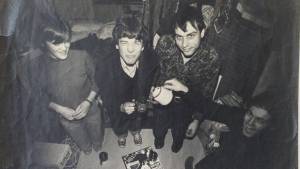 As a wounded, secretive, wide-eyed child myself, I’ve come to love Martin Phillips’s music with THE CHILLS, compiled here on this expanded reissue of their 80s singles and EPs, Kaleidoscope World. Phillips, like Skip Spence or Brian Wilson, wrote in the grip of strong contradictory emotions. The geographical and creative isolation of Phillips’s native New Zealand, and the tension and idealism of early punk, both informed his music, too, in ways these earlier boy-men didn’t have access to. But he’s shared in some of their struggles: the depression and addiction that would consume decades of Phillips’s later life stalks the dreams of “Great Escape” and “This Is the Way,” and lurks in the nightmare/meditation of “Pink Frost.” Last month, feeling hope like a first ray after weeks of sinking dark grief, I made myself a cup of coffee and listened through all twenty-four songs on this reissue, held tight between my own contradictory emotions. The low winter sun shone right on me; I felt myself loving how Phillips’s child-like seriousness elevates the slight ones (“Smile from a Dead Dead Face”) and keeps the ambitious ones (“Dream by Dream”) approachable.
When LEONARD COHEN died, it was heartbreaking— the second-worst news of November 9, 2016— but now it seems hard to believe he was alive so recently at all. This was the prematurely ancient poet of eroticism, heartbreak, and death, born before Elvis, born before Buddy Holly, and, until November 2016, he was still here. The first of his albums I ever heard was, at nineteen, the new one, Ten New Songs, and I loved it. I hated its followup, Dear Heather, and checked out on the subsequent albums, but I really fell for You Want It Darker. (Finn did too, which helped.) Amid strings-piano-drums settings whose warmth send me all the way back to Recent Songs, Cohen whispers to us: whispers from the doorway to a God and love he’s contended with, disappointed, and adores: and now he’s gone, into the arms of that God and love.
SHENANDOAH DAVIS, Souvenirs. Elaborately produced, and much more beautifully recorded than her first record, Souvenirs is a record of passion, ironic flair, and attention to detail that deserves to be bought by every woeful art student, musicals fan, and vest-wearing queerdo in blue-state America. When I listen to it, I hold tight to my own heartache keepsakes. Davis is classically trained as a pianist and vocalist and it shows, in her impeccable playing and the expert’s glee she brings to her singing of endless disappointments, bad choices, and foolish lovers. Got to be there in the warm whiskey-smelling little studio space for this record’s release party, so I know which four consecutive songs are about “terrible things that happened to me in New York” and which is about a “fatal bike crash… fatal to a relationship.”
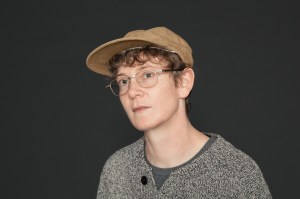 In the decade since Oliver gifted it to us, DEAR NORA’s Mountain Rock has remained maybe the wife’s favorite record, favorite indie record at least, in constant rotation: from her high-desert living room, Katy Davidson spins little lonesome moments of crossing and distance and warmth with some guitar scribbled in between into twenty-five minutes of music. My Spotify playlist aside, Mountain Rock is impossible to excerpt, because the spell of it is the whole thing. It’s back in print this year and on vinyl now thank God, with a few added living-room-jam bonus goofs, by a label that’s put out some other really beautiful shit.
FEVER RAY, “To the Moon and Back.” Sometimes one’s desire is incendiary and sacramental at once! Sometimes the non-constructive, uncaptureable energy of sex feels like one’s only hope!
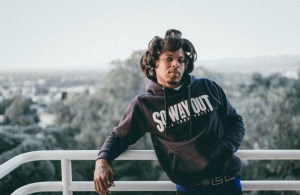 G PERICO, the twelve best songs spread across Shit Don’t Stop, All Blue and 2 Tha Left. I feel a little helpless in my love of G Perico (emphasis second syllable): his moral and geographic world is damn narrow, his confidence is always being gnawed at by paranoia, how did I ever find my way in? But I still found a whole universe on these three records (all from the last eighteen months), from his consciously old-school beats to that amazing yap of a voice. You can get Shit Don’t Stop here.
GUCCI MANE, “Make Love” (ft. Nicki Minaj). My brother and sister-in-law put me on to this one. Gucci’s sobriety seems now just another aspect of the good life– “I just left out the gym, I’m bout to take a swim and meditate”– and his relaxed flow is as far as could be here from Nicki Minaj’s score-settling, cartoonish rip at (as far as I can tell?) Remy Ma and Azealia Banks. The backing track is unresolved– barely even in tune– and is great. Song sibling: FRENCH MONTANA, “Lockjaw” (ft. Kodak Black), a couple of tight-lipped drawls over another spooky slow beat.
HUERCO S., from the “Quiet Time” series. A warm, intimate, slowly voice-shifting 30-minute chord, sometimes like the foot pedals on an organ, other times like wind, other times like voices way off. None of the insistently theoretical exercises of his albums here, just a movement that’s soothing and inhumanly big and slow. No music so formally static has ever moved me as much as this, and no new ambient music has filled up the crevices and softened the tensions of so many moments as this has. It’s not on Spotify, not in physical print anywhere. iTunes play count: 35 times since last November.
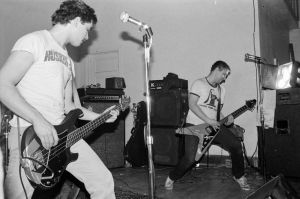 HÜSKER DÜ, Savage Young Dü. My first-ever post on this blog was about how much I loved this band: they were my Beach Boys: the group that gave me language to understand my adolescent self. They brought intensely personal, pained, and sweet stuff into indie, songs you’d sing yourself on an acoustic guitar. And, by playing psychedelic rock and ringing Byrds-y pop with the intensity of punk, Hüsker Dü invented the sound that, along with REM’s echoing chime, refigured the sound of guitar-based rock ‘n roll in the 1980s. This Numero Group reissue captures just their early recordings, teenagers on speed just going for it— the trio eager to blow away the bands they shared the stage with, singer-songwriters Bob Mould and Grant Hart eager to one-up each other— trying out garage rock and more classic punk before taking the challenge of Black Flag’s first two EPs to play harder faster and louder than any other band in the world. Their hardcore was hard, a rockslide, an electrocution: when I go back to it, I feel the explosive adolescent need, the desperation for a sense that art and life matters. The reissue stops at Metal Circus, the 1983 EP that began their time in creative Valhalla, but (as a bonus download) it includes five outtakes from those sessions that, along with the excerpts from the slow (“slow”) set that followed Land Speed Record‘s fast set, are my favorite discoveries on here. Favorite re-discovery: the incredibly brightened remaster of Everything Falls Apart.
ISHAWNA, “Equal Rights.” Feeling dancehall finally wind its way into my loves. I heard this one with Emily at Night Crush when Stas the Boss was DJing: a joyful and (even for someone who listens to a lot of rap) startlingly frank demand for equal treatment in pleasure. Not on Spotify.
KEITH JARRETT, Handel: Harpsichord Suites. This is the first music since my dad’s death that my heart has ached to share with him. These suites, played here thank God on piano, feel a little more emotive and musically simpler than Bach’s, but they still feel of a piece with the sort of cerebral joy he so loved in Bach: the music (the viola da gamba sonatas, the Brandenburg concertos, the two- and three-part inventions) that he’d play as he quietly worked at his desk and I sat up next to him in a big stupid Ikea lounger, under his shelves of books of Marxism ecology and astronomy, with a science fiction paperback or history homework. I’ve loved every classical piano album I’ve ever heard from Keith Jarrett— his recording of Shostakovich’s preludes and fugues is one of my favorite pieces of music ever— and this beautiful twenty-year-old album is finally reissued in print and available digitally thanks to ECM surrendering to Spotify. This will remain one of my offerings to my dad’s ghost.
 JLIN, Black Origami. It takes listening close to find what’s organic here and what’s synthesized, because of the physicality of the mix— the bass drums hit me right on the chest and the snapping tambourines and cymbals make rings around my skull— and because of the variety of sounds. I love the conviction (that I vaguely recall from the drum’n’bass I had a phase with) that percussion can do the work of melody, and I love the belief in dance music as a ritual space, one inextricably bound up with the legacy of African sounds and culture.
CARLY RAE JEPSEN, “Cut to the Feeling.” Listening to this song on the train home from seeing Cait’s folks, it occurred to me that I love Carly Rae Jepsen for the same reason I love the Go-Betweens: like those brainy, gifted Australians, Carly Rae Jepsen feels like an architect, an investigator of pop songs. Maybe her professionalism keeps potential fans at a distance and will keep her from being the world’s biggest pop star, but that very quality is why I love her: her craft is her joy.
 On SweetSexySavage, KEHLANI does ballads and put-downs, conscious throwbacks to 90s girl groups (“Piece of Mind”) and straightforwardly modern pop (“Get Like”); she’s indifferent, pragmatic, caustic, apologetic, greedy; she sounds inexhaustibly full of ideas. Like most major-label albums in the paid-per-track-streamed era, SweetSexySavage is three or four songs too long– the string of sweet ones near the end feels formally and emotionally obligatory– but this is still my favorite R&B record I’ve heard all year.
KELELA, “LMK.” Kelela’s got poise and a great consistent vision for the producers she chooses, but this one was the only tune that stuck with me from Take Me Apart. A night-drive song, blurring neon city rain. Song sibling: JESSIE WARE’s “Midnight,” a stomping soaring sweeping song I run out of limbs to move along with, the only song on Glasshouse that draws me in to a drama like those of “Champagne Kisses” or “Tough Love.”
ALICIA KEYS, “In Common.” I love the feel of this one, driven by an exciting, odd, Caribbean-indebted rhythm that refuses a climactic “Girl on Fire”-type build, and I love too her frank, rueful, self-aware lyric. Song sibling: J BALVIN’s “Mi Gente” (ft. Beyonce), because of course she can also rap in Spanish and this song sounds like it could be 500 million people’s favorite of the year.
Like with Drake, I don’t really understand how MIGOS has tapped into whatever they’ve tapped into— I’m not really a fan though I acknowledge the effects of what must be genius— but I see that they’re generating a massive amount of culture without seeming to do more than carry stacks of money and prescription bottles into their new cars. Without any love from radio, they’re everywhere, and everyone is soaking up that high-hat-led production and strong-double/strong-triple accent style of theirs. Of all their songs I’ve heard this year– blasting from car stereos and cookouts, requested by students for music-writealongs– I’ve loved “Motorsport” best. I met it when Stas the Boss played it on KEXP on the last warm evening this year, driving down to the lake to jump in after my family and it made our borrowed Corolla feel like a Bugatti. Internet burrowing question: has there been another male-led rap song than “Motorsport” to feature two female MC’s as guests? Besides Outkast’s “I’ll Call before I Come” I mean? Zkrt-zkrt!
 MAREN MORRIS, Hero. This big blocky crossover hit is, like Charly Bliss, pretty much perfect freeway music. Morris spins out a whole album of songs that have the instant hookiness and conceptual durability of very good pop, with the cultural signifiers of Americana worked in throughout: on “Rich” she phrases like Lorde, on “My Church” she fries the edges of each line like a country girl. The compressed, heavy production doesn’t suit the intimacy of “How It’s Done” but works everywhere else. After the sense-of-self adjustment required for me to do so, I’ve found that I like every single damn song on this record.
MOUNT EERIE, A Crow Looked at Me. A grief document, unguarded as a journal entry, haunted by particulars and torn up by loss and frightened of the spiritual vacancy that had been sublime, on snowy mountaintops, to conceptualize, but agonizing, in your emptied home, to face.
NAO’s “In the Morning” and SZA’s “Prom” have felt like twins since I first heard them, charged with an unguarded anguish that feels more relatable to me than the miracle-for-a-night dreams of most pop (or, for that matter, the tougher talk of their “Inhale Exhale” or “The Weekend”). NAO’s vocal is set against an anonymously loud and tense production that heightens the self-doubt of the performance: there’s no comfort in the music. SZA’s has chiming guitars and a shuffling synthesized percussion that calls up a nostalgia the singer reaches back for.
 NONAME, Telefone. Finn’s favorite rapper. Clipped keen nifty poetry, love notes, sunny day memory vibrations, a pervasive sense of egalitarianism and friendship, the beats sometimes Native Tongues-y and other times closer to just jazz. Name your price for it here.
FRANK OCEAN, “Chanel.” Never seeming to break a sweat, always seeming to get better. This piano floats along and he seems, impossibly, to feel even more serene than it does.
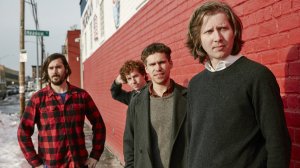 PARQUET COURTS, Human Performance. Going back to the Velvet Underground this year, I’ve found I love their flair-less-ness: the matter-of-fact repetitive chug of the fast ones, the austerity of the slow ones. No bursts of passion or rhythm-and-blues delight or look-at-me dazzle, just a steady and very big-city cyclical energy: a musical quality that looks ahead to New York punk, to which the wonderful nervous Parquet Courts look back. Their music is bare, lean, offhanded. The short songs feel like epigrams, the long ones like walking home late stoned.
As a rapper, RICK ROSS gets over less on verbal acuity, bravado, storytelling, or technical intricacy than on simple presence. On the songs of his I like best, he holds court, as confident and gratified (listen to his “uh–yeah”s) as a king on his throne draped in two layers of ermine. Never has a rapper been readier to be an “elder stateman.” My favorites on the retro-ish Rather You than Me evoke the good life in sumptuous production and relaxed tone better than in their (often interchangeable and received-feeling) lyrical particulars; “Powers That Be” sounds as beautiful as Tango in the Night and, speaking of lyrical particulars, benefits immensely from a verse by “eighty-fiver enlightener” Nas.
 ELZA SOARES, The Woman at the End of the World. A singer who seems to have spent her career restless on the edges of samba and bossa nova here collaborates with some young avant-garde dudes, on a set of songs that’s some of the most busted, ghoulish, energizing music I’ve ever heard. At 79, Soares has a rough voice that, here, she’s deliberately uglified. She gargles and snarls as if beauty were always an illusion– a trap– and only in ugliness is there a vitality worth trusting. Her pipes find their equivalent in the black-and-white racket of the bass synths and overdriven guitars, but, too, there are these horns, strings, flutes, and that effortlessly complex percussion I associate with Brazilian pop. The only album I know enough to compare it to is Caetano Veloso’s plugged-in Abraçaço; Woman shares with Veloso’s record a sense of defiant libidinous vitality, but it finds a uniquely liberatory female freedom in its harshness and vigorous ugliness. Soares’s young dudes wrote Woman’s material; but she arranges them, when they sing, in a strictly decorative, smoothing role. As Leonard Cohen used his girly soul choirs alongside his rough male one, here Soares uses the sweet male voice alongside her blasted female one: the evocation of an opposite principle in pursuit of spiritual balance. But of course, the only spirituality I get from Woman is ferocious life: the lyrics I can make out go, roughly, “my body, oh my body,” “it kills, it kills,” and “to fuck, to fuck, tofucktofuckfuck.”
 This fall and winter, JAY SOM’s Everybody Works has been a consistent kitchen and living-room companion. Melina Duterte is a craftsperson at the beginning of her huge gift: she plays everything on Everybody Works, which gives the album an endearing and characteristically indie-pop-ish stiffness. It also means that the performances aren’t always quite up to a musical imagination that spins through R&B, punk, and 60s-style guitar pop. But “Bus Song” is my song of the year: 12-string guitar, chiming piano, harmonies all mixed right on top of each other and all lifting off at once when the harmonies arrive in the wordless chorus. I can’t wait for her next record!!
SYD’s “Know” reminds me that it’s hard to beat a bragging secrecy (see James Carr’s “The Dark End of the Street”) if you want to put over a song.
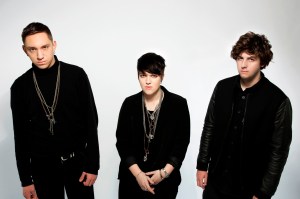 THE XX, “Lips.” The bigger and more rainbowy Jamie XX’s production gets, the harder time I have clearing it away to feel the musical chemistry between Romy and Oliver— regal flamey feminine and lonely laconic masculine. Like “LMK,” “Lips” exists in a nocturnal blur, the guitar spreading out to a wide-open, dimly-lit space of desire.
*
Oh and, as a catalogue against the darkness, here too is the pre-2016 music that I first heard (or first came attentively to) this year that stretched my soul and lightened my heart: 18 King Sized Rhythm & Blues Hits, Bobby “Blue” Bland, Buddy Guy & Junior Wells Play the Blues, Bonnie Raitt’s Luck of the Draw, Fleetwood Mac’s Mirage, Van Morrison’s Beautiful Vision and Into the Music, Roxy Music’s Avalon, Bruce Springsteen’s Tunnel of Love, Dylan’s World Gone Wrong and Live 1964, Bunny Wailer, Frank Sinatra’s recordings with that bully Tommy Dorsey, Eric Dolphy, Stan Getz Plays, my great-uncle’s Duke Ellington records, Bill Laswell’s remixes of Miles Davis, the Red House Painters’ rollercoaster album, the Velvet Underground’s V.U. as well as the Complete Matrix Tapes and the bonus stuff on Rhino’s now-deleted Loaded reissue, the Raincoats, Robert Wyatt’s Shleep, Tiger Trap and Lois and the Softies and Helium and Barbara Manning, the Go-Betweens, A Tribe Called Quest’s Midnight Marauders, Pete Rock & CL Smooth, Bach’s partitas for solo violin, Street Music of Central Java, Erik Marchand and Thierry Robin’s Chants Centre-Bretagne, and Youssou N’Dour’s Rokku Mi Rokka.
 Jay Aquinas Thompson
You must be logged in to post a comment.